Thigh-High vs Knee-High Compression Stockings: Which Is Right for You?
Knee-high compression socks suit most people, because they cover the ankles and calves, where everyday swelling and tiredness usually sit, and they are far easier to put on. Thigh-high stockings cover the whole leg and are usually chosen when swelling or discomfort reaches above the knee, often on a doctor's advice.
Here is how the two lengths compare, who each tends to suit, and how to manage thigh-highs with a donner.
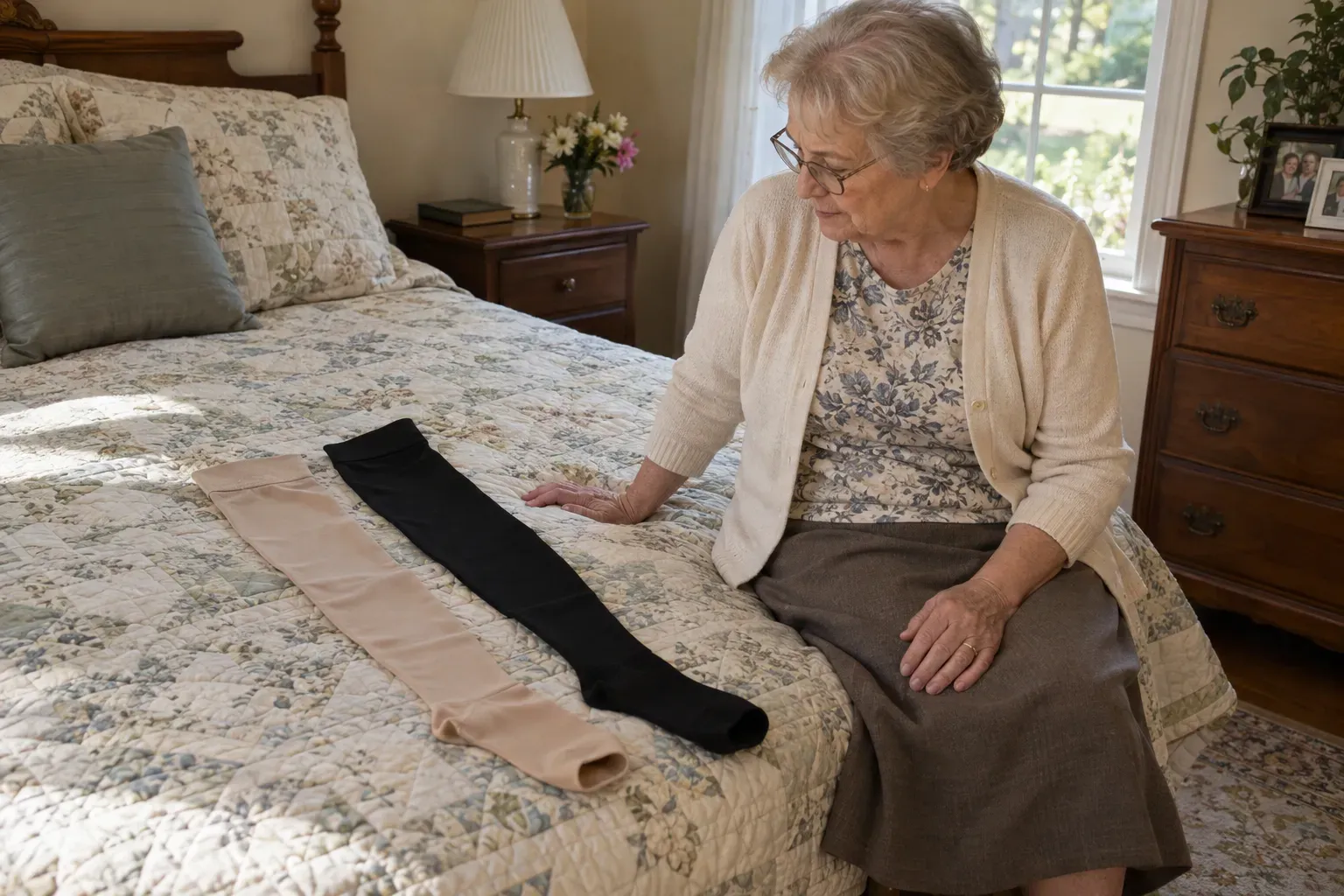
Mentioned in this article
The two lengths at a glance
MedlinePlus notes that compression stockings come in lengths from knee-high to the top of the thigh, and that knee-length stockings should come to about two fingers below the bend of the knee.
| Knee-high | Thigh-high | |
|---|---|---|
| Covers | Foot, ankle and calf | Foot to upper thigh |
| Ends | About two fingers below the knee bend | Upper thigh, held by a grip band |
| Putting on | Easier | Harder; a donner helps |
| Under clothing | Trousers, longer skirts | Skirts, dresses, trousers |
| In hot weather | Cooler | Warmer |
| Measurements needed | Ankle, calf, sometimes length | Ankle, calf, thigh, and length |
| Often chosen for | Tired legs, ankle and lower-leg swelling | Swelling or discomfort above the knee, or on a doctor's advice |
Who knee-highs tend to suit
For most people, knee-highs are the right place to start.
- Everyday tiredness and minor swelling in the feet, ankles and calves
- Travel days and long periods of sitting or standing
- Anyone who finds dressing difficult, because there is less fabric to manage
- Warm climates, where a full-length stocking feels hot
- People with sensitive skin on the thigh, since there is no grip band
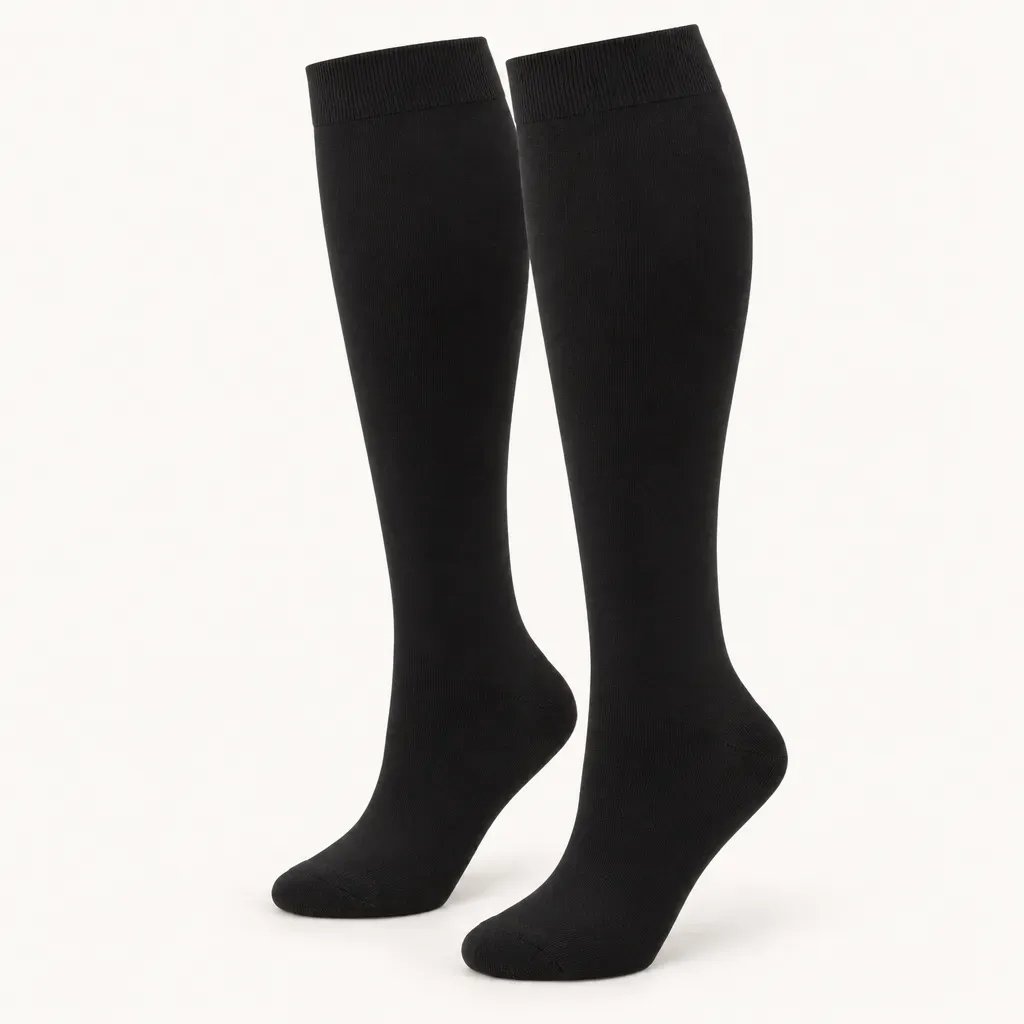
Our knee-high range includes the ZipperSocks zipper socks, a brand we stock, at 15-20 mmHg, and our firm knee-high socks in the 20-30 mmHg class, sizes S to 7XL.
Who thigh-highs tend to suit
- Swelling or heaviness that reaches above the knee
- People whose doctor has recommended full-leg compression
- Those who wear skirts or dresses and prefer an even look over the knee
- People with knee-high bands that dig in behind the knee, who may find that a longer stocking spreads the fit differently
If your swelling is above the knee, it is worth asking your doctor about it before you buy. Swelling that reaches the thigh, or is in one leg only, should be checked. Our guide on when to see a doctor about leg swelling explains the signs.
A word of caution. Check with your doctor before wearing compression if you have peripheral artery disease, heart failure, fragile skin or open sores, or reduced feeling in your feet.
How silicone grip bands work
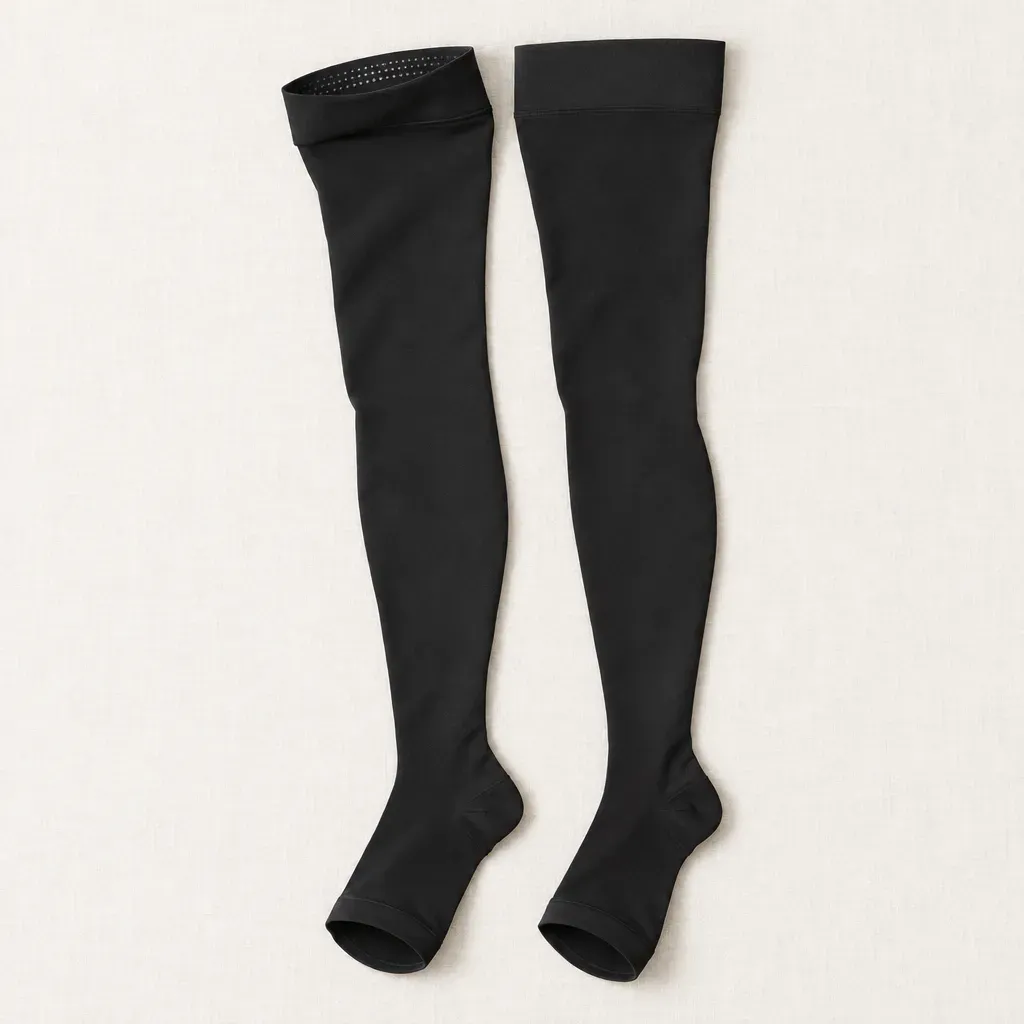
Thigh-high stockings need something to hold them up. Most use a band of silicone dots or strips on the inside of the top, which grips the skin lightly so the stocking does not slide down.
Making the band work well
- Apply to clean, dry skin. Lotion or oil on the thigh makes the band slip.
- Do not fold or roll the band down. MedlinePlus advises against tight bands around the thighs, and a folded band presses much harder.
- Wipe the band with a damp cloth between washes to keep it grippy.
- Check the skin under the band each evening for redness or itching.
Most people find silicone bands comfortable, but very sensitive skin can react to them. If that happens, a knee-high may be the better choice, and our guide to compression socks for sensitive skin has more ideas.
Our open-toe thigh-high compression stockings have a silicone grip band and are 15-20 mmHg, in black or beige. The open toe makes them easier to put on and lets you check your toes.
Measuring for each length
Both lengths need an ankle and calf measurement, taken in the morning with a soft tape. Thigh-highs also need the circumference of the widest part of the upper thigh, and sometimes the length from floor to the top of the thigh.
The thigh measurement is what decides whether the grip band sits comfortably. Too small, and it digs in. Too big, and it slides down. Our measuring guide walks through each step, and the charts are on the sizing guide page.
Putting on thigh-high stockings with a donner
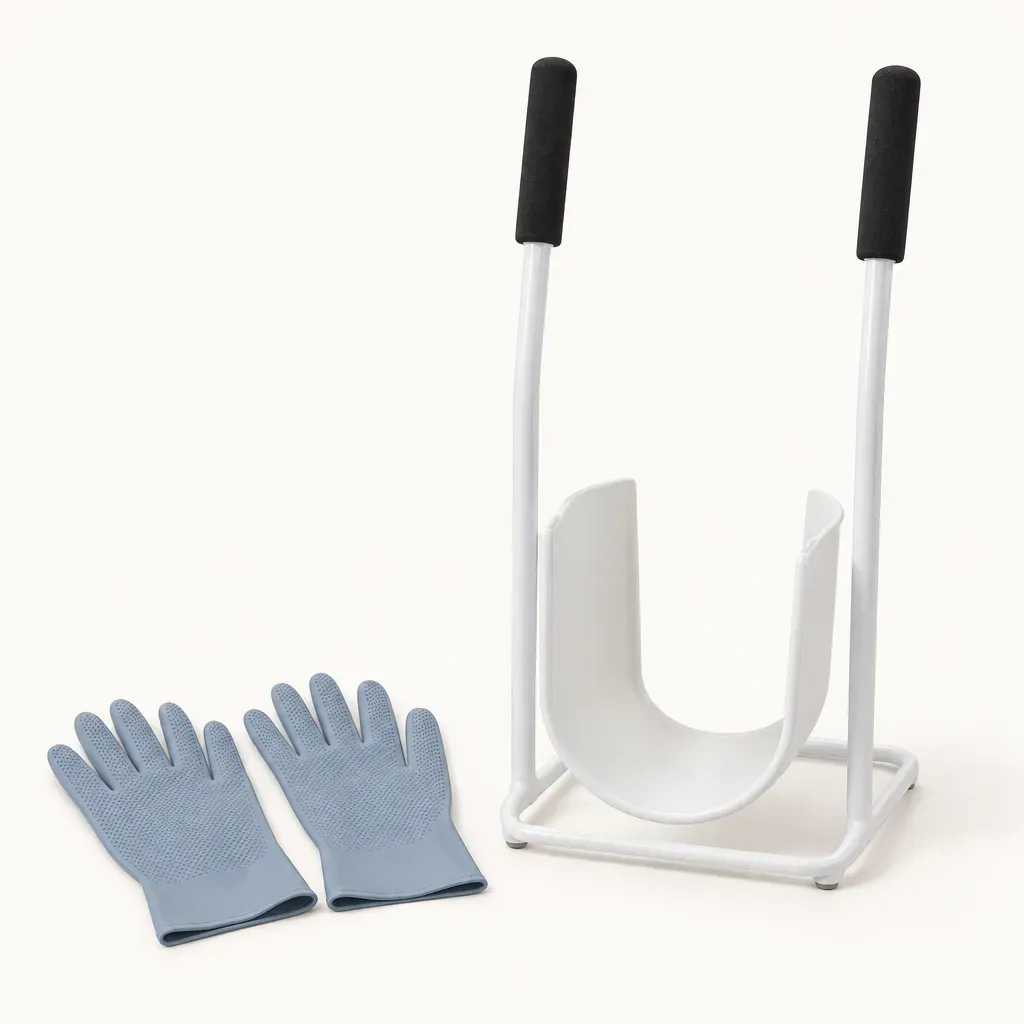
Thigh-highs are more work to put on because there is more fabric to move up the leg. A frame donner and rubber gloves make it much easier. MedlinePlus suggests both: rubber gloves to adjust and smooth the stockings, and a stocking donner to slide them over the foot.
- Sit down on a sturdy chair or the edge of the bed, first thing in the morning.
- Put on rubber gloves.
- Load the donner: stretch the foot and lower part of the stocking over the frame, heel facing out.
- Step in: slide your foot into the stocking while the frame holds it open.
- Pull the donner up toward your knee, so the stocking rolls off the frame onto your lower leg.
- Remove the donner, then use flat, gloved palms to ease the rest of the stocking up over the knee and thigh, a little at a time.
- Stand, if you safely can, holding onto something stable, to bring the band up to the upper thigh.
- Smooth out wrinkles, especially behind the knee, and check the band lies flat.
Our Easy-On Kit includes a frame donner and donning gloves. For more techniques, see putting on compression socks with arthritis.
Taking thigh-highs off and caring for them
Take thigh-high stockings off at bedtime, unless your doctor has told you otherwise. Cleveland Clinic advises against sleeping in compression.
- Sit down on the bed or a chair.
- Hook your gloved thumbs inside the band and peel it down, turning the stocking inside out as it goes.
- Ease it over the knee and calf with flat palms, then off the heel.
- Check the skin under the band and behind the knee for redness or marks that do not fade.
Wash thigh-highs as you would any compression stocking: mild soap, gentle handling, and air drying away from heat. MedlinePlus suggests replacing compression stockings every 3 to 6 months, and a silicone band that no longer grips well, even when clean, is a good sign it is time. Our washing guide has the details.
Making the decision
A few questions to settle it:
- Has your doctor recommended a length? Follow that.
- Where is the swelling or heaviness? Feet, ankles and calves point to knee-high. Above the knee points to a conversation with your doctor about thigh-high.
- How easy is dressing for you? If knee-highs are already a struggle, thigh-highs will be harder. Start with knee-highs, or plan on a donner.
- Is your skin sensitive to silicone? If so, knee-highs avoid the grip band.
Whichever you choose, all our compression wear comes with 30-day returns.
How to put on thigh-high compression stockings with a donner: quick steps
- Sit and glove up. Sit on a sturdy chair first thing in the morning, with clean, dry skin, and put on rubber gloves.
- Load the donner. Stretch the foot and lower part of the stocking over the frame donner with the heel facing out.
- Step in and pull up. Slide your foot into the stocking, then pull the donner handles up toward your knee so the stocking rolls onto your lower leg.
- Ease up the thigh. Remove the donner and use flat, gloved palms to ease the rest of the stocking over the knee and thigh a little at a time.
- Settle the band. Stand if you safely can, holding something stable, bring the silicone band to the upper thigh, and smooth out any wrinkles.