What mmHg Compression Do I Need? Light, Moderate and Firm Explained
For tired, achy legs and minor everyday swelling, most people start with moderate compression, 15-20 mmHg. Light compression, 8-15 mmHg, suits long days on your feet or first-time wearers, and firm compression, 20-30 mmHg, is usually chosen when swelling is more noticeable, often on a doctor's suggestion.
Anything at 30-40 mmHg or above should be prescribed and fitted by a clinician, and we do not sell it. Here is what the numbers mean and how to choose.

Mentioned in this article
-
-
-
What mmHg means
mmHg stands for millimeters of mercury. It is a unit of pressure, the same one used for blood pressure readings. On a compression sock, it describes how firmly the sock presses on your leg, measured at the ankle, where the pressure is highest.
A graduated compression sock is tightest at the ankle and gradually looser toward the knee or thigh. MedlinePlus explains that this gentle squeeze helps move blood up the legs. The mmHg number on the package tells you how strong that squeeze is at its firmest point.
A higher number is not automatically better. The right level is the one that gives you comfortable support you can actually wear every day.
The compression levels at a glance
Cleveland Clinic describes these common levels. The descriptions of typical use are general, so ask your doctor what suits you.
| Level | Range | Often chosen for | Where to get it |
|---|---|---|---|
| Light | 8-15 mmHg | Long days standing or sitting, first-time wearers, a gentle snug feel | Over the counter |
| Moderate | 15-20 mmHg | Tired, achy legs and minor swelling, travel | Over the counter |
| Firm | 20-30 mmHg | More noticeable swelling, often on a doctor's suggestion | Over the counter, ideally with your doctor's advice |
| Extra firm | 30-40 mmHg | Conditions a doctor is managing | Prescribed and fitted by a clinician |
Cleveland Clinic notes that extra-firm compression is usually only available by prescription and should be used under a doctor's supervision. We do not sell anything at 30-40 mmHg.
What an "mmHg class" means
You will often see compression described as a range, such as "15-20 mmHg" or "the 20-30 mmHg class", rather than a single number. There is a good reason for that.
The pressure a sock puts on a leg depends partly on the leg itself: its size, its shape, and how well the sock fits. The same sock can press a little more on one person and a little less on another. So manufacturers design socks to fall within a range for legs that match their size chart, and label them by that range, or class.
In practice, this means two things:
- Fit affects the pressure you actually get. A sock that is too small presses harder than its label, and one that is too big presses less. That is why measuring matters, as we explain in our measuring guide.
- Read the class as a guide, not a lab figure. When we describe our firm socks as being in the 20-30 mmHg class, we mean they are made to that firmness category, not that every leg will measure the same exact pressure.
Light compression (8-15 mmHg)
Light compression feels like a snug, supportive sock. It is a good way to find out whether you like compression at all.
People often choose it if they:
- Have never worn compression and want to start gently
- Spend long days standing or sitting and notice tired legs by evening
- Have sensitive skin and want the mildest pressure
Light compression is easier to put on than firmer levels, which makes it a sensible starting point for people with stiff hands.
Moderate compression (15-20 mmHg)
Moderate compression is the most common everyday level. It is firm enough that most people notice the support, but still comfortable for a full day.
People often choose it for:
- Tired, heavy, achy legs
- Minor swelling in the ankles and feet by the end of the day
- Long car rides and flights
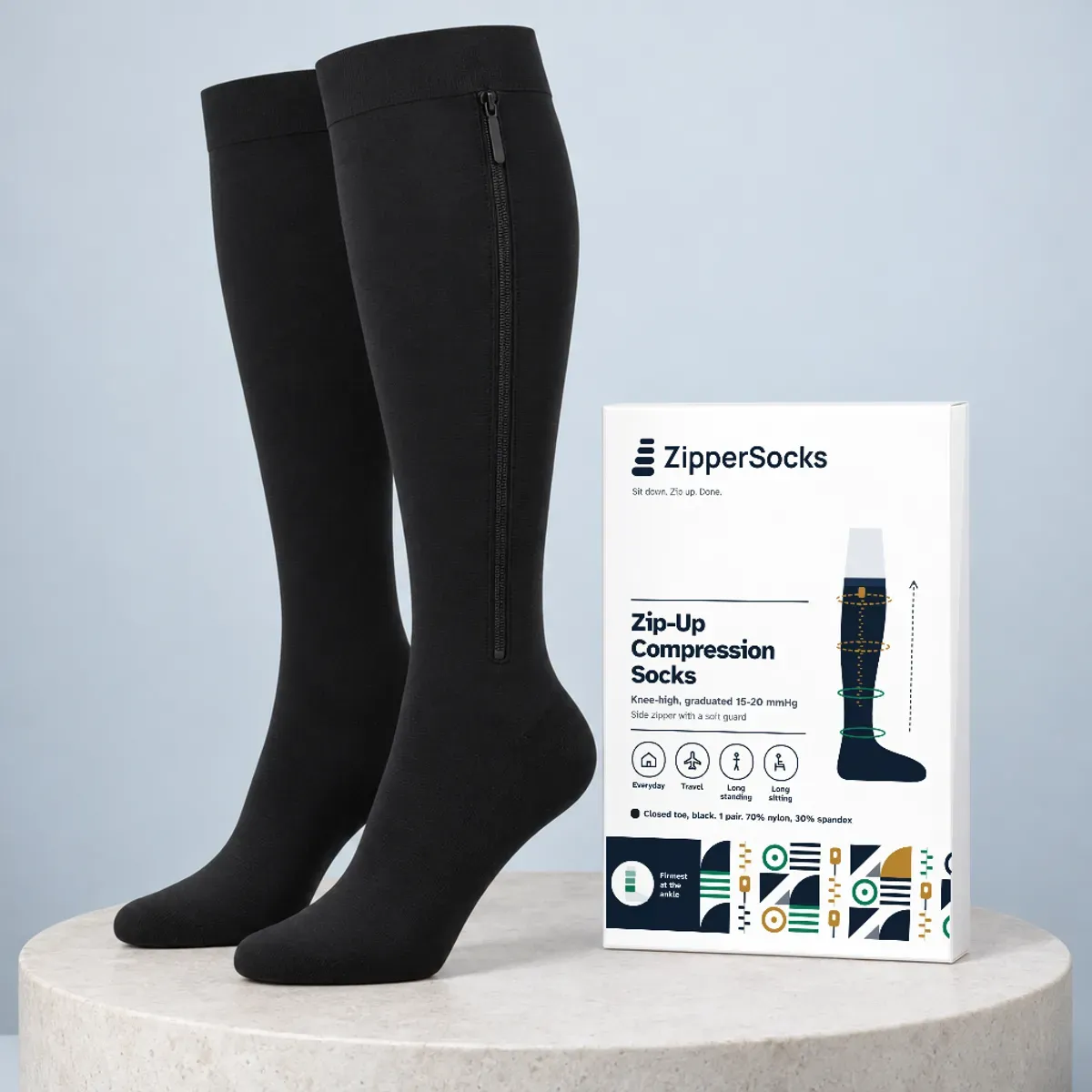
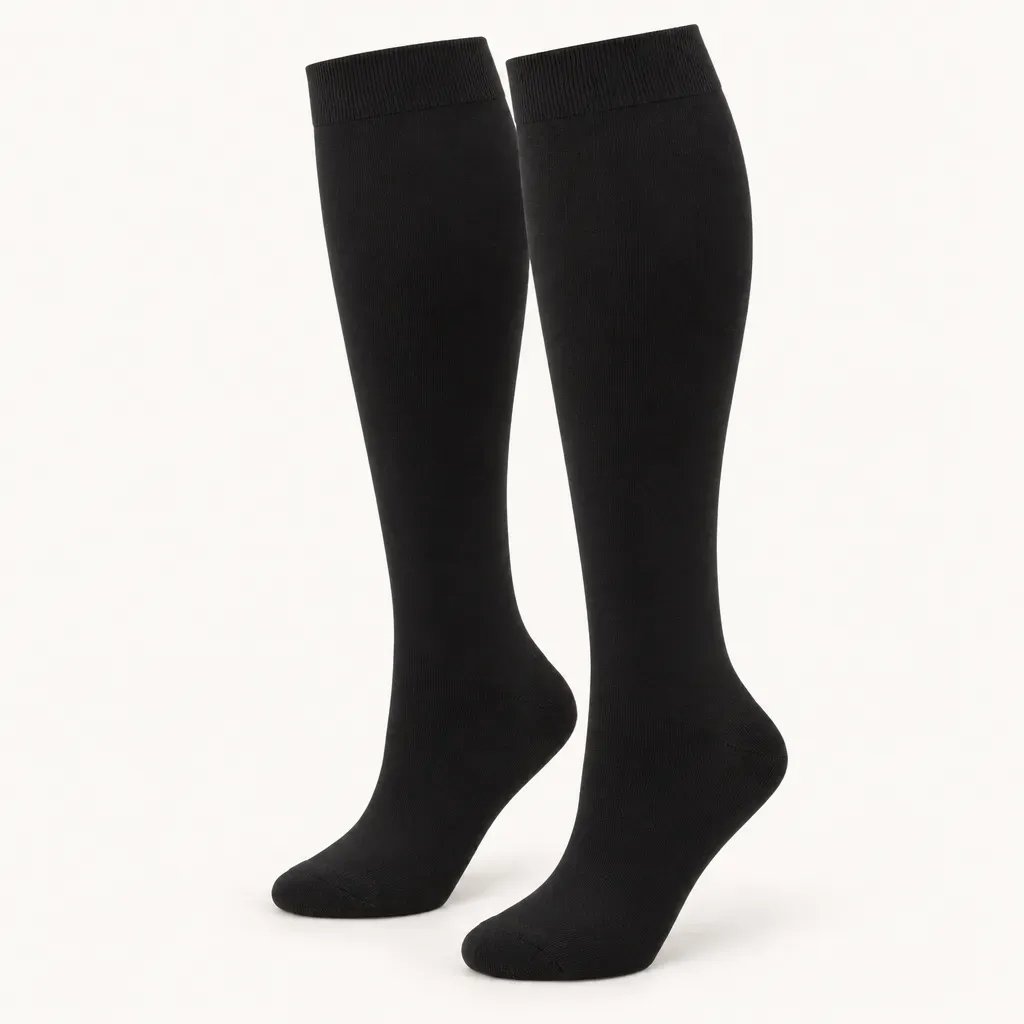
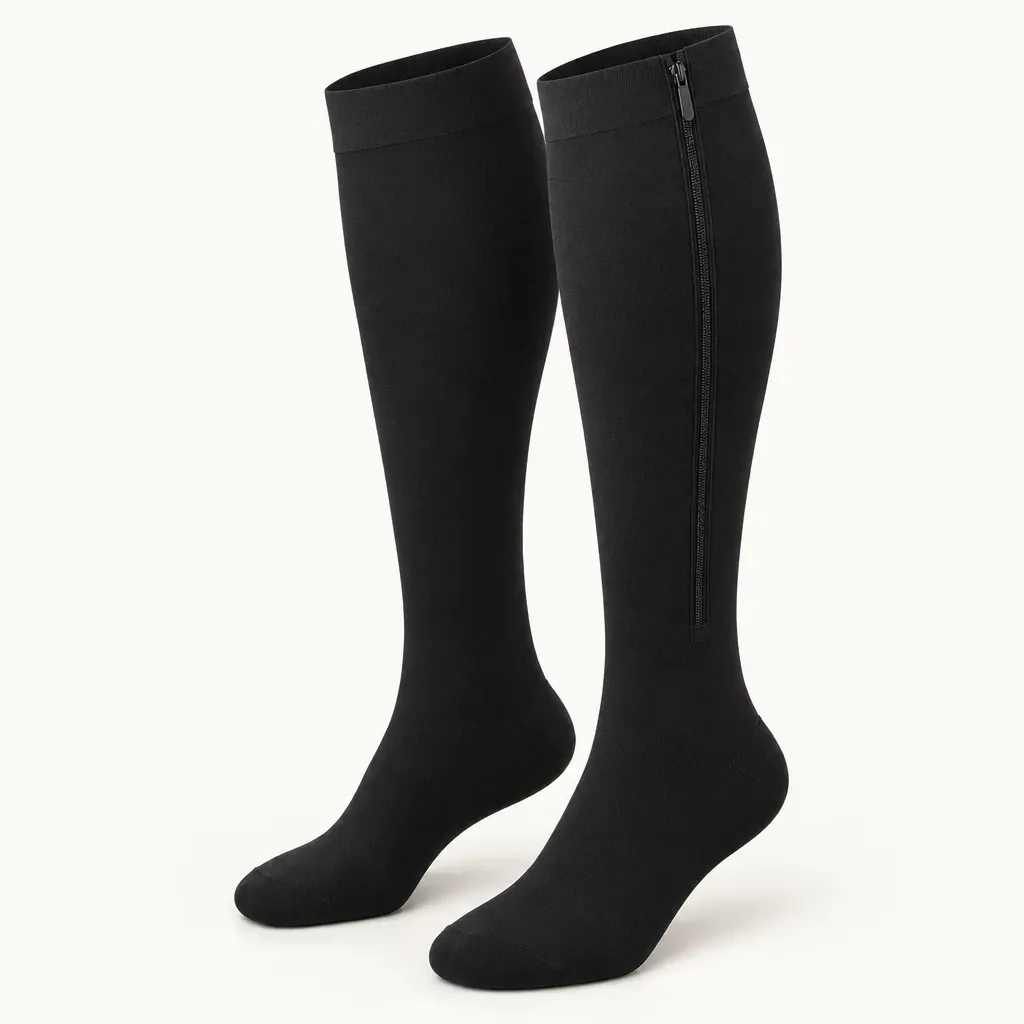
Our 15-20 mmHg options include the ZipperSocks closed-toe zipper socks, a brand we stock, and our cotton-blend knee-highs for sensitive skin.
Firm compression (20-30 mmHg)
Firm compression gives noticeably stronger support. It is harder to put on, and some people find it too much for all-day wear at first.
People often use it when:
- Swelling is more noticeable than moderate socks seem to help with
- Their doctor has suggested firmer support
- They have worn moderate compression comfortably and want more
Because firm compression presses harder, it is worth checking with your doctor before you start, especially if you have any of the conditions in the caution box below. We carry two firm styles: our firm zipper compression socks and our firm knee-high compression socks, both in the 20-30 mmHg class. The knee-highs come in sizes S to 7XL.
A word of caution. Check with your doctor before wearing compression if you have peripheral artery disease, heart failure, fragile skin or open sores, or reduced feeling in your feet.
Extra firm (30-40 mmHg): a job for your clinician
If your doctor mentions 30-40 mmHg, or a "class 2" or "class 3" garment, that is a medical level. Cleveland Clinic describes it as medical-grade compression that is usually only available by prescription and should be used under a doctor's supervision.
At this level, measurements and fitting are done by a trained fitter, and the garment is chosen for your specific condition. It is not something to buy online based on a guess, which is why we do not sell it. If you have been told you need this level, your doctor or a medical supply store can arrange it.
How to choose: a simple decision guide
- Has your doctor given you a level? Use that level. If it is 30-40 mmHg, get it fitted by a professional.
- Is this your first pair, for tired legs? Start with light or moderate compression.
- Is the swelling new, one-sided, painful, red or warm? See a doctor before buying anything. Our guide on when to see a doctor about leg swelling lists the signs.
- Do you wear moderate socks comfortably but want more support? Ask your doctor about moving to firm.
- Is getting socks on already a struggle? Choose a zipper style, use a donner, or stay at a level you can manage. A sock that stays in the drawer does nothing.
Signs a level is too firm for you
Cleveland Clinic advises taking compression socks off and calling your provider if you have pain, numbness, tingling, skin discoloration or worsening swelling. Deep grooves that last long after you take the socks off are also a sign that the size or level is not right.