How to Measure for Compression Socks (Ankle, Calf and Thigh)
To measure for compression socks, wrap a soft tape measure around the narrowest part of your ankle and the widest part of your calf, first thing in the morning before swelling builds. For thigh-high stockings, also measure around the widest part of your thigh. Then match those numbers, not your shoe size, to the brand's size chart.
It takes five minutes and makes a big difference to comfort. Here is exactly how to do it, with tips for measuring someone else.
Mentioned in this article
-
-
-
Why measuring matters more than shoe size
Compression socks squeeze by a set amount at the ankle and gradually less up the leg. That only works if the sock matches the size of your leg. Too small, and the top band can dig in like a rubber band, which is uncomfortable and works against the point of the sock. Too big, and the sock gives little support and tends to slide down and wrinkle.
Cleveland Clinic advises getting measured so you get the right size, rather than picking a pair off the rack. A pharmacist or medical supply store can measure you if you prefer, and MedlinePlus suggests the same. Many people do it well at home with a soft tape and a helper.
When to measure
Measure in the morning, ideally soon after you get up, before you have been on your feet for long. Legs that swell during the day are at their slimmest after a night lying flat. Cleveland Clinic and MedlinePlus both recommend putting compression on in the morning before swelling builds, so the sock should fit your morning leg.
A few more tips:
- Measure bare skin, not over trousers or socks.
- Sit on a chair with your foot flat on the floor and your knee bent at a right angle, or stand if that is easier for you.
- If your legs are different sizes, measure both and use the larger leg, or ask your doctor if they differ a lot. A big difference between legs is worth mentioning to your doctor anyway.
- If you have been very swollen recently, wait until the swelling has settled, or ask your doctor before buying.
What you need
- A soft, flexible tape measure (the sewing kind, not a metal one)
- A pen and paper
- A sturdy chair
- A helper, if bending is hard
If you do not have a soft tape, a piece of string or ribbon works. Wrap it around, mark where it meets with a pen, then lay it flat against a ruler.
Measuring your ankle
Find the narrowest part of your lower leg, just above the ankle bone. This is usually an inch or two above the bony bump on the side of your ankle.
- Wrap the tape around the leg at that point, keeping it level with the floor.
- The tape should lie flat and snug against the skin without pressing in.
- Read the number where the tape overlaps and write it down.
The ankle number matters because that is where a graduated sock is tightest. If you only take one careful measurement, make it this one.
Measuring your calf
Find the widest part of your calf. For most people it is roughly halfway between the ankle and the back of the knee, but feel for the fullest point rather than guessing.
- Wrap the tape around the fullest part of the calf, level with the floor.
- Keep it snug but not tight.
- Write down the number.
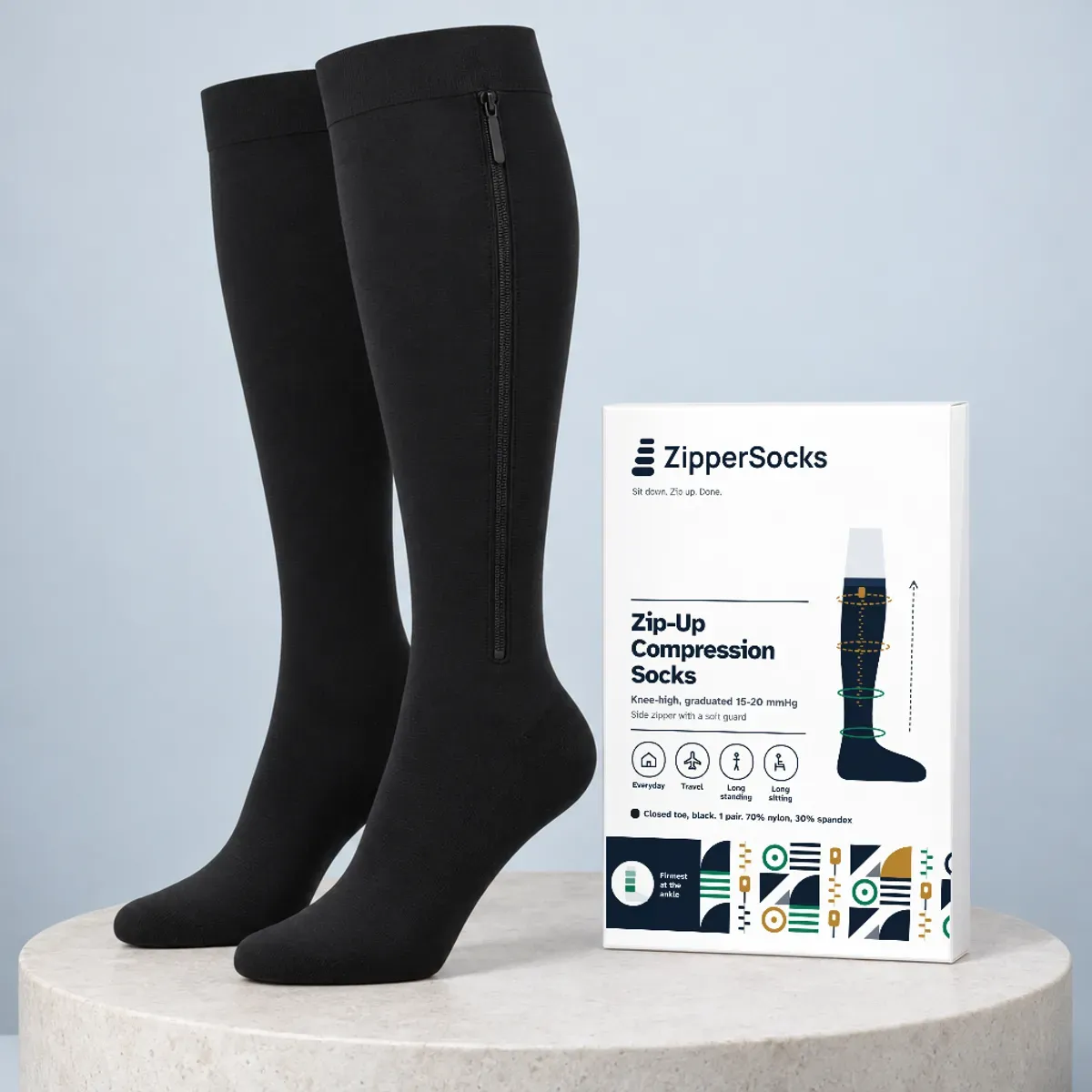
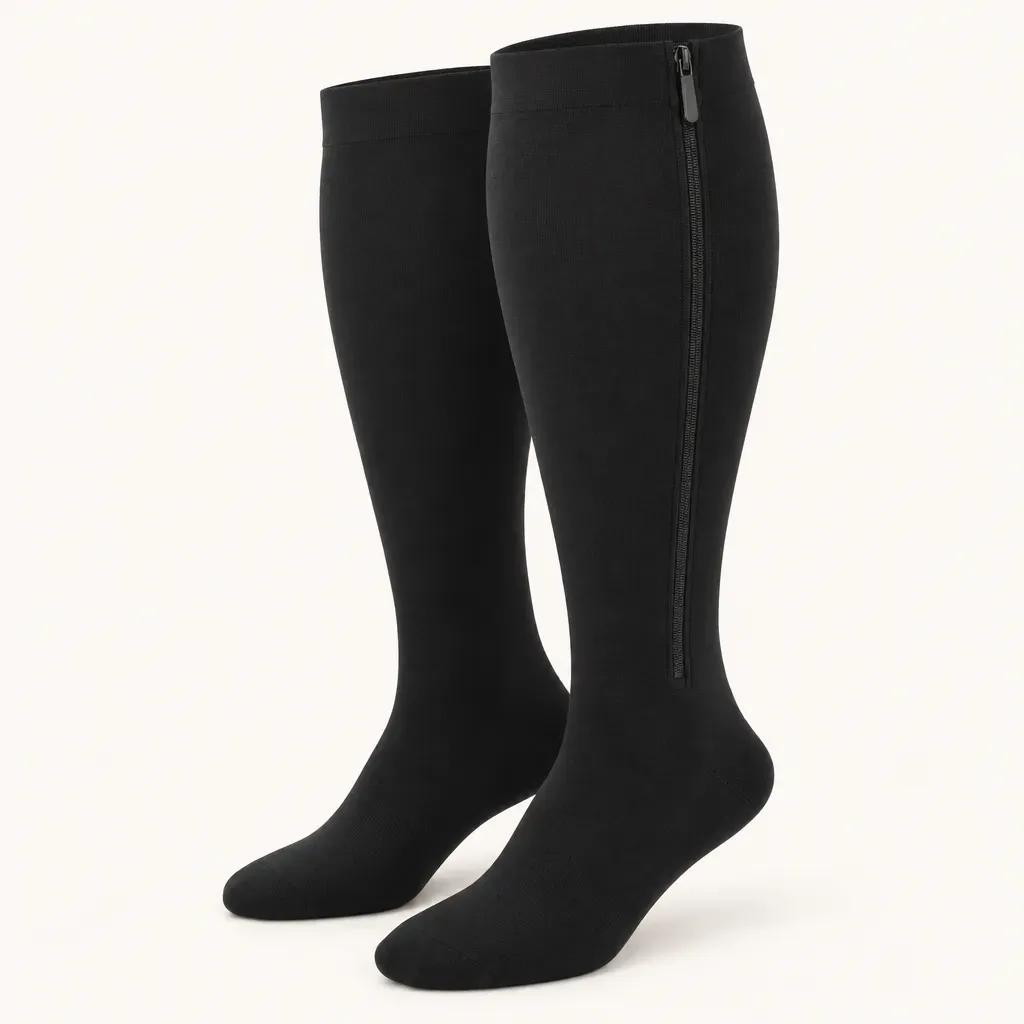
Many size charts, including the ones for the zipper socks we carry, size mainly by calf. The ZipperSocks range runs from M to 3XL for calves of about 8 to 20 inches. If your calf is larger, our wide-calf zipper socks go up to 7XL.
Leg length for knee-highs
Some charts also ask for the length from the floor to the bend of the knee. MedlinePlus notes that knee-length stockings should come to about two fingers below the knee bend, so a sock that is too long will bunch behind the knee.
Measuring your thigh, for thigh-high stockings
If you are buying thigh-highs, you also need the thigh measurement.
- Stand, if you safely can, with your weight on both feet.
- Measure around the widest part of the upper thigh, usually a few inches below the crease of the buttock.
- Write down the number.
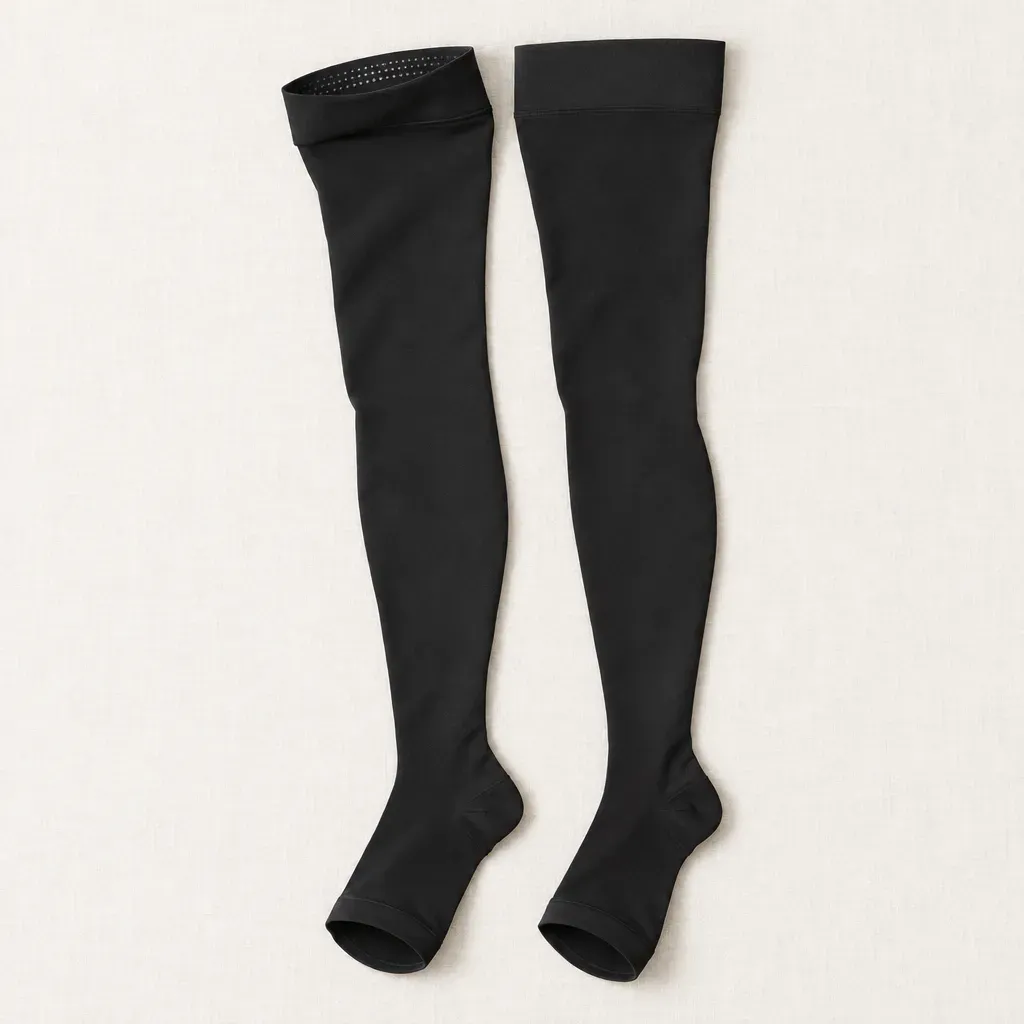
The thigh number is what decides whether the silicone grip band sits comfortably or rolls. Our open-toe thigh-high stockings list thigh ranges for each size. For more on choosing length, see thigh-high vs knee-high compression.
Reading the size chart, and what to do between sizes
Compare your numbers with the brand's chart. Every brand sizes a little differently, so always use the chart for the exact sock you are buying. Ours is on the sizing guide page.
| Situation | What to do |
|---|---|
| Ankle and calf both fit one size | Choose that size |
| Calf fits one size, ankle another | Go by the measurement the chart lists first (often calf), and check the other is close |
| Right on the line between two sizes | Many people choose the larger size for comfort, especially if swelling varies |
| Calf above the largest size | Look at wide-calf or plus-size styles |
| Measurements far outside any chart | Ask your doctor or a fitter about custom garments |
If a new pair digs in at the top, rolls down, or leaves deep grooves, the size is probably wrong. All our socks have 30-day returns, so you can exchange for a better fit.
A word of caution. Check with your doctor before wearing compression if you have peripheral artery disease, heart failure, fragile skin or open sores, or reduced feeling in your feet.
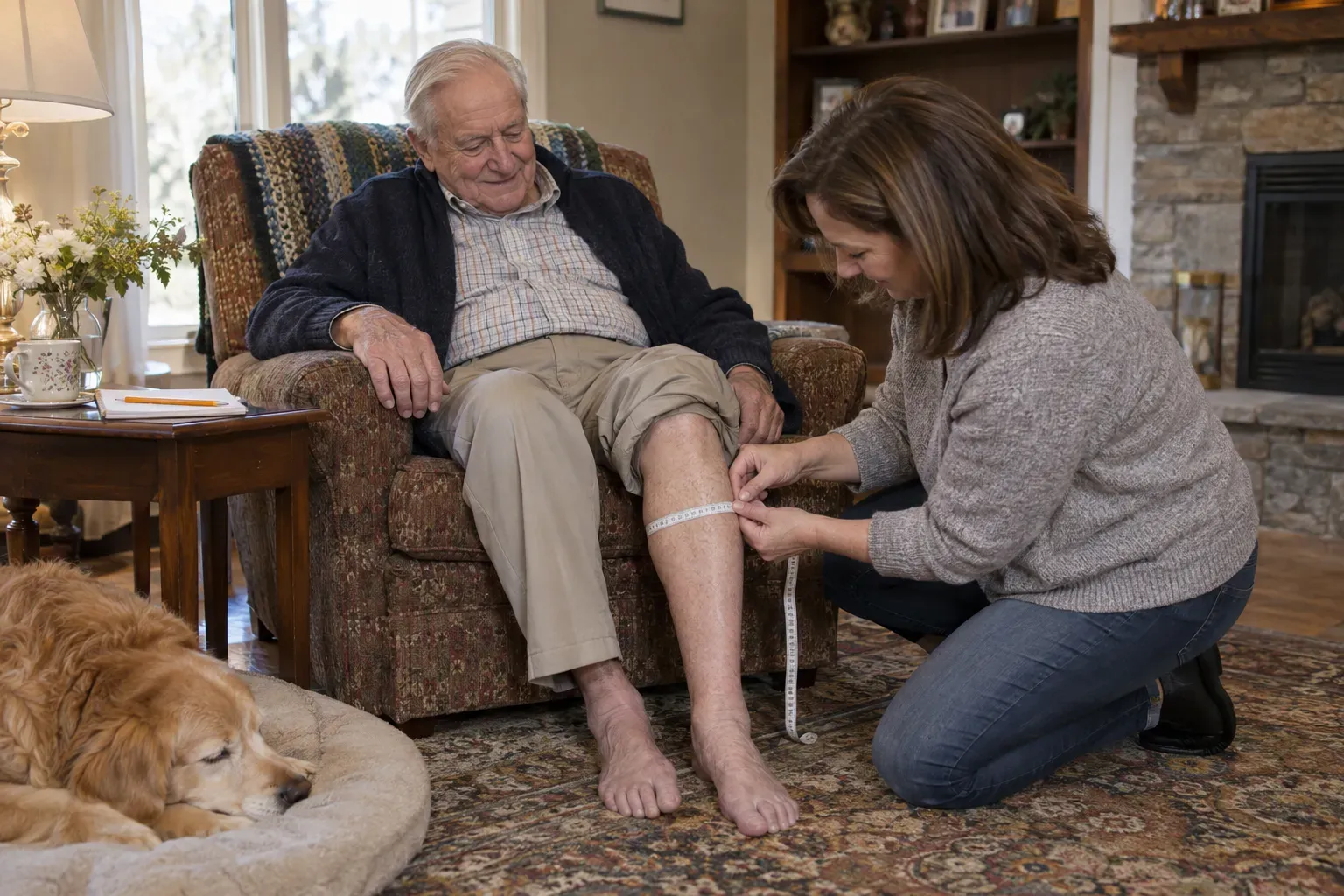
Measuring a parent or partner
Measuring someone else is often easier than measuring yourself.
- Have them sit in a sturdy chair with both feet flat on the floor.
- Kneel or sit on a low stool so you are at leg height.
- Measure both legs. Write each number down straight away, labeled left and right.
- Ask if any spot is tender before you wrap the tape.
- Look at the skin while you are there. Redness, sores, or a leg that is much larger than the other are worth raising with their doctor before buying compression.
When to measure again
Legs change. It is worth measuring again before you reorder, and sooner if you have gained or lost weight, if swelling has changed, or if your doctor has adjusted a medicine that affects fluid. MedlinePlus suggests replacing compression stockings every 3 to 6 months, which is a natural time to check that the size is still right.
How to measure for compression socks: quick steps
- Measure in the morning. Measure soon after getting up, on bare skin, sitting with your foot flat on the floor and your knee bent.
- Measure the ankle. Wrap the tape around the narrowest part of the leg just above the ankle bone, level and snug without pressing in. Write it down.
- Measure the calf. Wrap the tape around the widest part of the calf, level with the floor. Write it down.
- Measure the thigh if needed. For thigh-high stockings, measure around the widest part of the upper thigh while standing.
- Match the chart. Compare your numbers with the size chart for the exact sock you are buying. If you are between sizes, many people choose the larger size.