Compression Socks for Sensitive Skin: Fabrics, Seams and Skin Care
If your skin is dry, thin or easily irritated, look for compression socks with a soft cotton-blend lining, flat seams, a smooth top band, and the lightest level that still feels supportive. Pair them with a simple routine: moisturize at night, let skin dry fully before socks go on, and check your legs each evening.
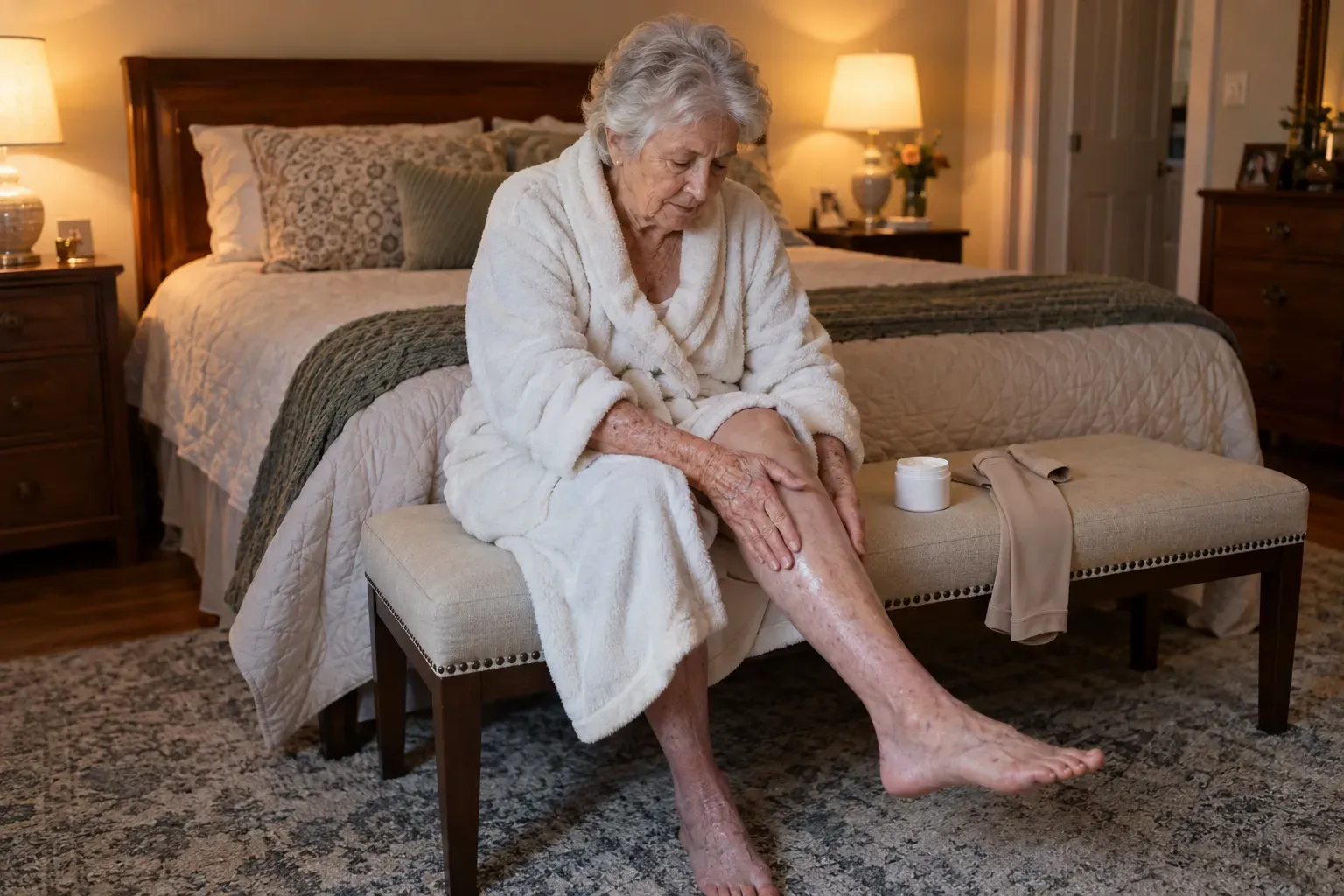
Skin naturally gets drier and more fragile with age, so a little care goes a long way. Here is what to look for and how to keep your skin comfortable.
Mentioned in this article
Why skin gets more sensitive with age
The National Institute on Aging notes that skin changes as we get older: it tends to become thinner and drier, and many older people have dry, itchy patches, especially on the lower legs. Thinner skin can also bruise or tear more easily.
A compression sock sits close against that skin all day. Most people wear compression comfortably, but if your skin is dry or fragile, the choice of fabric, the seams and the fit all matter more than usual.
Cleveland Clinic advises not wearing compression socks over open wounds, skin infections, or extremely fragile skin, and asking a provider first if you have any of those.
A word of caution. Check with your doctor before wearing compression if you have peripheral artery disease, heart failure, fragile skin or open sores, or reduced feeling in your feet.
Fabrics that feel kinder
Compression needs elastic fibers to work, so no compression sock is pure cotton. What you can choose is a blend with more natural fiber against the skin.
- Cotton blends feel softer and more breathable to many people with dry or sensitive skin. The American Academy of Dermatology suggests cotton clothing for dry skin and notes that wool and some synthetic fabrics can irritate it.
- Smooth synthetic knits are thinner and slide on more easily, but some people find them warmer.
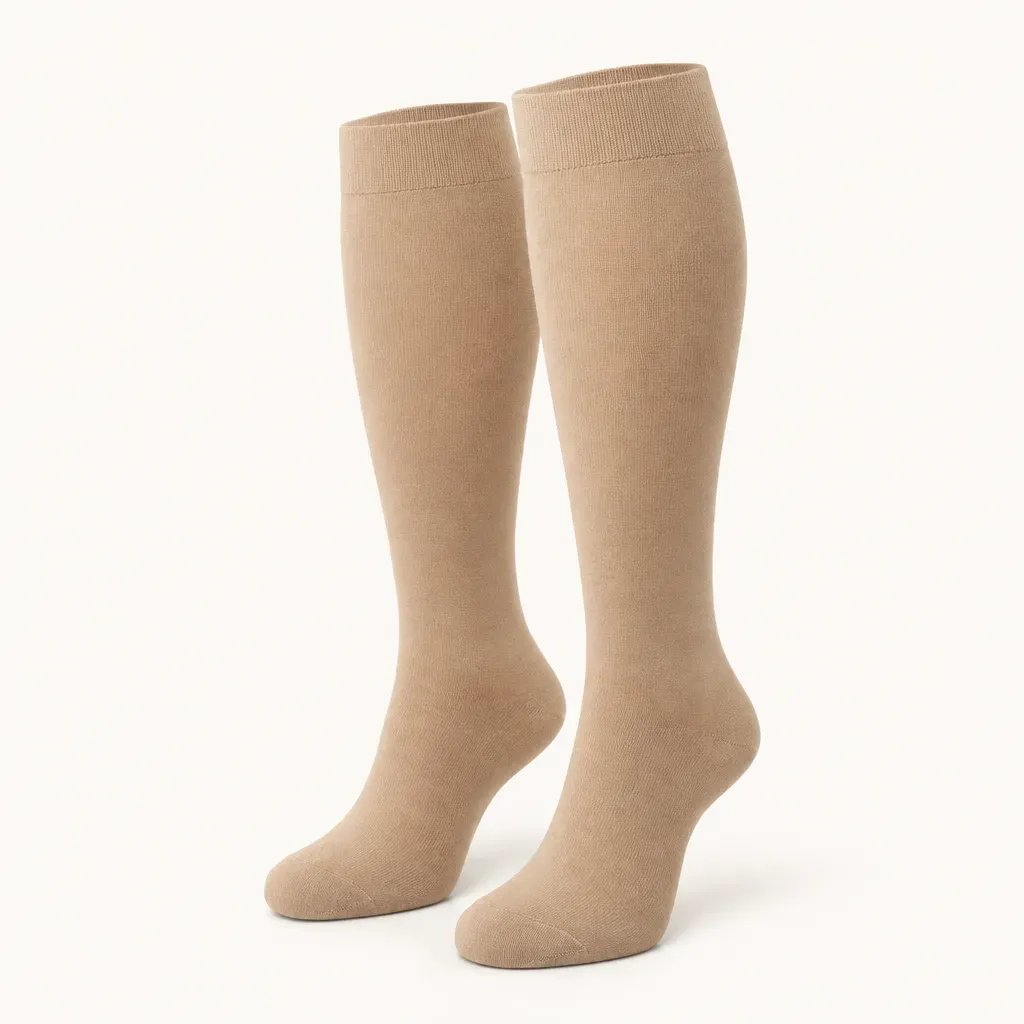
Our cotton-blend knee-high compression socks are made with sensitive skin in mind. They are 15-20 mmHg, beige, in open or closed toe, sizes S to 3XL. You can see similar options in our sensitive skin collection.
Seams, toes and top bands
Toe seams
A thick seam across the toes can rub, especially on curled toes or bunions. Look for a flat, low-profile toe seam, or choose an open-toe sock so there is no seam over the toes at all.
Top bands
The band below the knee is where most irritation happens. A wide, soft band spreads the pressure. A narrow, tight band, or a sock that is too small, can leave a deep groove. Never fold the top down, which doubles the pressure. MedlinePlus also advises not letting stockings bunch up or wrinkle.
Silicone grip bands
Thigh-high stockings use a silicone band to stay up. Many people wear them happily, but silicone can bother very sensitive skin. If you get itching or redness under the band, try a knee-high instead, or ask your doctor. See thigh-high vs knee-high compression for more.
Zippers
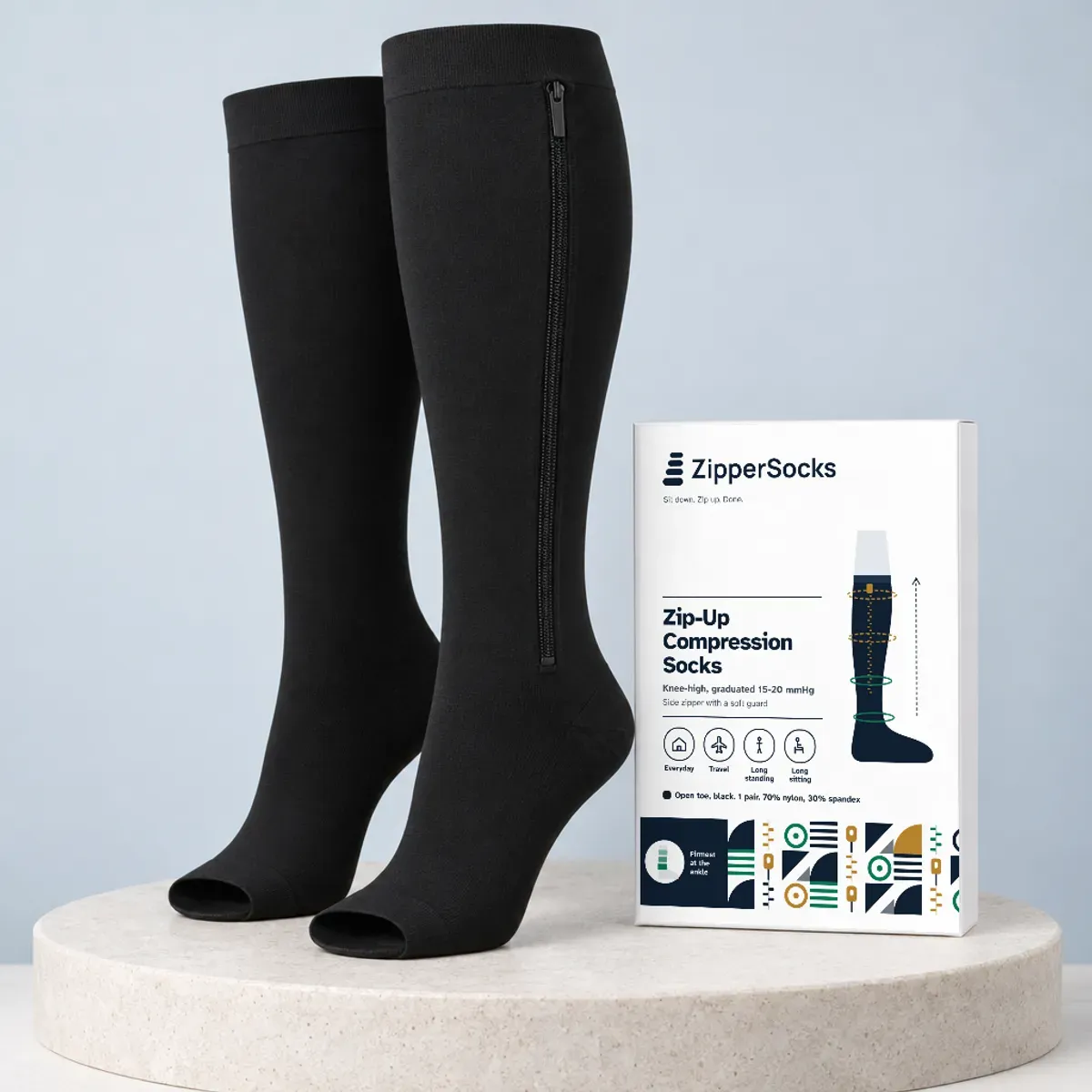
Zipper socks should have a soft fabric guard between the zipper and your skin. Check that it lies flat each time.
Choosing the right level for delicate skin
Firmer compression presses harder on the skin and takes more effort to pull on, which can drag on fragile skin. If your skin is sensitive:
- Start with light or moderate compression, unless your doctor has advised a specific level.
- Choose the right size. A sock that is too small presses harder than its label.
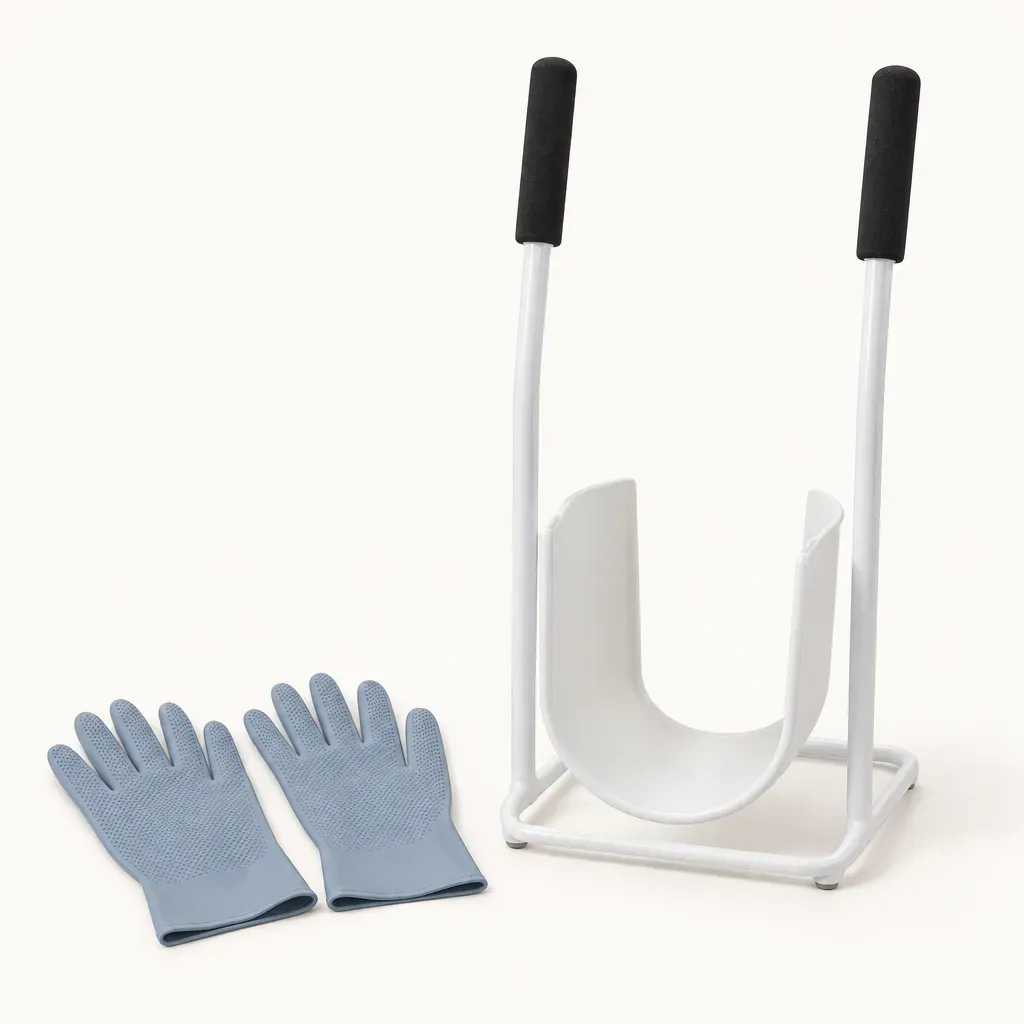
- Consider a zipper or a donner, so you are not dragging the fabric over your skin. Our Easy-On Kit includes a frame donner and donning gloves.
Our guide to choosing mmHg explains the levels in more detail.
A simple skin-care routine around compression
At night
- Take your socks off at bedtime.
- Wash your legs with warm, not hot, water and a gentle cleanser. Pat dry rather than rubbing.
- Apply a moisturizer. The American Academy of Dermatology suggests creams or ointments, which hold in more moisture than lotions, and fragrance-free products. The Kingston and Richmond NHS leaflet also advises avoiding perfumed products.
In the morning
- If you moisturize in the morning, use a light layer and let it dry fully. MedlinePlus advises letting lotion dry before putting stockings on, and NHS fitting advice is to wait until the skin is dry.
- Put socks on carefully, with rubber gloves if your nails or rings might catch.
- Smooth out any wrinkles.
Moisturizing at night means the cream has hours to soak in, and your socks go on easily over dry skin in the morning.
Putting socks on without dragging fragile skin
Thin skin is most at risk not from wearing compression, but from the tugging that goes into getting it on and off. A few changes make that much gentler:
- Keep nails short and smooth, and take off rings, which can catch both the fabric and the skin.
- Wear rubber gloves. MedlinePlus suggests rubber gloves to help adjust and smooth stockings, and they let you move the fabric with flat palms instead of pinching.
- Turn the sock inside out to the heel so you only ease it up, rather than dragging the whole length over your shin.
- Use a little powder on dry legs, which MedlinePlus mentions can help stockings slide on.
- Consider a zipper style, such as the ZipperSocks open-toe zipper socks we stock, so the sock closes around the leg instead of being pulled over it.
- Take socks off slowly, peeling them down inside out rather than pulling from the toe.
Checking your skin each day
A quick look each evening, when the socks come off, is the most useful habit for sensitive skin. Use a mirror, or ask a family member, for the backs of the legs and heels.
| What you see | What it usually means |
|---|---|
| Faint knit pattern that fades within an hour | Normal |
| A groove below the knee that lasts | Band too tight or sock too small |
| Red, itchy patch under a band or seam | Rubbing or irritation; try a different style and tell your doctor if it lasts |
| Dry, flaky skin | More moisturizer at night |
| Broken skin, a sore, or a blister | Stop wearing compression on that leg and contact your doctor |
The Kingston and Richmond NHS leaflet advises reporting any new wounds or skin changes, such as redness or itching, to your doctor or nurse straight away.
When to stop and call your doctor
Take compression socks off and contact your doctor if you notice:
- Pain, numbness or tingling
- Toes that look pale, blue or dusky
- Broken skin, sores, or blisters
- A red, warm, swollen area
- Swelling that is getting worse
Cleveland Clinic lists pain, numbness, tingling, skin discoloration and worsening swelling as reasons to remove compression socks and call a provider. If the problem is only fit or comfort, we offer 30-day returns, and we are happy to help you choose a different style through our contact page.