How to Put On Compression Socks When You Have Arthritis
With arthritis, the easiest way to put on compression socks is to stop relying on your fingers: use rubber gloves to grip, a frame donner to hold the sock open, or a zipper style that opens down the side. Sitting down, working in the morning, and turning the sock inside out to the heel make every method easier.
Here is how each approach works, step by step, and how a family member or care partner can help without taking over.
Mentioned in this article
Why compression socks are hard with stiff hands
A compression sock is meant to be snug. Getting it over the heel takes a pinch grip and a good pull, which is exactly the movement that sore knuckles and stiff thumbs find hardest. Bending forward to reach your feet can also be uncomfortable with stiff hips, knees or back.
The good news is that almost every step can be done with your palms, a gadget, or a change of position. The aim is to save your fingers for smoothing, not pulling.
Before you start: set yourself up
- Sit down. Use a sturdy chair with arms, or the edge of the bed with both feet flat on the floor. Never try this standing on one leg.
- Do it in the morning. MedlinePlus suggests putting compression stockings on first thing, before you get out of bed, while your legs are least swollen.
- Dry skin, not damp. If you use lotion, let it dry fully first. MedlinePlus also mentions a little baby powder or cornstarch on the legs to help the sock slide.
- Take off rings and watches. They can snag the fabric.
- Warm your hands. The Arthritis Foundation notes that running hands under warm water can help ease stiffness. Many people find their hands loosen up after a few minutes.
Method 1: the inside-out roll, with rubber gloves
This is the classic method, made easier with grippy gloves. MedlinePlus and NHS fitting leaflets both suggest rubber gloves because they let you move the fabric with your palms rather than pinching.
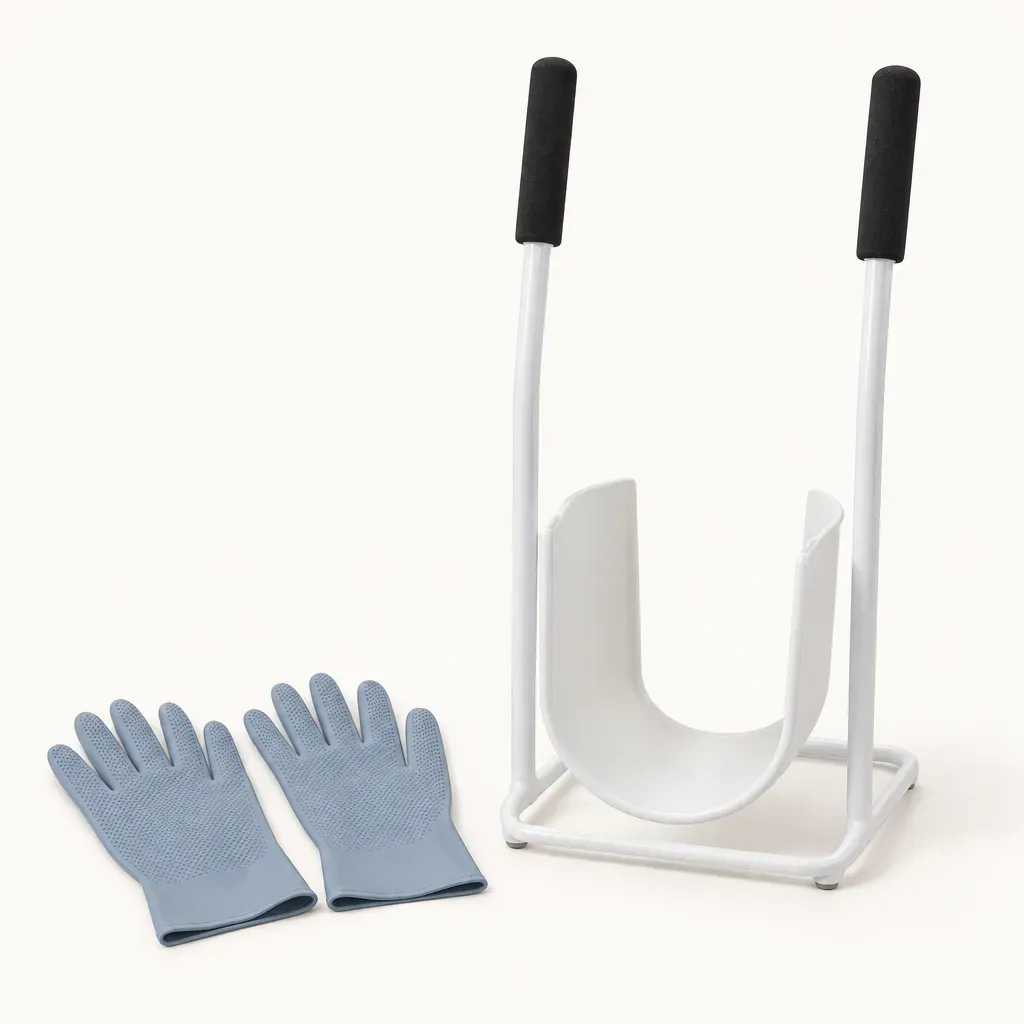
- Put on a pair of rubber gloves. Ordinary dishwashing gloves work, or use dedicated donning gloves.
- Reach inside the sock, grab the heel, and pull the sock inside out down to the heel. You now have a foot pocket with the leg folded back over it.
- Slip your toes and foot into the pocket and settle the heel into place.
- Using flat palms, ease the rest of the sock up your leg a little at a time. Do not tug from the top band.
- Rub upward along the leg with gloved palms to smooth out wrinkles. The sock should sit about two fingers below the bend of your knee.
If you cannot reach your foot comfortably, skip to method 2.
Method 2: a frame stocking donner
A frame donner is a simple metal or plastic frame that holds the sock open, so your foot does the work instead of your hands. MedlinePlus describes it as a gadget that helps slide the stocking over your foot.
- Set the donner on the floor in front of your chair.
- Stretch the sock over the frame, heel facing out, with the foot part hanging down inside.
- Slide your foot down into the sock while it is held open.
- Pull the donner's handles up toward your knee. The sock rolls off the frame onto your leg.
- Remove the frame and smooth the sock with gloved hands.
Our Easy-On Kit includes a frame donner and rubber donning gloves together. A donner takes a few tries to get the knack of, so practice once or twice when you are not in a hurry.
Method 3: zipper compression socks
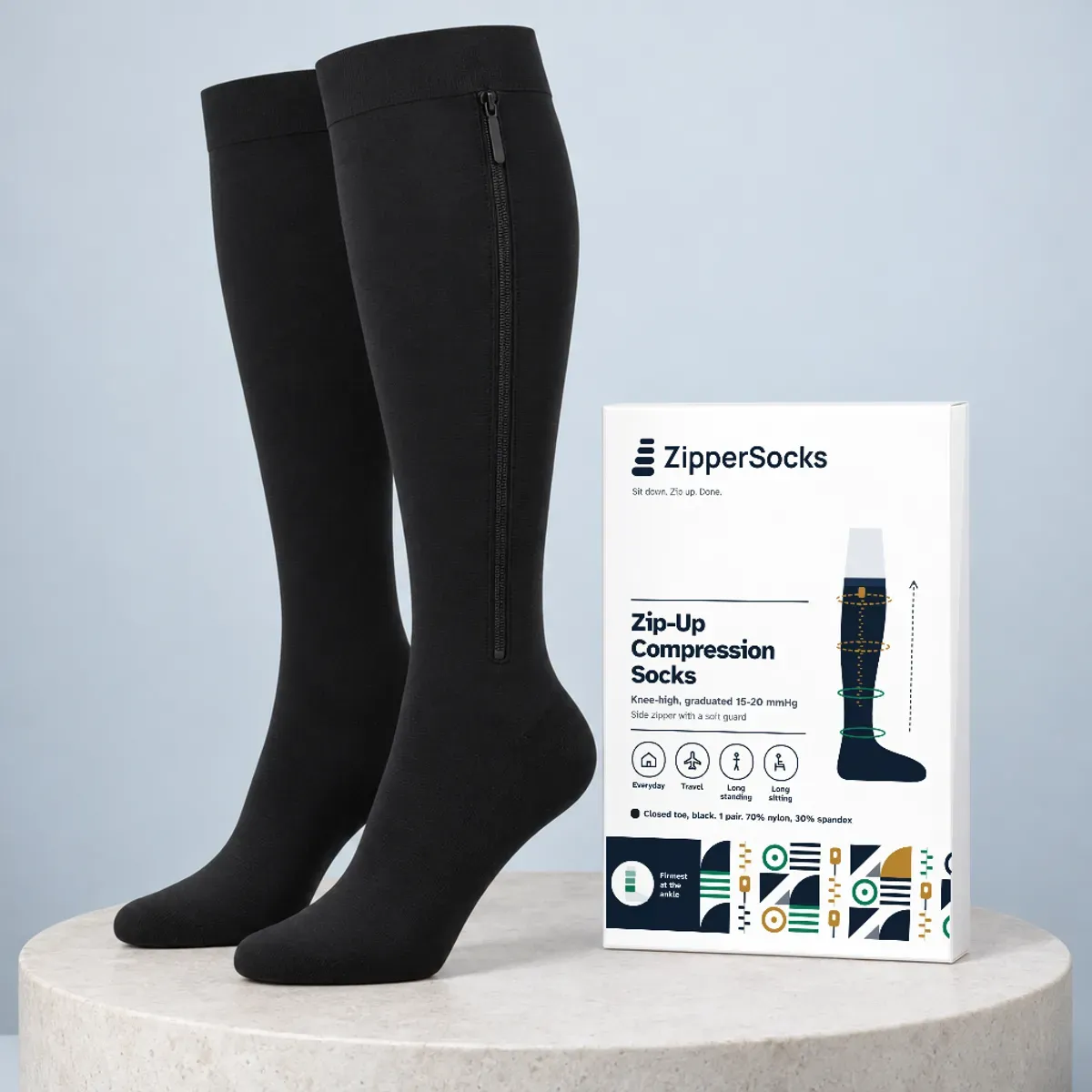
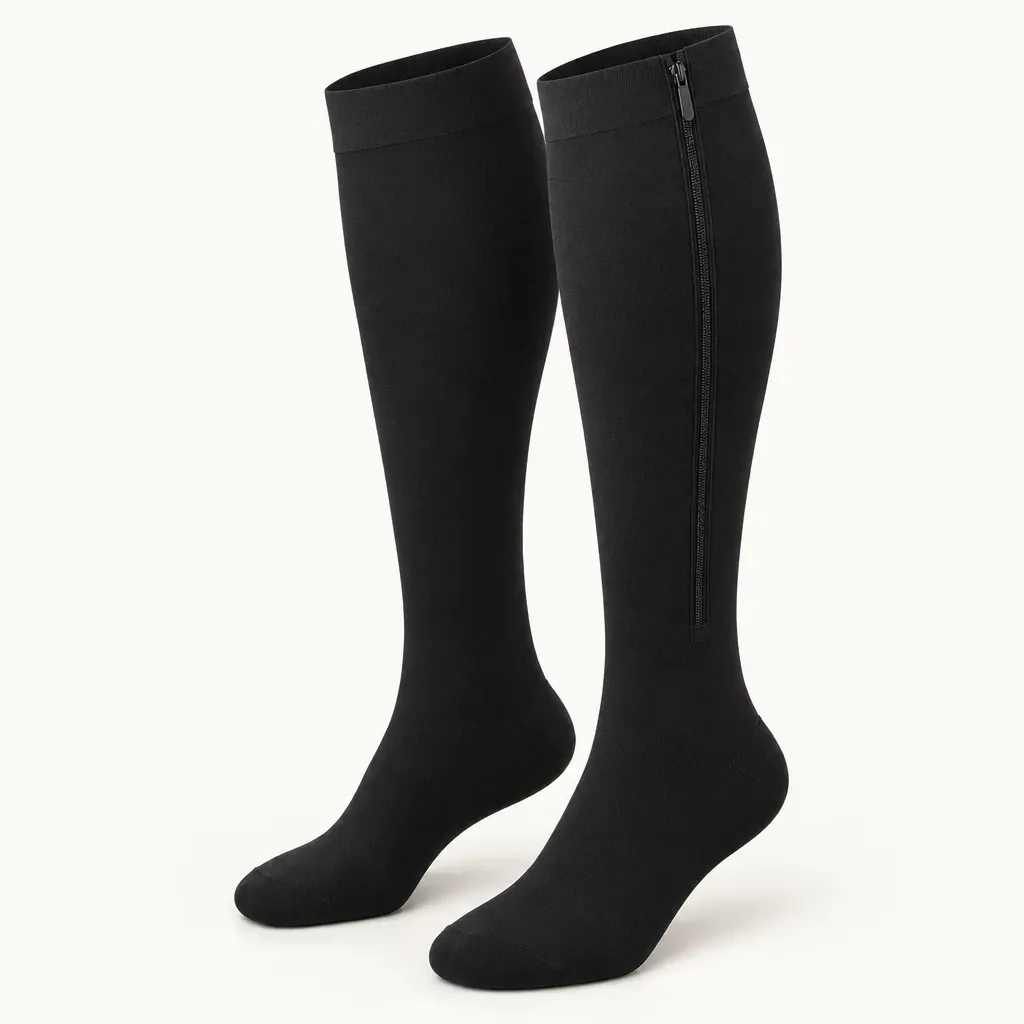
For many people with arthritis in the hands, a zipper is the simplest answer. You open the sock along its full length, put your foot in, line it up, and close the zipper from ankle to knee.
- Close the zipper partway at the ankle first so the sock grips, then zip upward.
- Look for a soft fabric guard behind the zipper so the teeth do not touch your skin.
- A large pull tab, or a key ring threaded through it, is easier to hold than a tiny slider.
The ZipperSocks closed-toe zipper socks (a brand we stock) are 15-20 mmHg and have a fabric guard along the zipper. For firmer support, the firm zipper compression socks are in the 20-30 mmHg class. Zippers have trade-offs too, which we cover honestly in zipper vs regular compression socks.
Taking them off at night
Removing compression socks is usually easier, but it still helps to have a plan.
- Sit down again. Wear gloves if your grip is weak.
- Push the top of the sock down with your palms, turning it inside out as it goes.
- Once it is past the heel, slide it off the toes.
- A reacher-grabber or a long-handled shoe horn can help ease the sock off the heel if bending is hard.
- With a zipper sock, simply unzip and lift it away.
Look at your skin while the sock is off. Light marks from the knit are normal and fade quickly. Redness that stays, sore spots or broken skin are worth mentioning to your doctor.
How a care partner can help
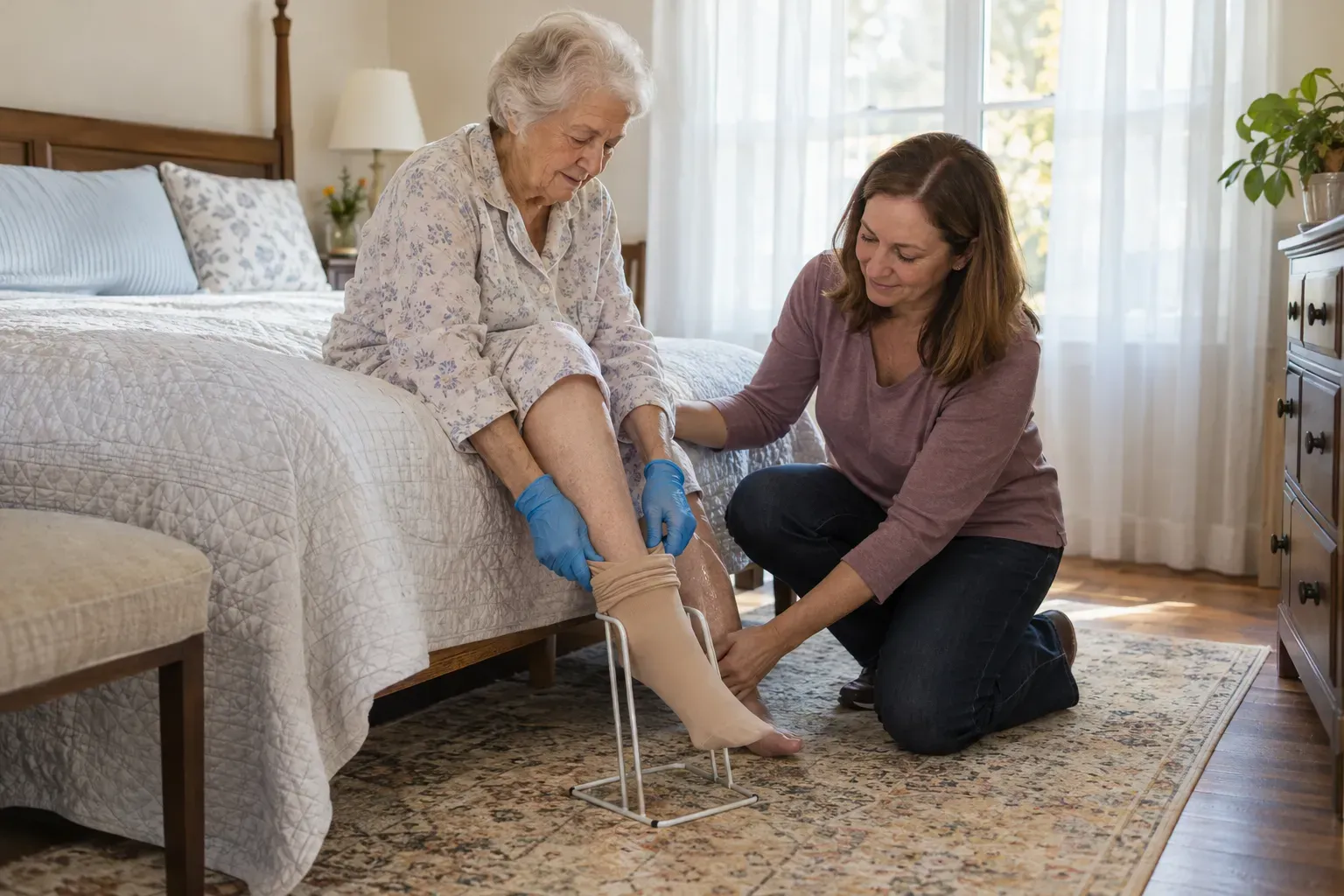
Many adult children and spouses end up helping with compression socks. A few things make it go smoothly for both of you:
- Ask what they want help with. Some people only need the sock turned inside out or the donner loaded, and prefer to do the rest themselves.
- Have them sit, you kneel. Keep their foot on a low stool or your knee, not lifted high.
- Use gloves yourself. Rubber gloves help you ease the sock up evenly instead of pulling one spot.
- Check for wrinkles at the ankle and behind the knee. These are the spots that rub.
- Do a quick skin check together in the evening, especially on the heels and shins.
If daily help is not available, a zipper style or a donner can make someone fully independent again.
When to ask for more help
If you still cannot get your socks on after trying these methods, tell your doctor. They may suggest a different length or level, or refer you to an occupational therapist, who can recommend tools and techniques for your hands and joints.
Cleveland Clinic advises taking compression socks off and calling your provider if they cause pain, numbness, tingling, skin discoloration, or worsening swelling.
A word of caution. Check with your doctor before wearing compression if you have peripheral artery disease, heart failure, fragile skin or open sores, or reduced feeling in your feet.
For a general walk-through without arthritis in mind, see our page on how to put on compression socks.
How to put on compression socks with arthritis using a donner: quick steps
- Sit and prepare. Sit in a sturdy chair with both feet flat on the floor, first thing in the morning, with dry skin. Put on rubber gloves.
- Load the donner. Stretch the sock over the frame donner with the heel facing out and the foot part hanging inside the frame.
- Step in. Set the donner on the floor and slide your foot down into the sock while the frame holds it open.
- Pull up. Hold the donner handles and pull upward toward your knee so the sock rolls off the frame onto your leg.
- Smooth and check. Remove the frame and rub upward with gloved palms to smooth wrinkles. The top should sit about two fingers below the knee bend.