When to See a Doctor About Leg Swelling: The Signs to Know
See a doctor promptly if swelling is in one leg only, comes on suddenly, is painful, red or warm, or keeps getting worse. Call 911 straight away if leg swelling comes with shortness of breath, chest pain or pressure, or coughing up blood.
Mild swelling in both ankles that goes down overnight is very common and usually not an emergency. This guide explains the difference calmly and plainly, so you and your family know what to watch for and when to act.
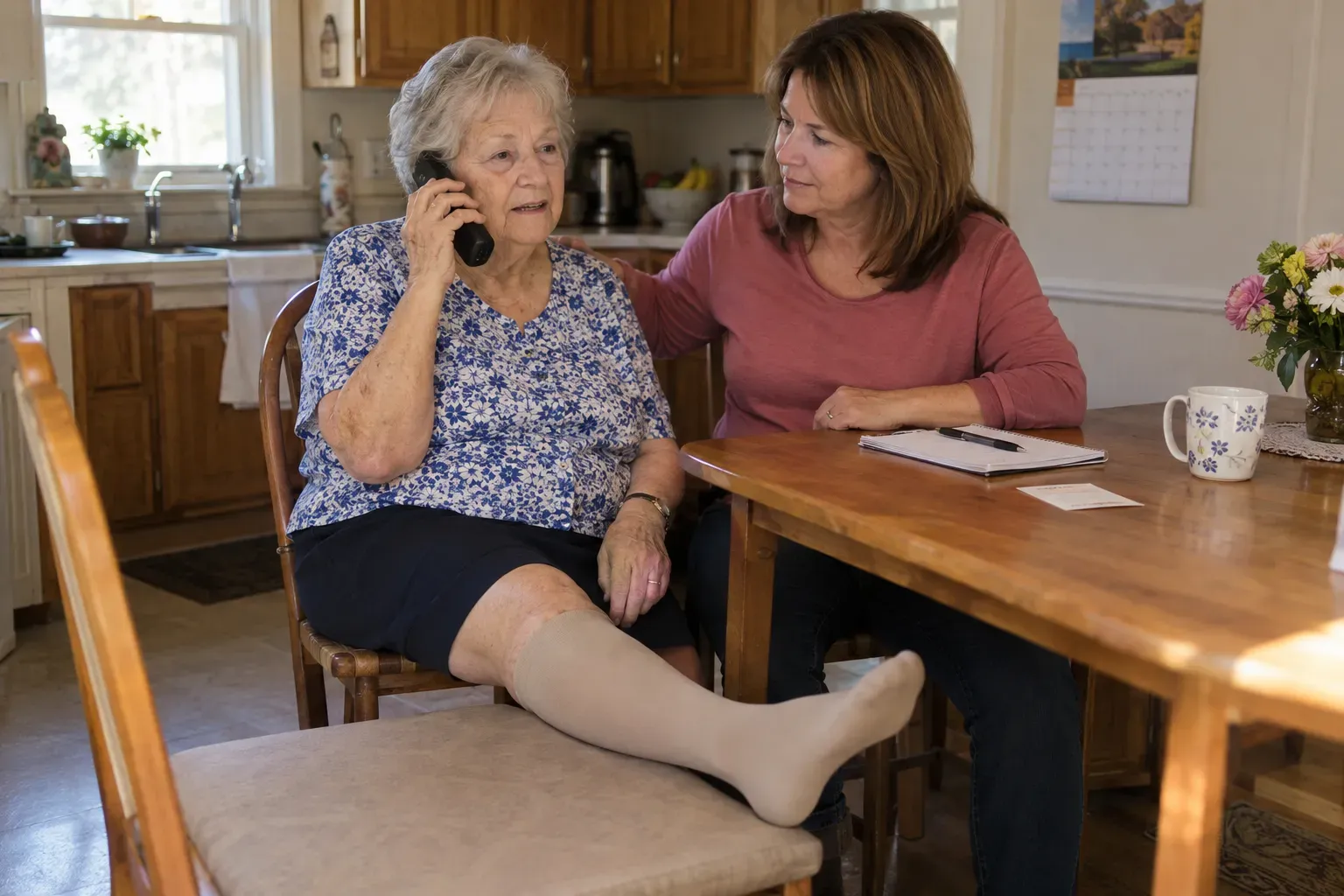
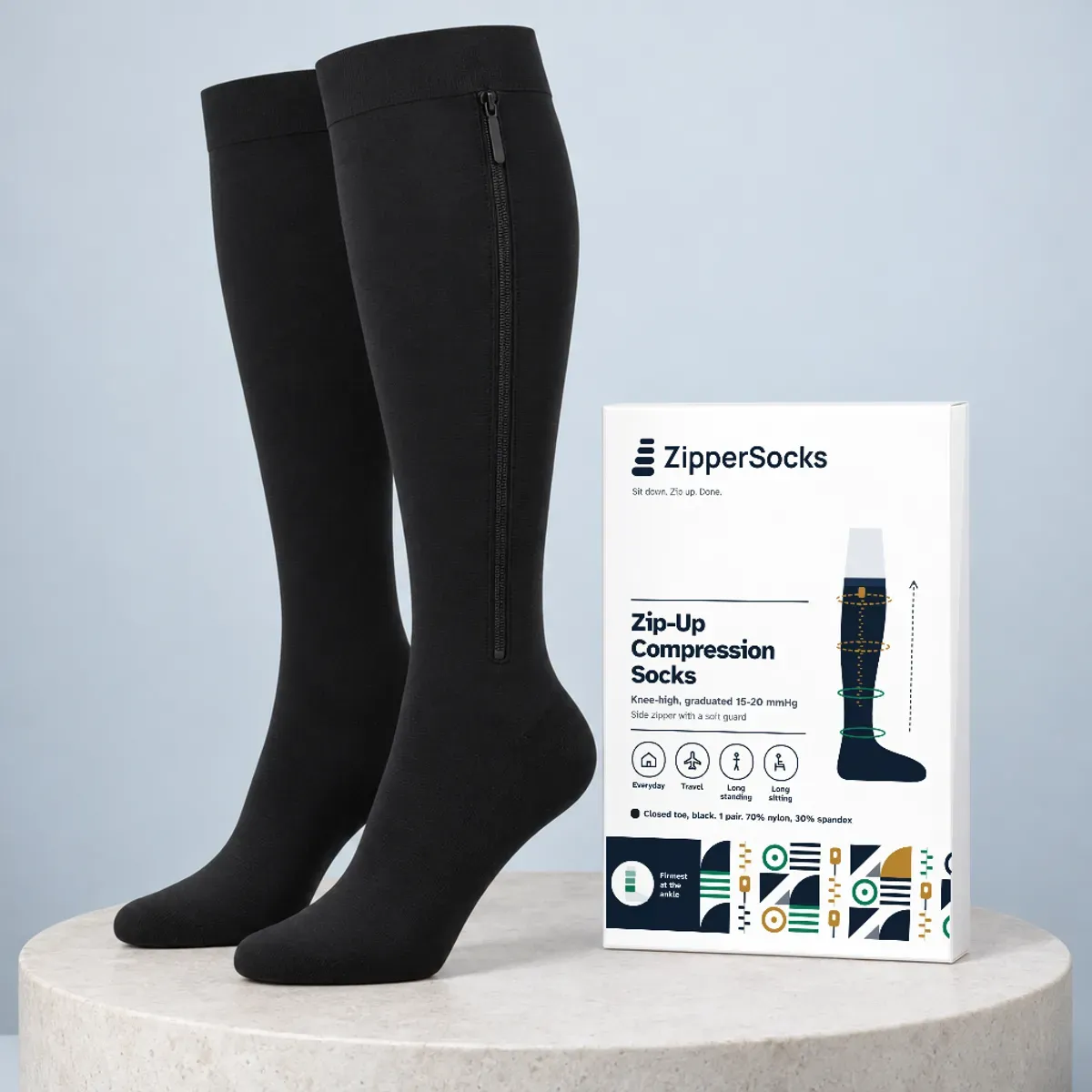
Everyday swelling vs swelling to watch
The NHS describes most swelling in the ankles, feet and legs as caused by fluid build-up from everyday things: sitting or standing still for too long, warm weather, salty food, extra weight, or certain medicines. It often goes away on its own.
| Usually everyday | Needs a doctor's attention |
|---|---|
| Both ankles, about the same | One leg only, with no clear reason |
| Builds slowly through the day | Comes on suddenly |
| Goes down overnight | Stays, or keeps getting worse |
| Not painful | Painful, tender, red or warm |
| You feel otherwise well | Fever, breathlessness, chest discomfort |
The table is a guide, not a diagnosis. If something feels wrong, trust that and call.
Call 911: emergency signs
Call 911 or your local emergency number right away if leg swelling comes with any of these. Do not drive yourself.
- Shortness of breath or difficulty breathing
- Chest pain, tightness or pressure
- Coughing up blood
- A racing or pounding heartbeat
- Feeling faint, lightheaded, confused or clammy
- Sudden swelling of the face, lips, tongue or throat
The NHS explains that breathlessness or chest pain alongside leg symptoms can be a sign of a blood clot that has traveled to the lungs, which needs hospital care straight away. MedlinePlus also advises calling 911 for shortness of breath or chest pain with leg swelling, and Cleveland Clinic lists sudden swelling around the face or mouth from an allergic reaction as an emergency.
Get an urgent appointment: same day or next day
These signs are not always an emergency, but they should not wait for a routine visit. Call your doctor's office and say it is urgent, or use urgent care, if:
- Only one leg, ankle or foot is swollen and there is no obvious reason, such as an injury.
- There is throbbing or cramping pain in one calf or thigh, especially with swelling.
- The skin is red, darker, hot or tender to the touch.
- You have a fever or feel hot, cold or shivery.
- The swelling is severe, came on suddenly, or followed an injury.
- You have diabetes and notice new swelling in your feet, ankles or legs.
- Swelling appears somewhere new, such as the face or belly.
The NHS describes the main signs of a blood clot in the leg, called deep vein thrombosis, as throbbing pain in one leg, swelling in one leg, and red or darkened skin around the painful area. A clot is one of the reasons one-sided swelling needs to be checked quickly. Other causes, such as a skin infection called cellulitis, also need prompt care.
Compression socks are not the answer to any of these signs. Do not put on compression socks to deal with sudden, painful or one-sided swelling. Get it checked first.
Book a regular appointment
These are worth a visit in the next week or so, even if you feel well:
- Swelling in both legs that has not improved after a few days of raising your legs and moving more
- Swelling that is slowly getting worse over weeks
- You have a heart, kidney or liver condition and notice more swelling than usual
- Swelling started after a new medicine or a dose change
- Shoes, socks or rings fitting much more tightly than before
- Skin on the lower legs becoming shiny, stretched, discolored or itchy
MedlinePlus lists heart, kidney and liver problems among the causes of leg swelling, and the NHS notes that some medicines, including certain blood pressure medicines and steroids, can cause it. Do not stop a medicine on your own. Ask your doctor or pharmacist.
The NHS heart failure page notes that swelling in the ankles and legs, along with breathlessness and tiredness, can be among its symptoms. If you are more breathless than usual with activity, or need extra pillows to breathe comfortably at night, tell your doctor.
Helping a parent notice changes
Older adults sometimes play down symptoms or put off calling the doctor. If you help care for a parent, a few gentle habits make changes easier to spot:
- Look at both legs side by side when you visit. One-sided swelling is easier to see when you compare.
- Notice shoes and socks. New marks, shoes left unlaced, or slippers worn all day can be signs of swelling.
- Ask about breathing. Getting winded on the stairs, or sleeping propped up, is worth mentioning to the doctor.
- Keep a simple log. Note which leg, when it started, and whether it goes down overnight. A phone photo each morning helps too.
- Bring a medicine list to appointments, including anything new.
What to tell the doctor
A clear description helps the doctor work out what is going on. Before you call, jot down:
- Which leg or legs, and where (feet, ankles, calves, higher)
- When it started, and whether it came on suddenly or slowly
- Whether it goes down overnight
- Any pain, redness, warmth, or changes in the skin
- Any breathlessness, chest discomfort, or fever
- Recent travel, surgery, injury, or a long period in bed
- Your medicines, including any new ones
- Your health conditions, such as heart, kidney or liver problems
After you have seen the doctor
Once a doctor has looked at your swelling, they may suggest everyday steps such as raising your legs, walking more, and cutting back on salt. They may also suggest compression socks, and tell you what level to use. Cleveland Clinic advises asking your provider before using compression for swelling.
If your doctor is happy for you to wear compression for tired, achy legs or minor swelling, our guides can help:
- What mmHg compression do I need?
- Compression socks for swollen feet and ankles
- How to measure for compression socks
Our swelling and tired legs collection includes light-to-firm options. We do not sell 30-40 mmHg garments, which should be prescribed and fitted by a clinician.
A word of caution. Check with your doctor before wearing compression if you have peripheral artery disease, heart failure, fragile skin or open sores, or reduced feeling in your feet.