Guide
How to put on compression, three easy ways
Compression is snug at the ankle on purpose, which is exactly the part you have to get over your heel. These three methods take most of the struggle out of it. Whichever you use, sit down, and put your socks on in the morning on dry skin.
Method 1: zip them on
The easiest way if your hands are stiff or reaching your feet is hard. Zipper socks open along the side of the calf, so there is no tight tube to stretch over your heel.
Sit down
Use a sturdy chair or the edge of the bed. Rest your foot flat on the floor or on a low stool.
Unzip fully
Open the zipper all the way down to the ankle.
Step in
Slide your toes in and settle your heel into the heel pocket.
Fold the guard flat
Lay the soft fabric guard flat behind the zipper teeth.
Zip up from the ankle
Hold the two edges together with one hand and zip up in short, steady moves.
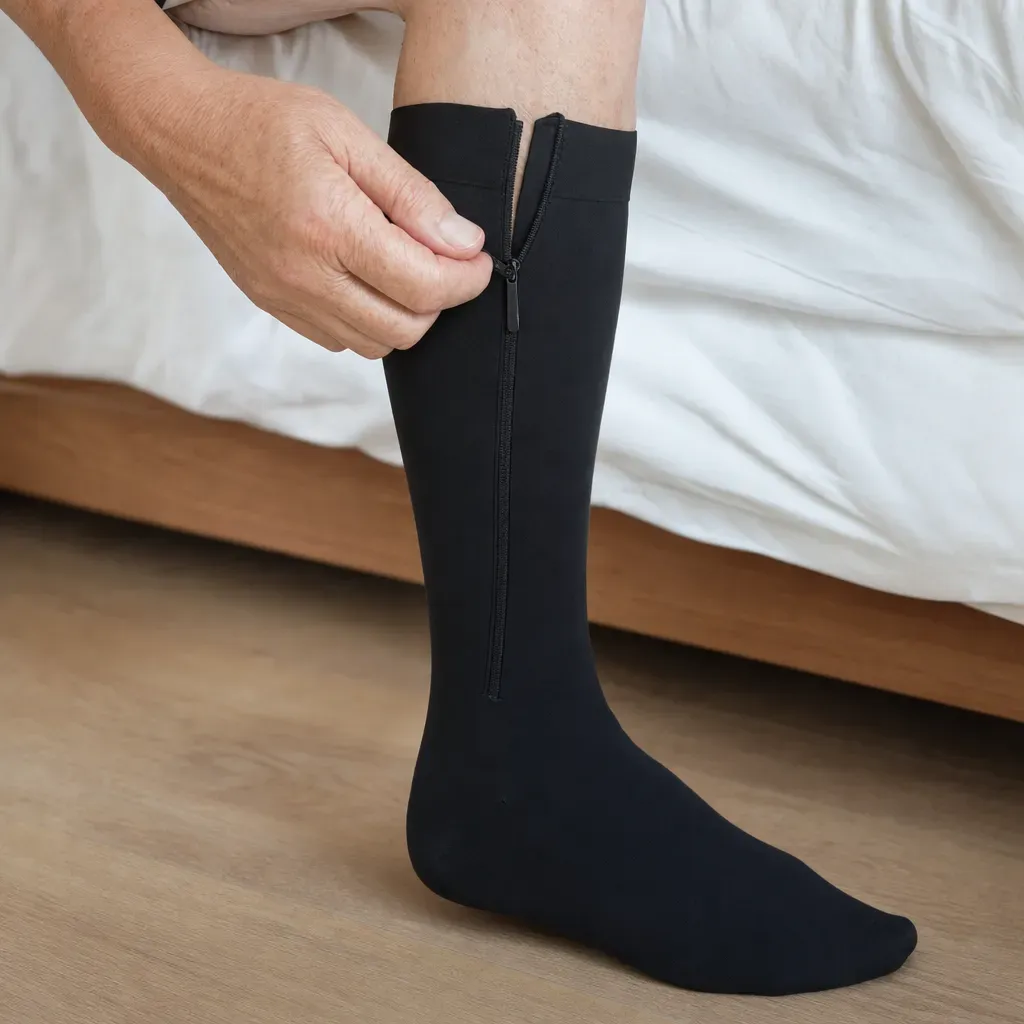
Method 2: step into a donner
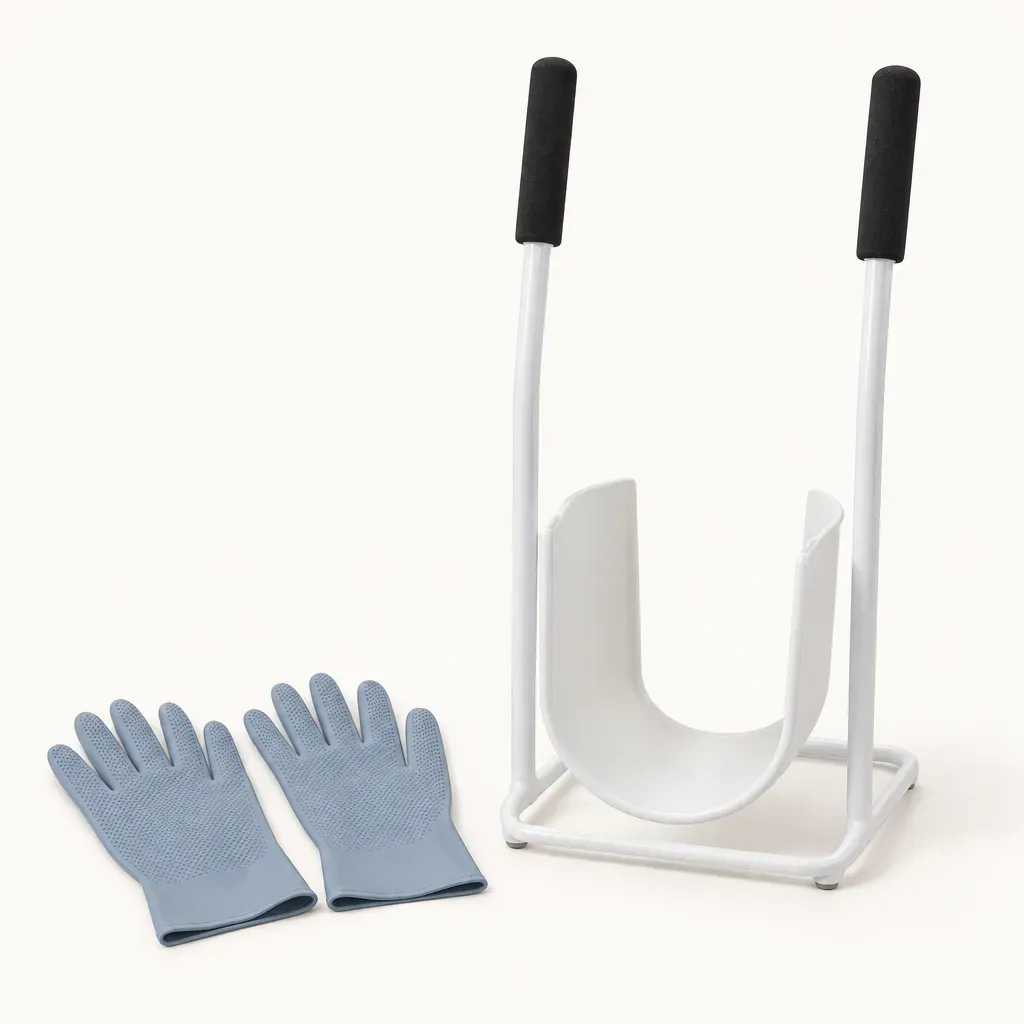
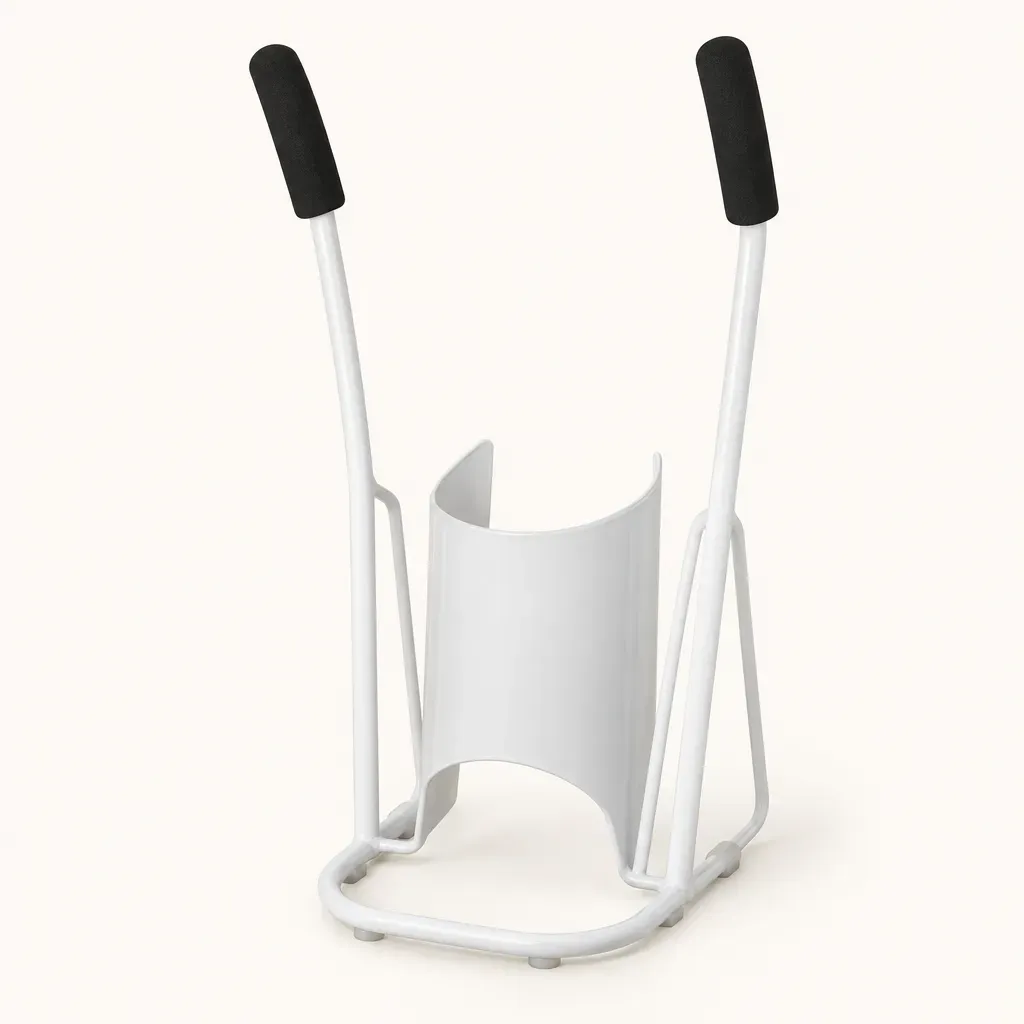
For pull-on socks and thigh-high stockings. A frame donner holds the sock open while you step in, then you draw it up by the long handles. Far less bending and pinching.
Load the sock
Pull the sock over the curved part of the frame, heel facing out, and fold the top down over the outside.
Sit and step in
Stand the donner on the floor in front of your chair and slide your foot in until your heel reaches the bottom.
Pull up by the handles
Lift the frame by both handles; the sock slides off the frame and up your leg.
Smooth it out
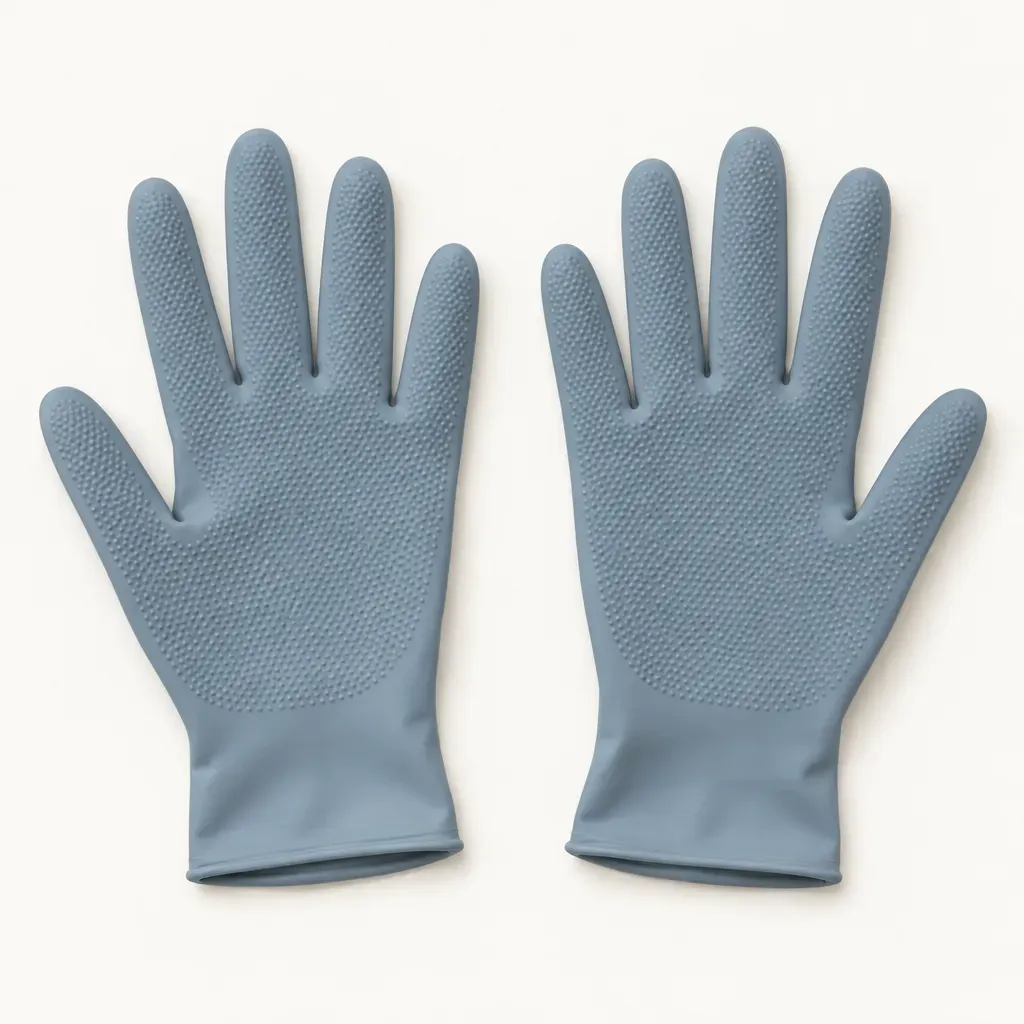
Run flat palms up the leg to even out wrinkles. Rubber gloves help.
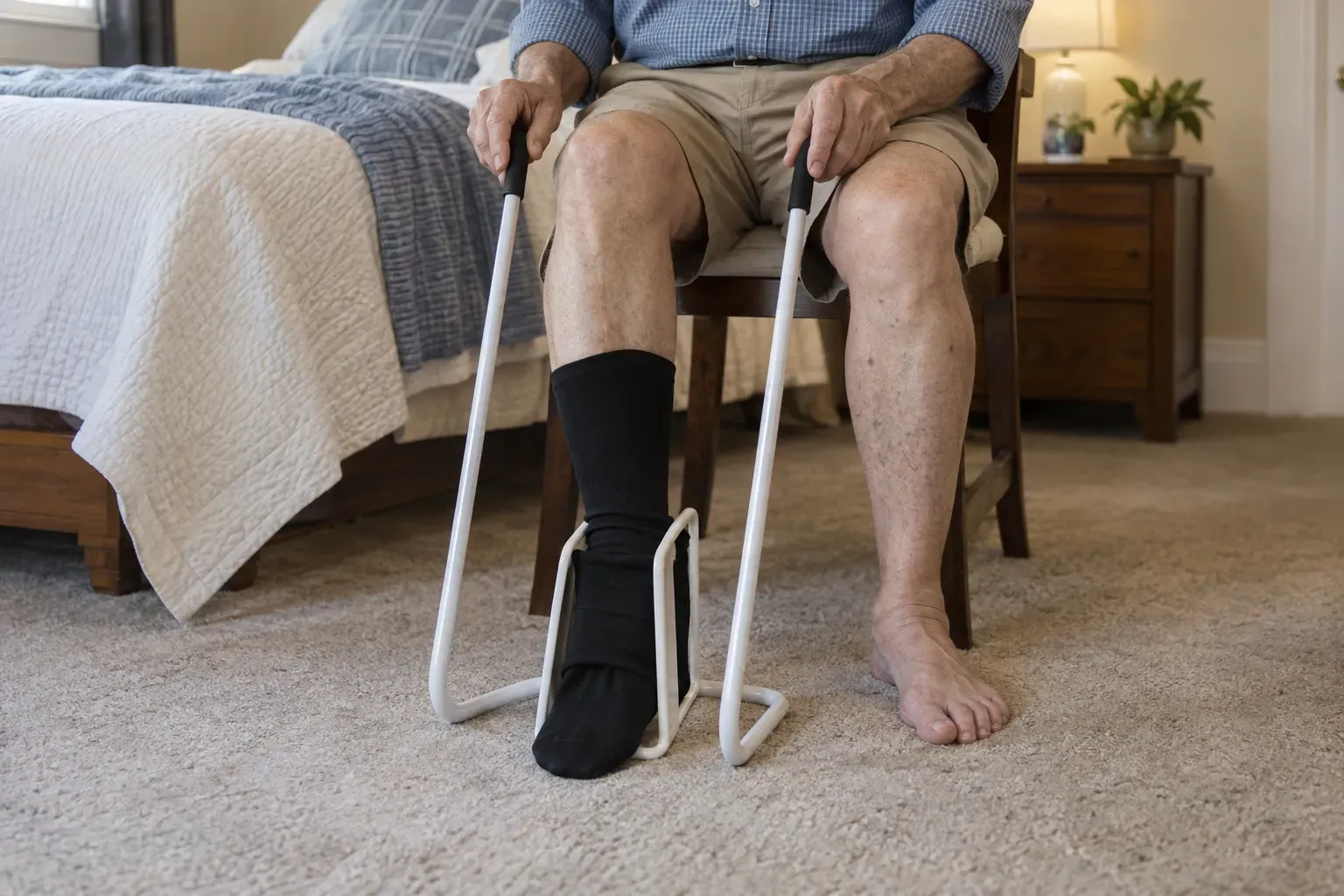
Method 3: the heel-pocket trick with grip gloves
The classic way, made easier with textured rubber gloves that grip the knit so you do not have to pinch it.
Gloves on
Put on rubber donning gloves (or clean rubber dish gloves).
Turn the sock inside out to the heel
Reach in, hold the heel and pull the sock inside out, so only the foot part stays the right way round.
Heel first
Slide your foot in until your heel sits in the heel pocket.
Ease it up
Unroll the rest up your leg a little at a time, smoothing with flat palms. Stop just below the knee.
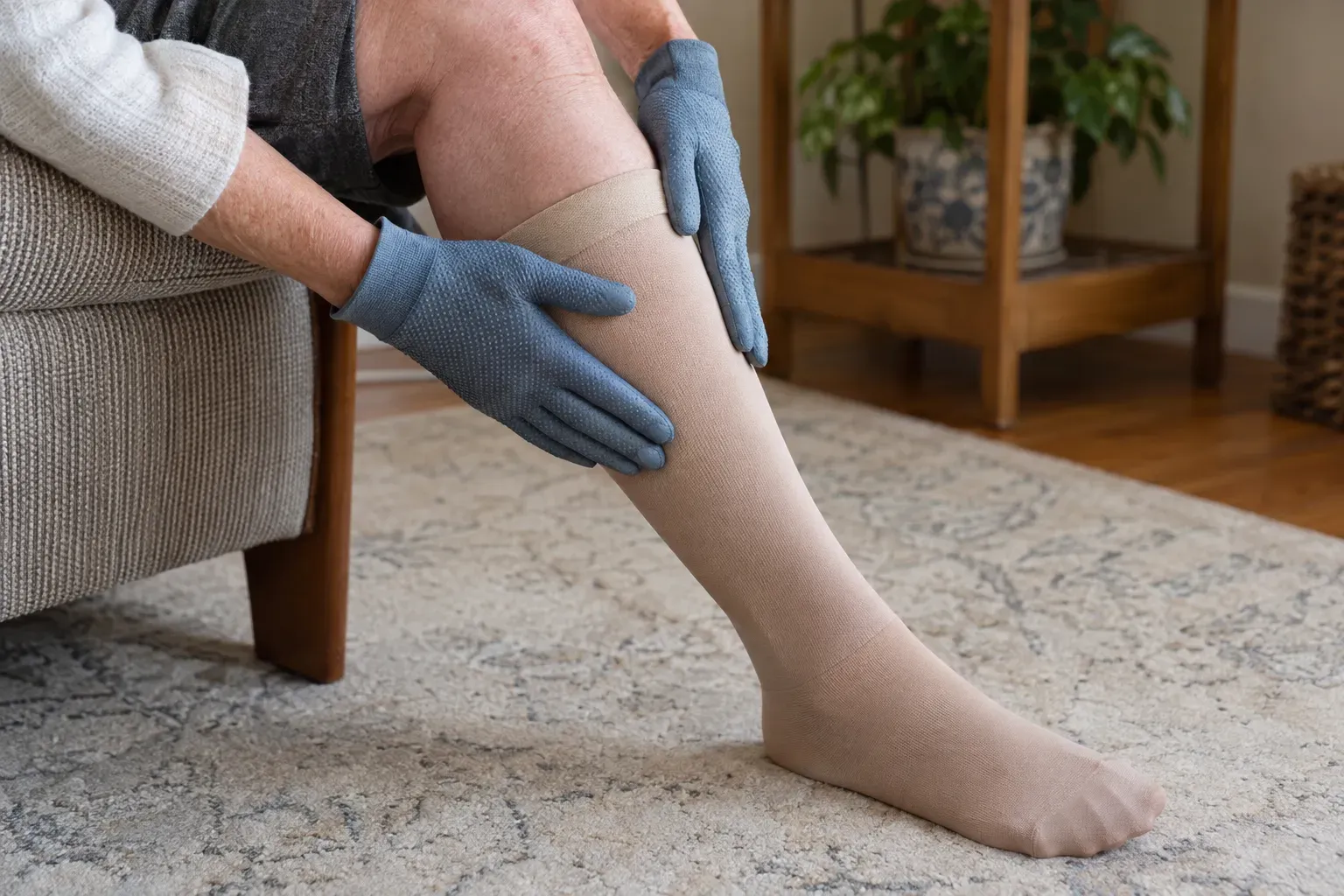
Tools that make it easier
-
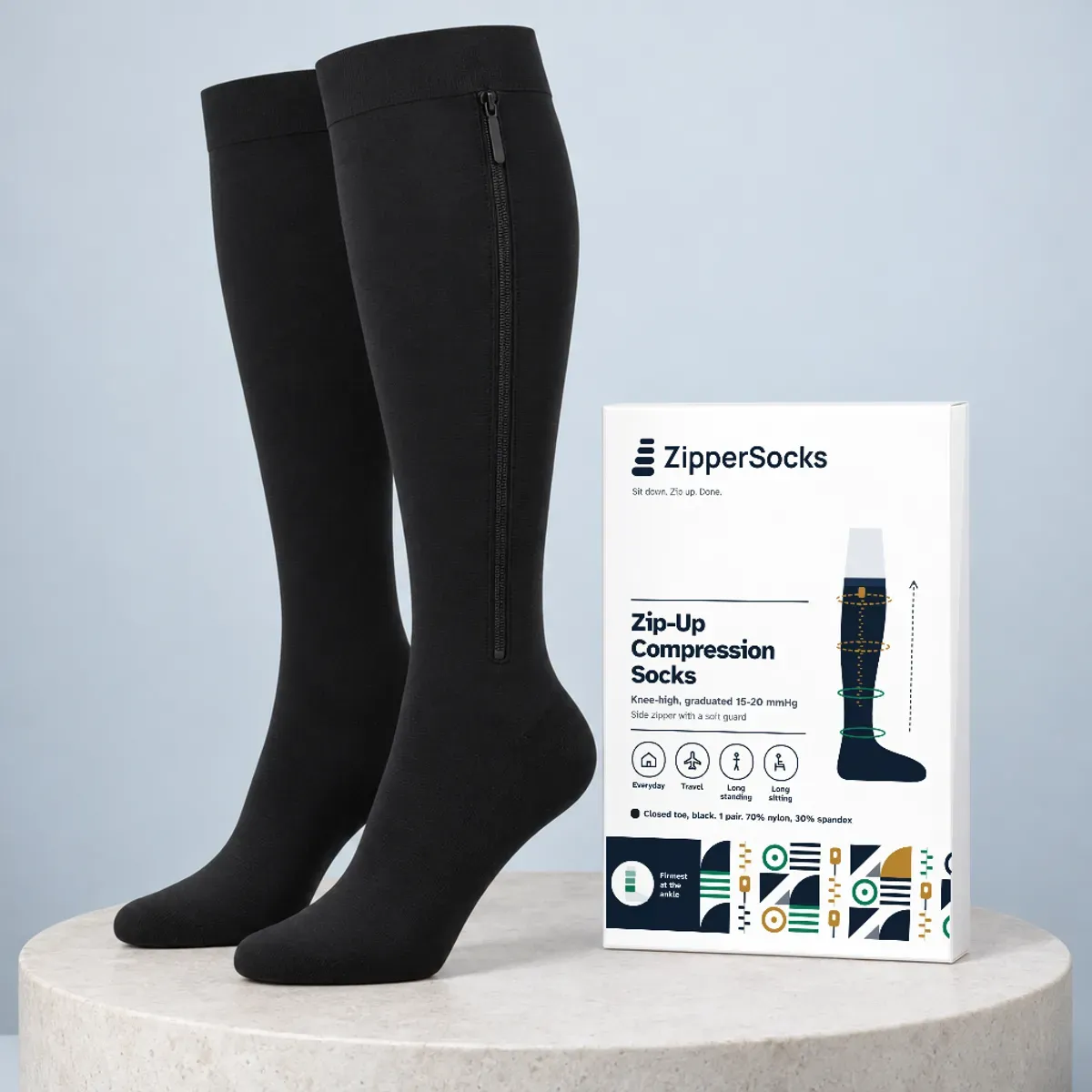
-
-
-
More questions
When is the best time to put on compression socks?
In the morning, soon after you get up, before swelling builds. Make sure your skin is dry and any lotion has soaked in.
How do I take them off?
Sit down. For zipper socks, unzip and lift your foot out. For pull-on socks, fold the top down and peel the sock inside out over your heel; a long-handled shoe horn or a helper can make it easier.
Should I wear compression socks to bed?
Put them on in the morning and take them off at bedtime, unless your doctor tells you otherwise.
Can a family member help?
Yes. Zipper socks are the quickest for a helper: they can zip while you sit. With pull-on socks, the helper should smooth the fabric up evenly and never roll the top down into a tight band.
Compression wear is not right for everyone. If you have peripheral artery disease, heart failure, fragile skin, open sores or reduced feeling in your feet, talk to your doctor before wearing it. New, painful or one-sided swelling needs a doctor, not a sock.