How to Wash Compression Socks (and When to Replace Them)
Wash compression socks often, ideally after each wear, in lukewarm water with mild soap, then gently press out the water and let them air dry away from direct heat. Regular washing actually helps the fabric recover its stretch, and gentle drying protects the elastic fibers that give the sock its squeeze.
Even with good care, compression wears out. Common guidance is to replace a pair every 3 to 6 months. Here is how to wash them, how to dry them, and how to tell when a pair is past its best.
Mentioned in this article
-
-
-
Why washing matters for compression socks
Compression socks are knitted with elastic fibers that stretch as you wear them through the day. Washing removes skin oils, sweat and lotion that build up in the fabric, and lets the fibers relax back toward their original shape.
MedlinePlus advises washing compression stockings each day with mild soap and water, then rinsing and air drying. It also suggests having two pairs if you can, so you wear one while the other is washed and dried. That simple rotation is the easiest way to always have a clean, fully recovered pair ready in the morning.
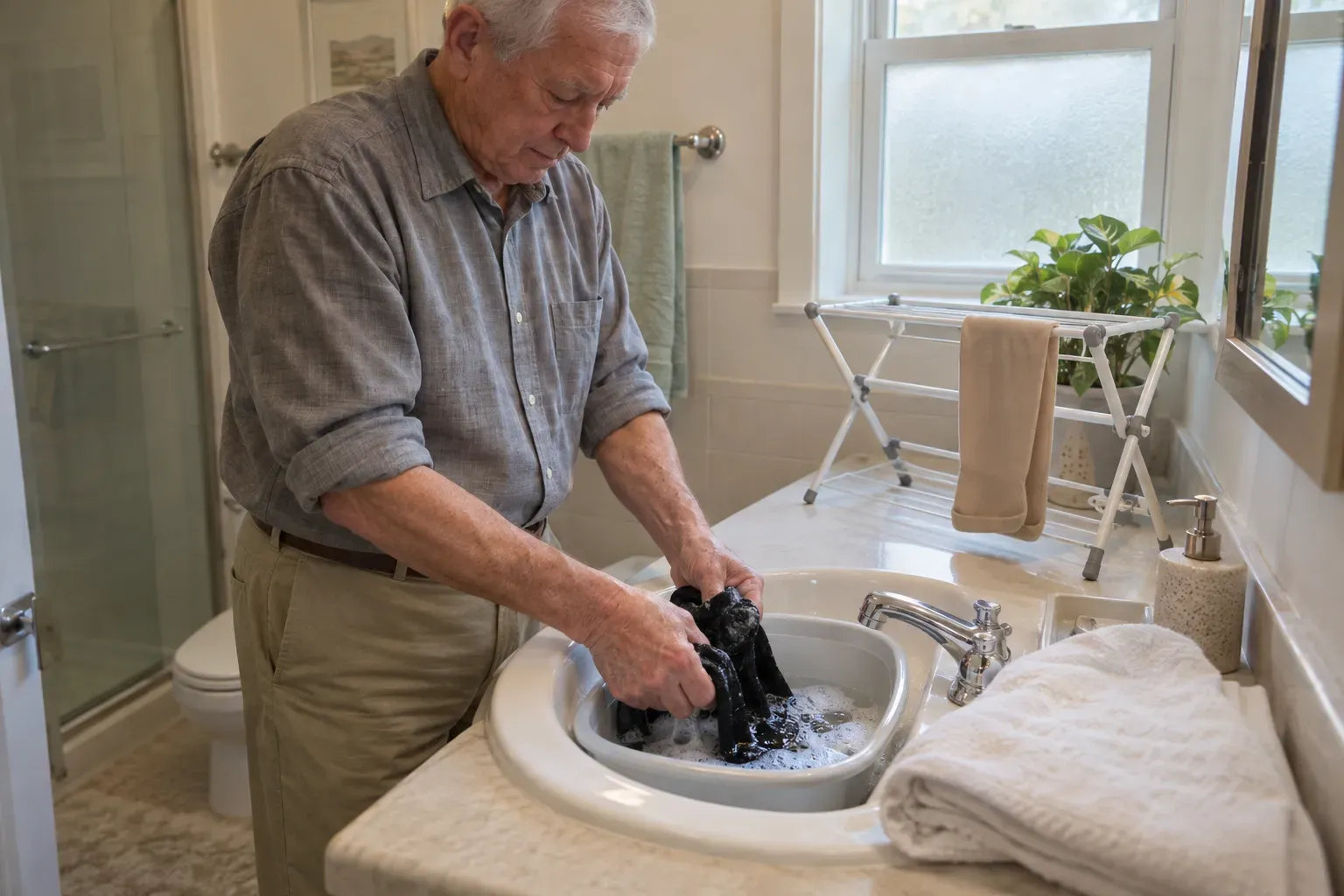
Hand washing, step by step
Hand washing is the gentlest option and takes only a few minutes. NHS fitting advice is to follow the manufacturer's care label, and if you are unsure, to wash by hand in warm water with a mild, non-biological detergent.
- Close any zippers and turn the socks inside out.
- Fill a basin with lukewarm water and a small amount of mild soap or gentle detergent.
- Swish and squeeze the socks gently for a minute or two. Do not scrub or twist.
- Rinse in clean water until no soap remains.
- Press out the water by rolling each sock in a clean towel and pressing. Never wring.
- Lay flat or hang to dry away from heat and direct sun.
Many people do this in the evening when they take their socks off, so a pair is dry by the next night.
Machine washing
If the care label allows machine washing, you can save time without harming the socks:
- Put them in a mesh laundry bag so they do not stretch or tangle around other items.
- Close zippers first so the teeth do not snag the fabric.
- Use a gentle or delicate cycle with cool or lukewarm water.
- Use a mild detergent.
- Skip fabric softener and bleach, which can be hard on elastic fibers.
If the label says hand wash only, follow it. Care instructions differ between materials, and cotton blends in particular can behave differently from all-synthetic knits.
Drying without damaging the stretch
Heat is the main enemy of the elastic in compression socks. The Kingston and Richmond NHS leaflet advises letting stockings dry naturally, and not drying them in the sun or on a radiator, because heat can damage the elastic fibers.
- Air dry on a drying rack, over a towel rail, or laid flat on a towel.
- Keep away from radiators, heaters, hair dryers and strong direct sunlight.
- Avoid the dryer unless the care label specifically allows a low or no-heat setting.
- Hang by the toe or lay flat, rather than pinning the top band, so the band does not stretch.
Compression socks usually dry overnight indoors. Thicker cotton blends may take a little longer, which is another reason to keep two pairs.
How long compression socks last
MedlinePlus advises replacing compression stockings every 3 to 6 months so they keep their compression and support. The Kingston and Richmond NHS leaflet gives the same 3 to 6 month range and notes that it depends on the make you wear. Ireland's HSE gives similar guidance.
Where your pair falls in that range depends on:
- How many days a week you wear them
- How many pairs you rotate between
- Whether they are dried with heat
- How carefully they are put on, since tugging and fingernails stress the knit
A sock can look fine and still have lost much of its squeeze. That is why a regular replacement schedule is better than waiting for holes.
Signs a pair needs replacing
- The sock goes on much more easily than it used to
- It slides down or wrinkles during the day
- The top band has gone loose or wavy
- The fabric looks thin, shiny or see-through in places, often at the heel
- There are holes, runs, or a zipper that no longer closes smoothly
- Your legs feel the way they did before you started wearing compression
Also replace your socks if your size has changed. If you have gained or lost weight, or your swelling is different, measure again using our sizing guide before reordering.
Simple habits that make socks last longer
- Rotate at least two pairs. Each pair gets a full day to recover.
- Use rubber gloves when putting socks on. MedlinePlus suggests rubber gloves to help adjust and smooth stockings, and they also keep fingernails and rings from snagging the knit. Our donning gloves are made for this.
- Let lotion dry first. Creams can weaken fibers over time and make socks harder to put on.
- Do not fold the top band down. This stretches the band and makes it dig in.
- Store them flat or loosely rolled, not balled up tightly.
An easy routine with two or three pairs
The simplest way to keep up with washing is to make it part of taking your socks off at night. Here is a routine that works for many households:
- Evening: take the day's pair off, check your skin, and wash the pair straight away in the bathroom sink.
- Overnight: let them dry on a rack or towel rail.
- Morning: put on the clean pair you washed the night before.
With two pairs, each pair gets a full day and night to dry and recover. A third pair is handy for weeks when socks dry slowly, for travel, or as a backup if one pair snags.
If someone helps a parent with laundry, it is worth keeping compression socks out of the main wash basket altogether. A small mesh bag hung in the bathroom makes it obvious which items need gentle care, and keeps them away from hot water and the dryer.
Write the purchase date on the care label or on a note inside the drawer. It makes the 3 to 6 month replacement guidance much easier to follow.
Washing tips for special materials
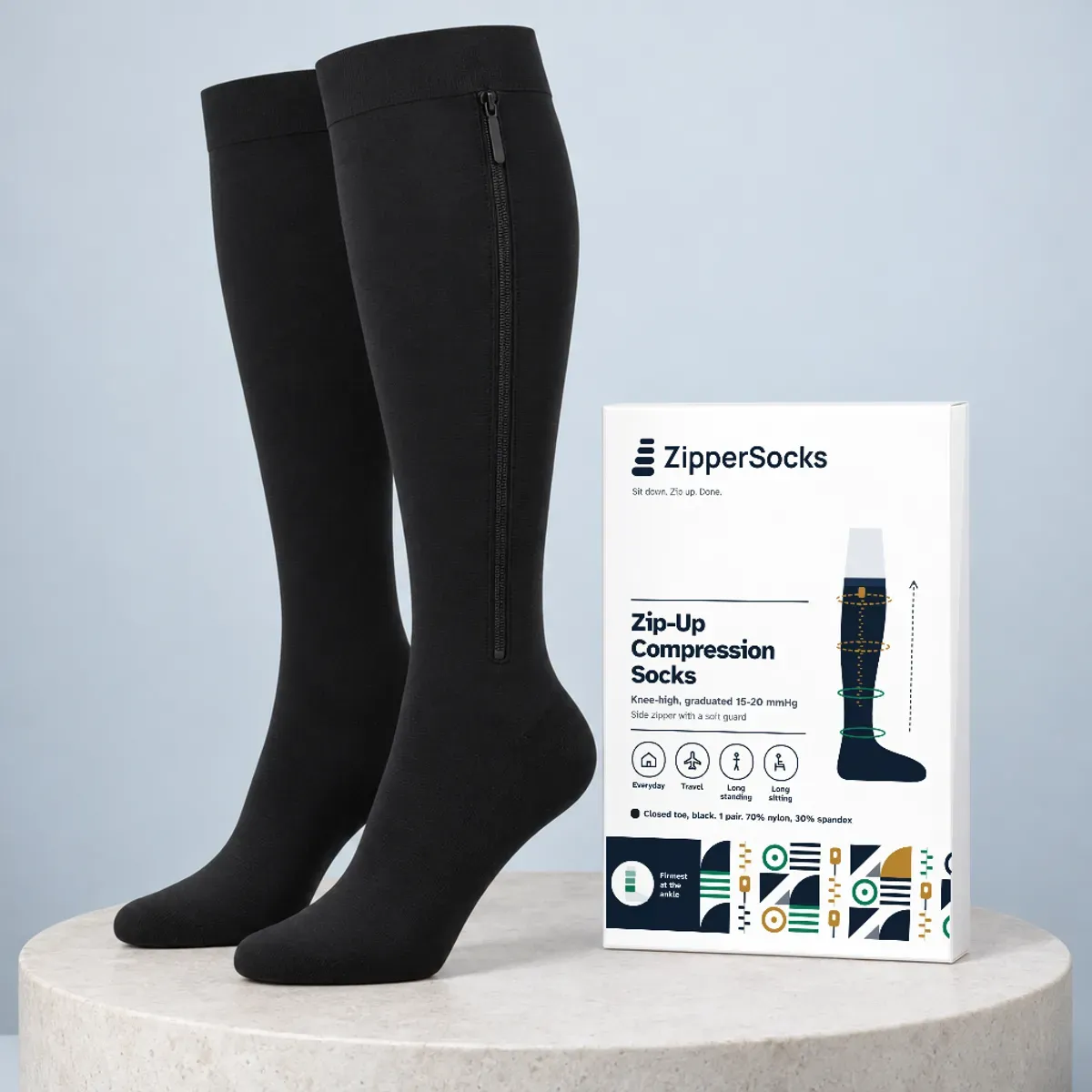
Zipper socks
Close the zipper before washing, and check the fabric guard behind it is clean and dry before wearing. The ZipperSocks styles we stock wash the same way as any compression sock once zipped.
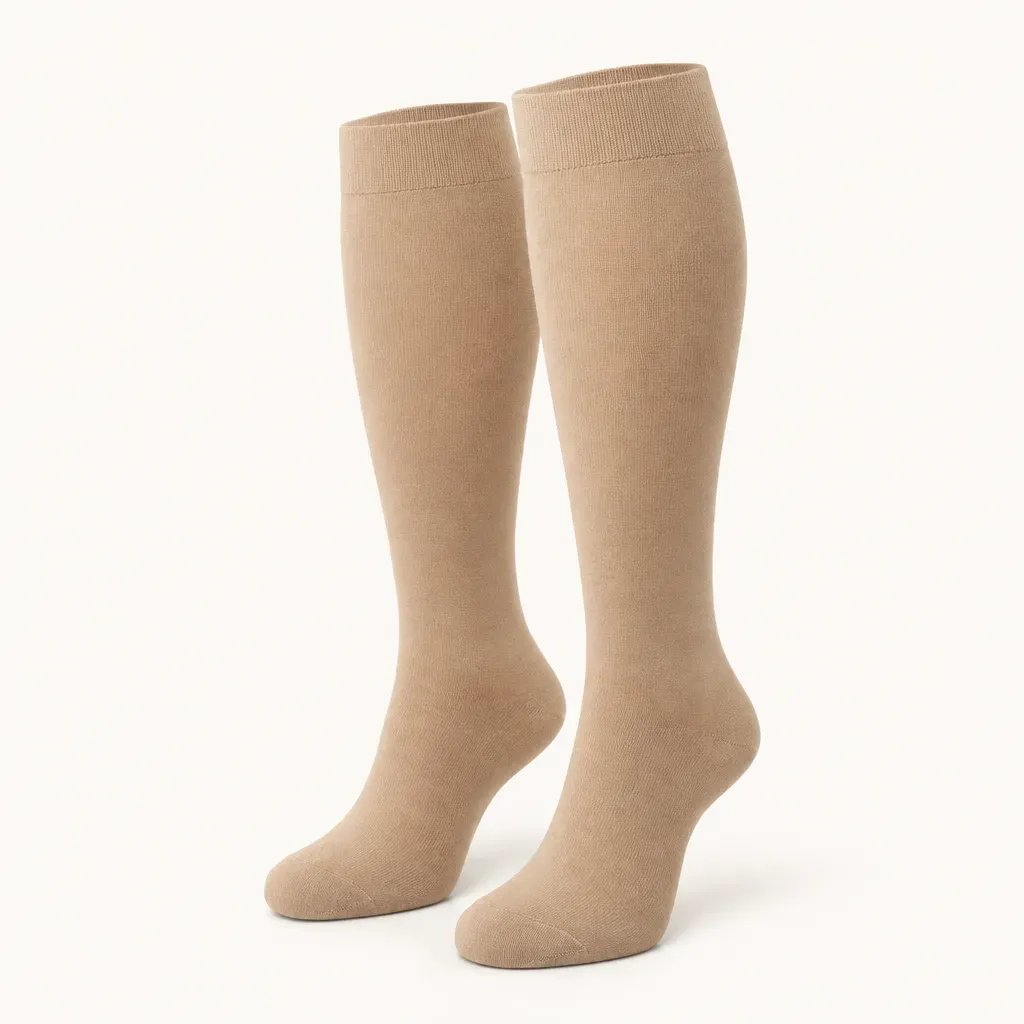
Cotton blends
Our cotton-blend knee-highs are softer on sensitive skin. Wash gently and air dry, as cotton can hold water a little longer.
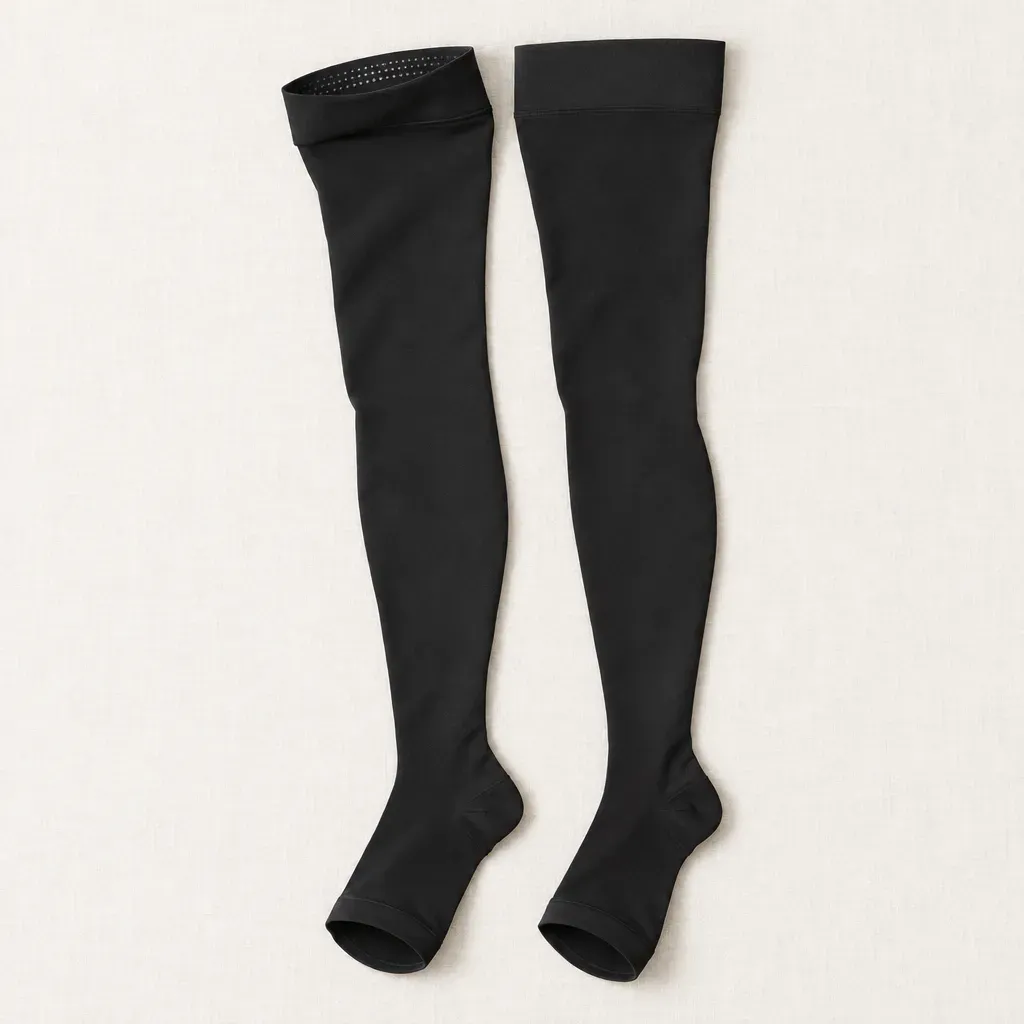
Thigh-highs with silicone bands
Skin oils and lotion reduce the grip of a silicone band. Wipe the band with a damp cloth between washes, and keep it out of hot water and heat. See our thigh-high stockings for details.
How to hand wash compression socks: quick steps
- Prepare. Close any zippers and turn the socks inside out.
- Wash gently. Swish and squeeze the socks in lukewarm water with a little mild soap for a minute or two. Do not scrub or twist.
- Rinse. Rinse in clean water until no soap remains.
- Press out water. Roll each sock in a clean towel and press to remove water. Do not wring.
- Air dry. Lay flat or hang by the toe to dry, away from radiators, heaters and direct sun.