Compression Socks for Swollen Feet and Ankles: A Practical Guide
Compression socks can help relieve the tired, heavy feeling and minor swelling that many people notice in their feet and ankles by the end of the day. They work best alongside a few simple habits: putting your feet up, moving often, and checking with a doctor when swelling is new, one-sided or painful.
This guide walks through why ankles swell, what you can do at home, how to choose a sock that is comfortable on puffy feet, and the signs that mean it is time to call your doctor instead.
Mentioned in this article
Why feet and ankles swell
Swelling in the feet and ankles usually comes from fluid collecting in the tissues. The NHS lists the everyday causes first: standing or sitting in the same position for too long, eating a lot of salty food, carrying extra weight, and some medicines, including certain blood pressure tablets, hormone therapy, antidepressants and steroids. Varicose veins and thyroid problems can play a part too.
Gravity is the simple reason it shows up in the feet. When you are upright all day, fluid tends to settle at the lowest point. That is why many people notice that their sock tops leave a deep ring in the evening, or that shoes that fitted in the morning feel snug by dinner time.
MedlinePlus notes that leg and ankle swelling is more common as we get older. It also lists less ordinary causes, such as infection, a blood clot, or heart, kidney or liver problems. Those are the reasons a doctor should look at swelling that is new or behaves differently, which we cover at the end of this guide.
Simple habits that help swollen ankles
Before thinking about socks, it helps to know the basics that health services recommend for everyday swelling. None of them cost much, and they work well together.
- Put your feet up. MedlinePlus suggests propping your legs on pillows so they sit above the level of your heart while you lie down. The NHS suggests raising your legs on a chair or pillows whenever you can.
- Keep moving. Gentle walking helps the calf muscles push fluid back up the legs. If you sit for long stretches, get up and walk around the room every so often.
- Go easy on salt. A lower-salt diet may help reduce fluid build-up, according to MedlinePlus. Ask your doctor before making big changes if you have a heart or kidney condition.
- Choose roomy shoes. The NHS recommends wide, comfortable shoes with a low heel and a soft sole.
- Avoid tight bands. Socks with tight elastic tops, garters, or clothing that digs in can make things worse. A proper compression sock is designed differently, as you will see below.
Even a short routine makes a difference: ten minutes with your feet up after lunch, a walk to the mailbox, ankle circles during the evening news.
Where compression socks fit in
MedlinePlus describes compression stockings simply: they gently squeeze your legs to help move blood up your legs. A well-made compression sock is tightest at the ankle and gradually looser toward the knee. That graduated fit is the difference between a compression sock and an ordinary tight sock, which squeezes hardest at the top band.
For many people, the result is legs that feel lighter and less achy by evening, and ankles that stay a little less puffy. Think of compression as comfort and support for healthy circulation, not as a fix for whatever is causing the swelling. If something underneath is driving it, your doctor needs to know.
Cleveland Clinic advises putting compression socks on in the morning, before swelling builds up, and taking them off at bedtime. That timing matters more than most people expect, because a sock goes on far more easily over a slim morning ankle than a swollen evening one.
How to choose socks for swollen feet
There are four choices to make: how firm, how long, open or closed toe, and how you will get them on.
Compression level
Compression is measured in millimeters of mercury (mmHg). For everyday tiredness and minor swelling, most people start in the moderate range.
| Level | Range | Typical use |
|---|---|---|
| Light | 8-15 mmHg | Long days on your feet, first-time wearers |
| Moderate | 15-20 mmHg | Tired, achy legs and minor swelling |
| Firm | 20-30 mmHg | More noticeable swelling, often on a doctor's suggestion |
| Extra firm | 30-40 mmHg | Prescribed and fitted by a clinician only |
We do not sell anything at 30-40 mmHg. If your doctor mentions that level, it should be measured and fitted by a professional. Our longer guide, what mmHg compression do I need, goes into more detail.
Length and toe
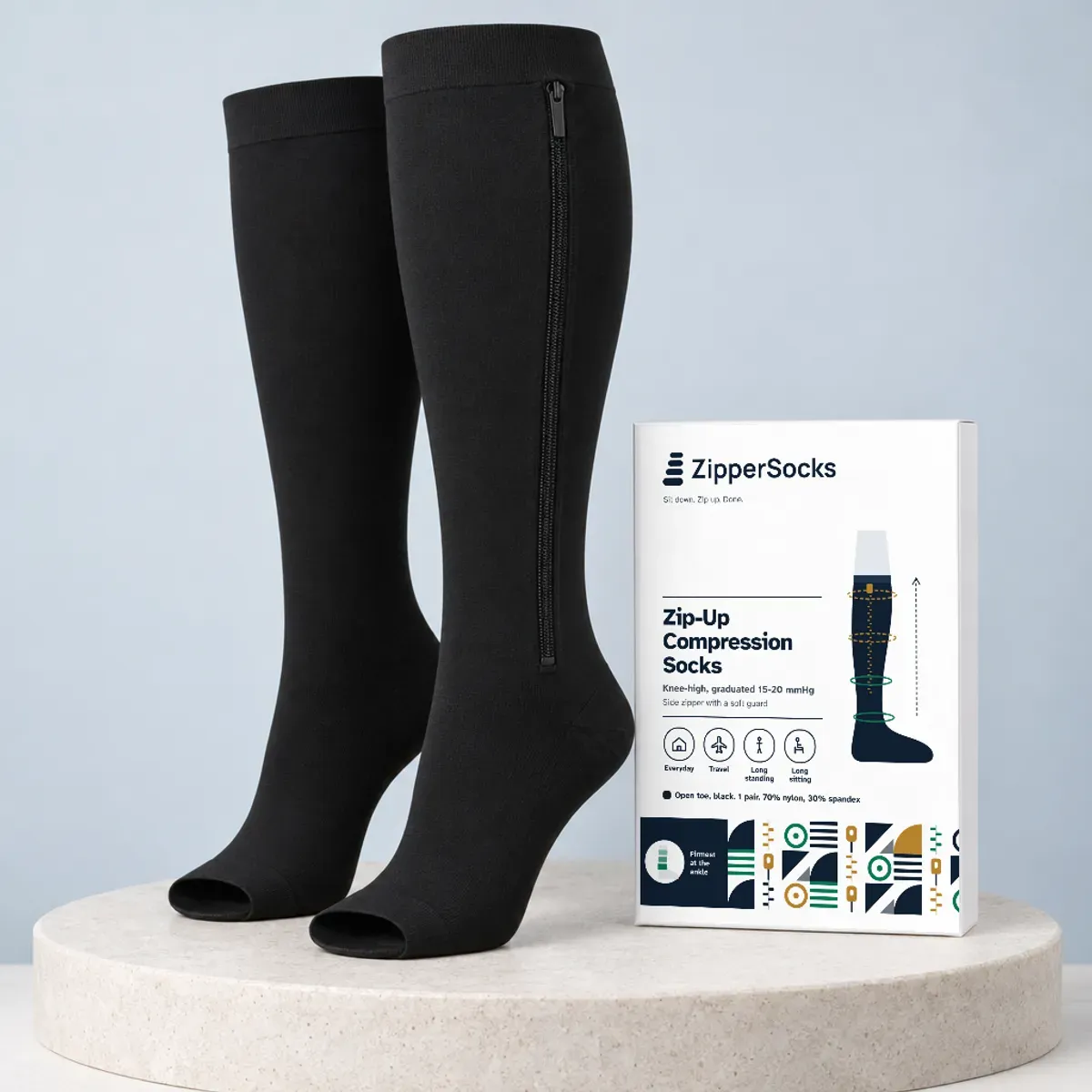
Knee-high socks are enough for most ankle and lower-leg swelling. An open toe can feel better if your toes are sensitive, crowded, or you wear sandals at home. A closed toe looks like a normal sock under trousers.
Size
Compression sizes go by your calf and ankle, not your shoe size. Measure in the morning, using our sizing guide, so the sock fits the leg you have before the day's swelling.
Getting socks on when your ankles are puffy
The biggest complaint about compression socks is that they are hard to put on. That is the price of a sock that actually squeezes. A few things make it much easier.
- Put them on first thing. MedlinePlus suggests putting them on before you get out of bed, when your legs are least swollen.
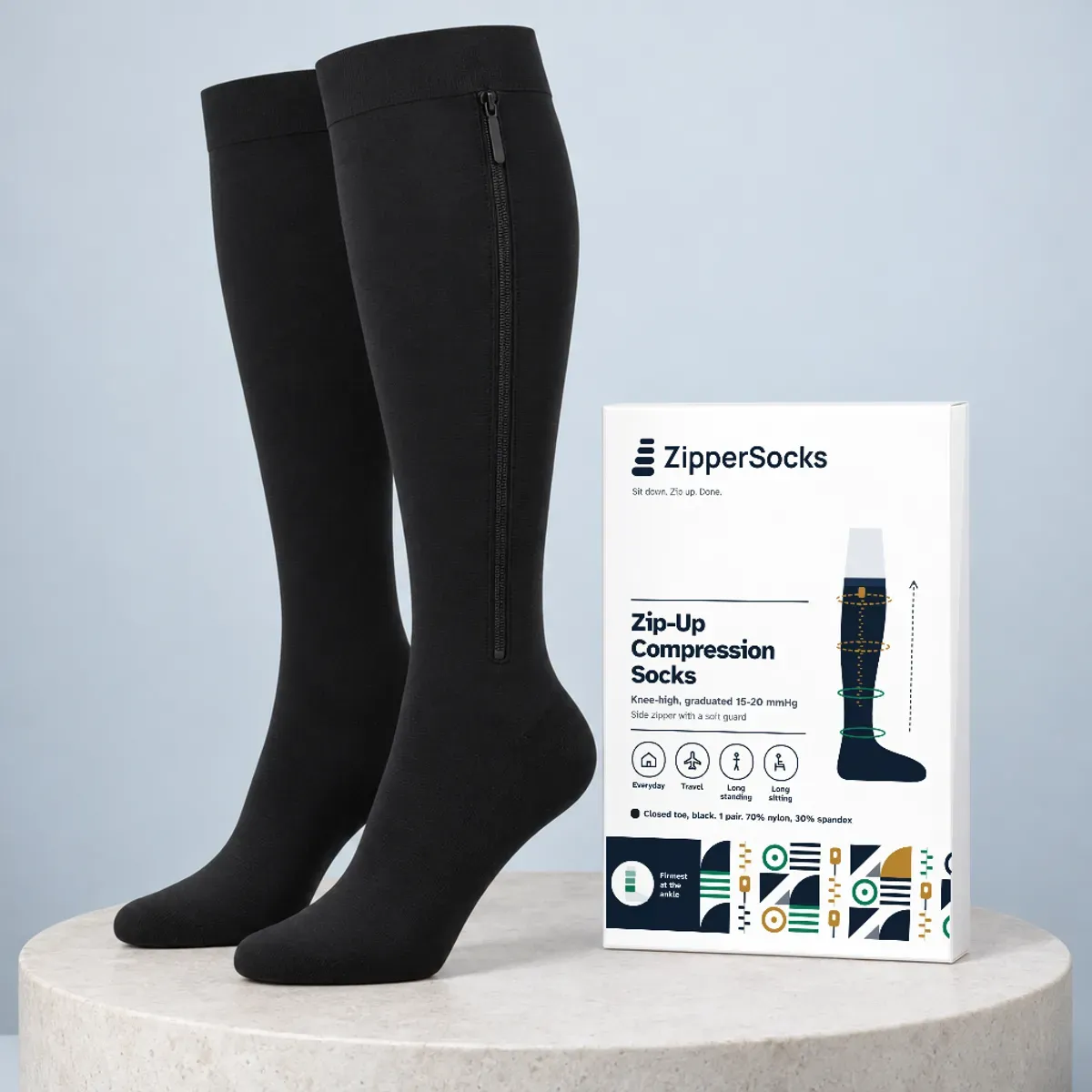
- Use a zipper. A side zipper lets you open the sock, slip your foot in, and close it up the leg. The ZipperSocks closed-toe zipper socks, a brand we stock, are 15-20 mmHg with a soft fabric guard behind the zipper.
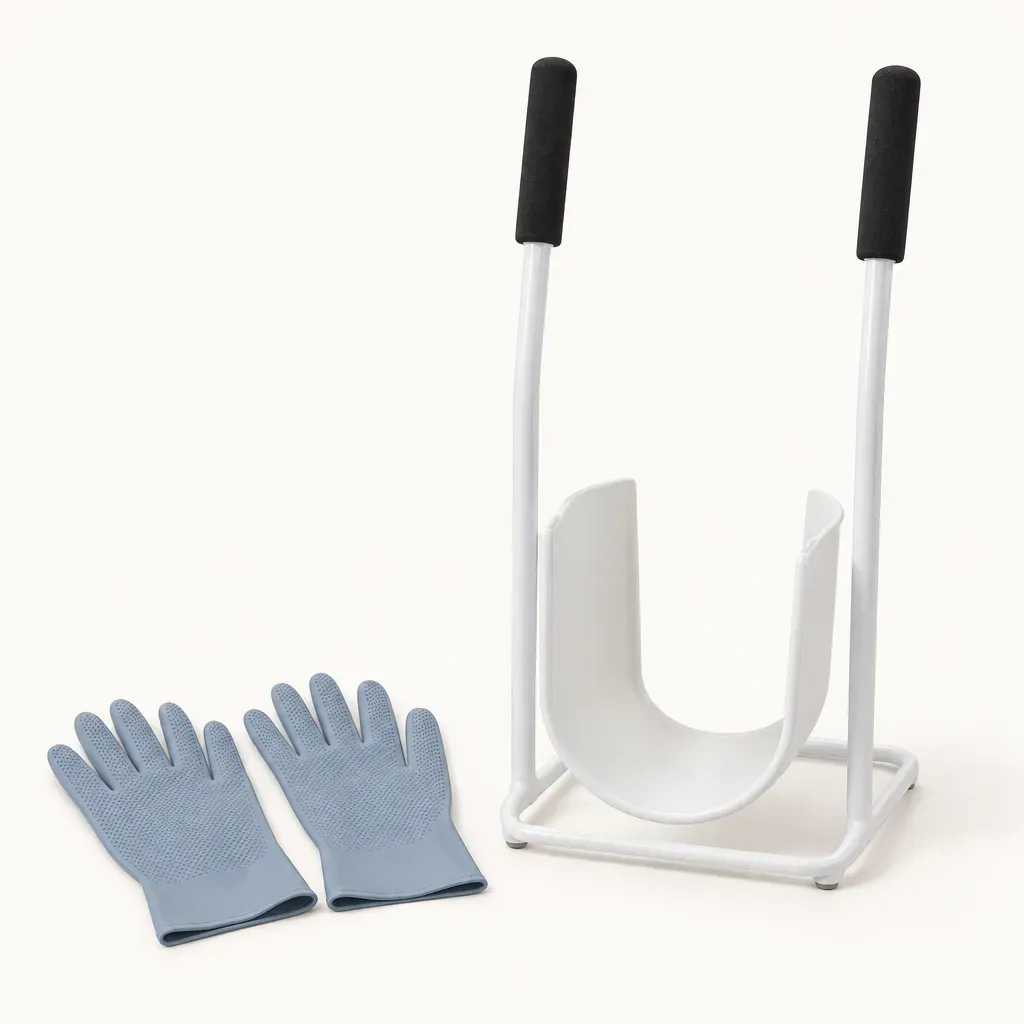
- Use rubber gloves or a donner. Rubber gloves help you grip and smooth the fabric, and a frame donner holds the sock open so you can step in. Our Easy-On Kit has both.
If hands are stiff or painful, our guide to putting on compression socks with arthritis goes step by step.
Wearing them comfortably day to day
Once you have a pair that fits, a little care keeps them comfortable.
- Smooth out wrinkles. MedlinePlus advises not letting the stockings bunch up or wrinkle, because folds press unevenly on the skin.
- Never roll or fold the top down. A doubled band acts like a tight garter.
- Moisturize at night, not right before. If you use lotion in the morning, let it dry fully first so the sock slides on.
- Look at your skin each evening. Faint marks from the knit are normal. Deep grooves, redness that does not fade, or broken skin are not, and are worth a call to your doctor.
- Have two pairs. One to wear while the other is washed and dried.
Most people need a few days to get used to the snug feeling. If socks cause pain, numbness, tingling or color changes in your toes, Cleveland Clinic says to take them off and call your provider.
When swelling needs a doctor, not a sock
Everyday swelling in both ankles that goes down overnight is common. Some patterns are different, and the NHS and MedlinePlus are clear about them. Contact your doctor promptly if:
- Only one foot, ankle or leg is swollen and there is no obvious reason
- The swelling came on suddenly, is severe, or is painful
- The skin is red, hot to the touch, or you have a fever
- Swelling is getting worse, or has not improved after a few days of home care
- You have a heart, kidney or liver condition and the swelling is new or worse
Call 911 if swelling comes with shortness of breath, chest pain or tightness, or coughing up blood. These can be signs of a serious problem that needs emergency care.
A word of caution. Check with your doctor before wearing compression if you have peripheral artery disease, heart failure, fragile skin or open sores, or reduced feeling in your feet.
For a fuller list of warning signs, see when to see a doctor about leg swelling.