Zipper Compression Socks vs Regular Compression Socks
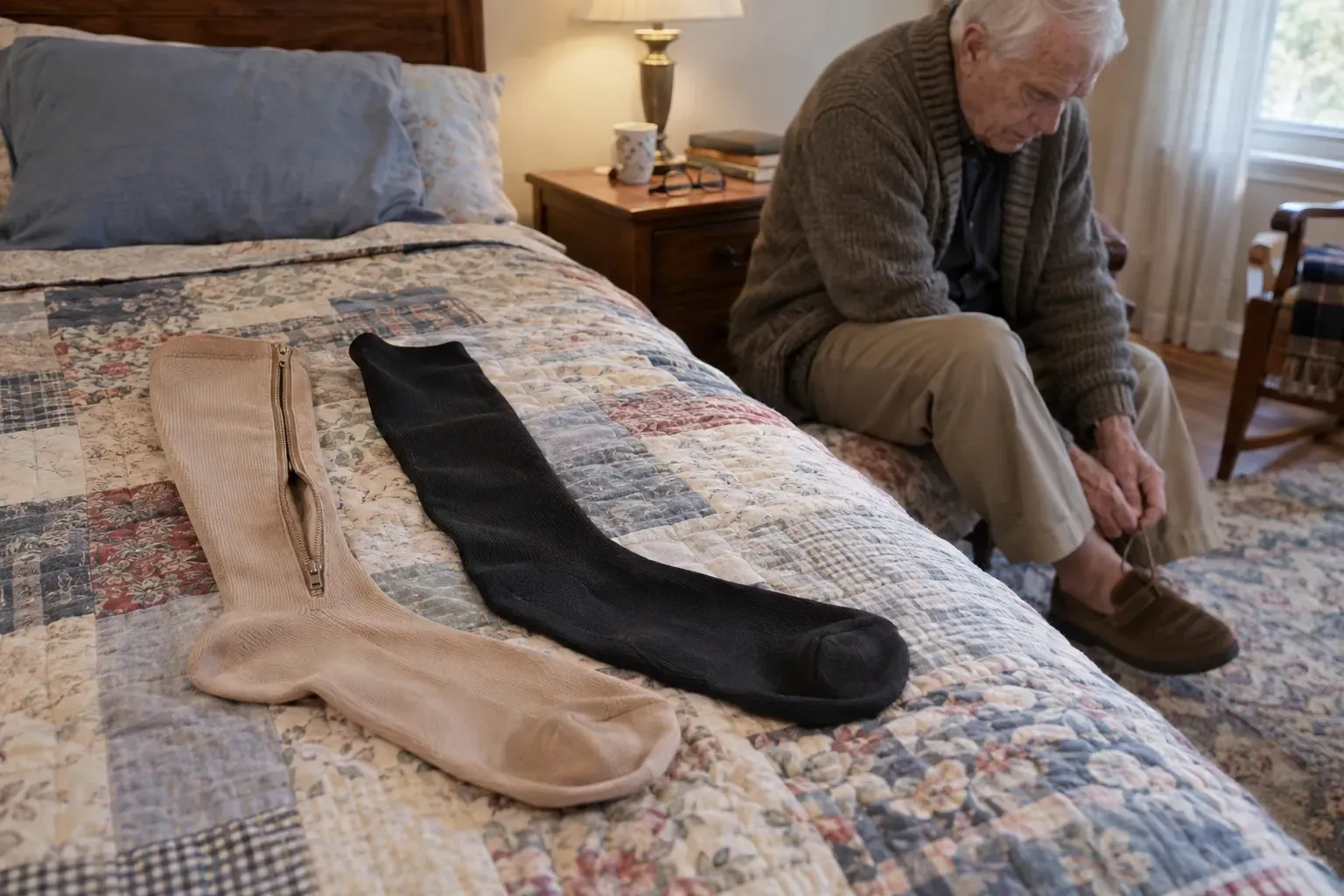
Zipper compression socks are much easier to get on and off, which makes them a strong choice for anyone with stiff hands, limited reach, or ankles that swell. Regular pull-on socks are smoother, slimmer under clothes, come in more sizes and levels, and have nothing to snag or press on the skin.
Neither is better for everyone. Here is an honest comparison so you can choose the right one for your hands, your legs and your routine.
Mentioned in this article
-
-
-
How each type works
Both kinds apply graduated compression: snug at the ankle and gradually looser toward the knee. MedlinePlus describes the purpose as gently squeezing the legs to help move blood up them. The compression comes from the knit, not from the zipper, so a zipper sock and a pull-on sock at the same level should feel similar once they are on.
The difference is in how they get there:
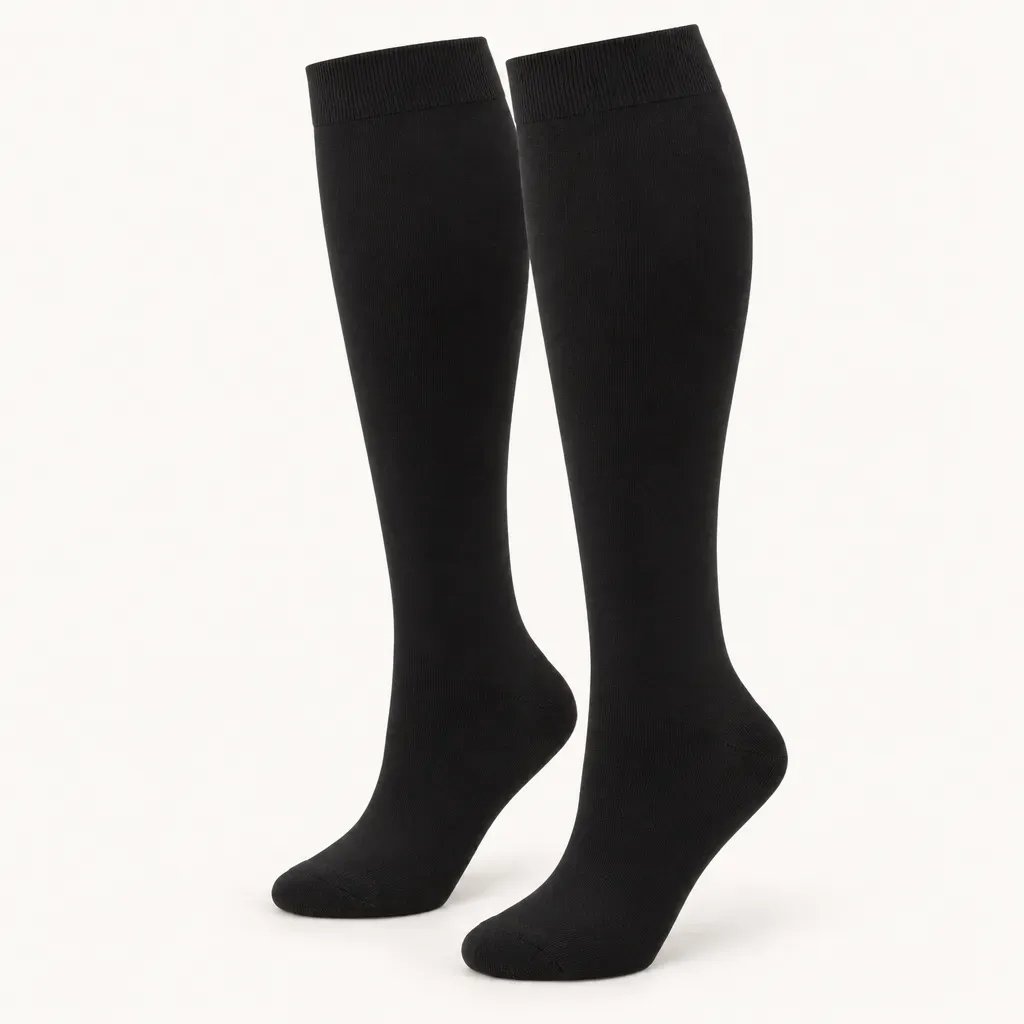
- Regular (pull-on) socks are a continuous tube. You turn them inside out to the heel and ease them up the leg, as MedlinePlus and NHS fitting leaflets describe.
- Zipper socks open along one side. You put your foot in, then close the zipper from ankle to knee, so there is very little pulling.
Side-by-side comparison
| Zipper socks | Regular socks | |
|---|---|---|
| Getting them on | Much easier, little grip strength needed | Harder, needs grip and reach or a donner |
| Taking them off | Unzip and lift away | Peel down and over the heel |
| Feel on the skin | A soft ridge along the zipper line | Smooth all the way round |
| Under trousers | Zipper can show slightly under thin fabric | Looks like a normal sock |
| Size range | Usually fewer sizes | Usually more sizes and levels |
| Wear and tear | Zipper is one more part that can fail | Fabric is the only thing to wear out |
| Best for | Stiff or painful hands, limited reach, swelling | Good hand strength, sensitive skin along one side, wide size needs |
The real advantages of zipper socks
Independence
For many older adults, the main benefit is being able to dress without help. If arthritis, a weak grip, a bad shoulder or a stiff back has turned socks into a two-person job, a zipper can make it a one-person job again.
Easier on swollen ankles
Pull-on socks are hardest to get over an ankle that is already puffy. A zipper opens wide, so the sock goes around your leg instead of being forced over the heel.
Quicker removal
At bedtime, when you are tired, unzipping is simpler than peeling a snug sock down your leg.
Less strain for care partners
If a spouse or adult child helps, a zipper sock takes far less effort and is less likely to be put on with wrinkles.
The honest downsides of zipper socks
Zipper bulk
A zipper adds a firm line down the side of the leg. Most people stop noticing it, but it can show under fitted trousers, and some people feel it when they cross their legs.
You need a zipper guard
Zipper teeth should never sit directly on the skin. A good zipper sock has a soft fabric flap behind the zipper. Check it is lying flat each time, especially if your skin is thin or easily marked.
Fewer sizes
Zipper socks usually come in fewer sizes than pull-on socks. If your calf is very slim or very full, you may find a better fit in a pull-on style. Our wide-calf zipper socks cover sizes 4XL to 7XL, which helps, but the widest range is still in pull-on socks such as our firm knee-high socks, sizes S to 7XL.
Zipping takes a little care
The zipper must be lined up straight. If the sock twists, the compression is uneven. Zipping the first few inches at the ankle, then checking the heel is in place, avoids most problems.
When a regular sock is the better choice
- Your hands are strong enough and you can reach your feet comfortably, or you are happy using a donner.
- You want the slimmest look under dress trousers or with skirts.
- You have a skin area that is sensitive to pressure along one side of the leg, where a zipper line would sit.
- You need a size or level that zipper styles do not come in.
Pull-on socks are also easier to manage with a frame donner and rubber gloves than many people expect. Our Easy-On Kit has both, and our guide on putting on compression socks with arthritis shows the method.
Tips for using zipper socks well
- Sit down, open the zipper fully, and set your heel into the heel pocket first.
- Close the zipper a few inches at the ankle, then check that the heel and toe are lined up.
- Smooth the fabric guard flat behind the zipper with your fingers.
- Zip slowly to the top, keeping the zipper running straight up the side of the leg.
- Close the zipper before washing so the teeth do not catch on other things.
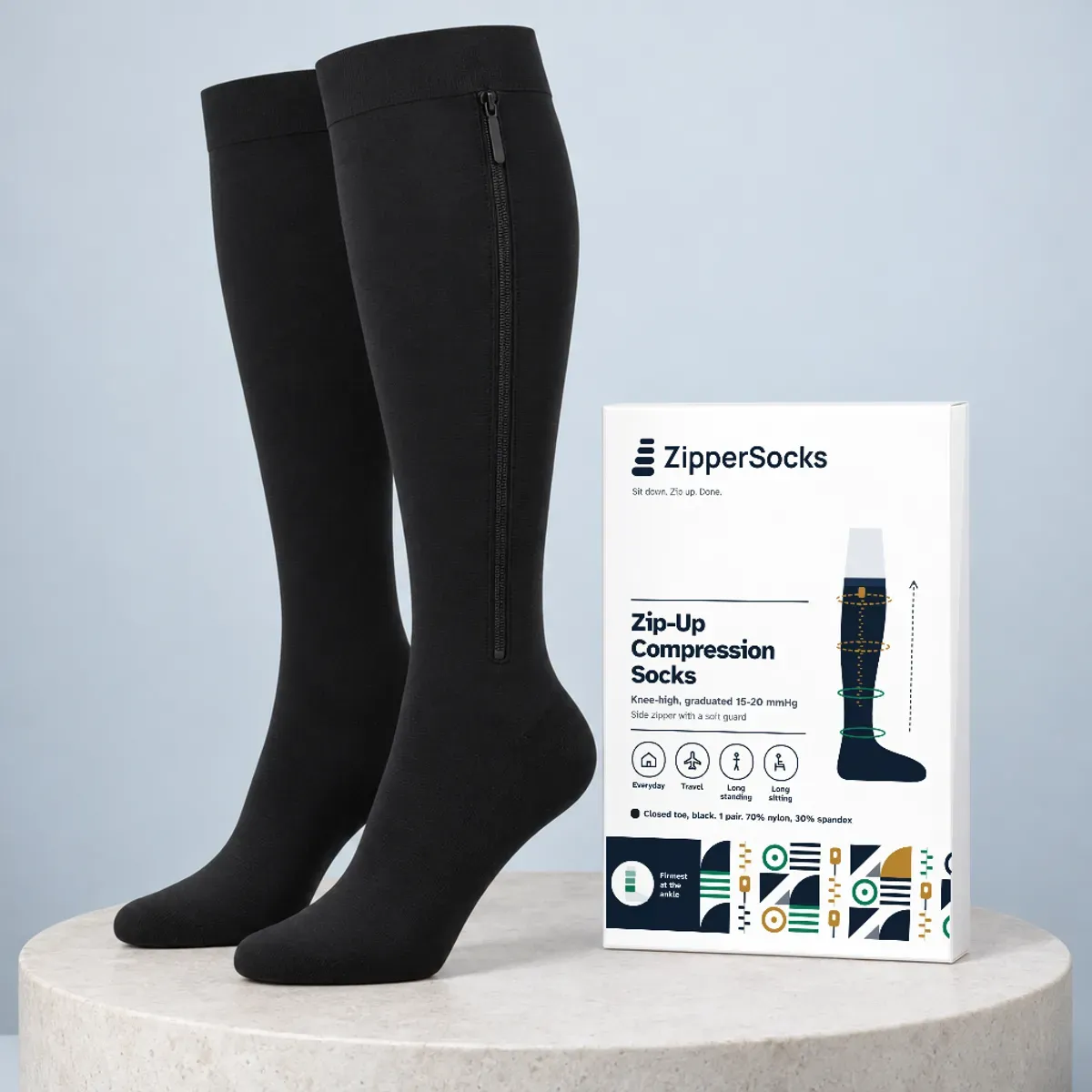
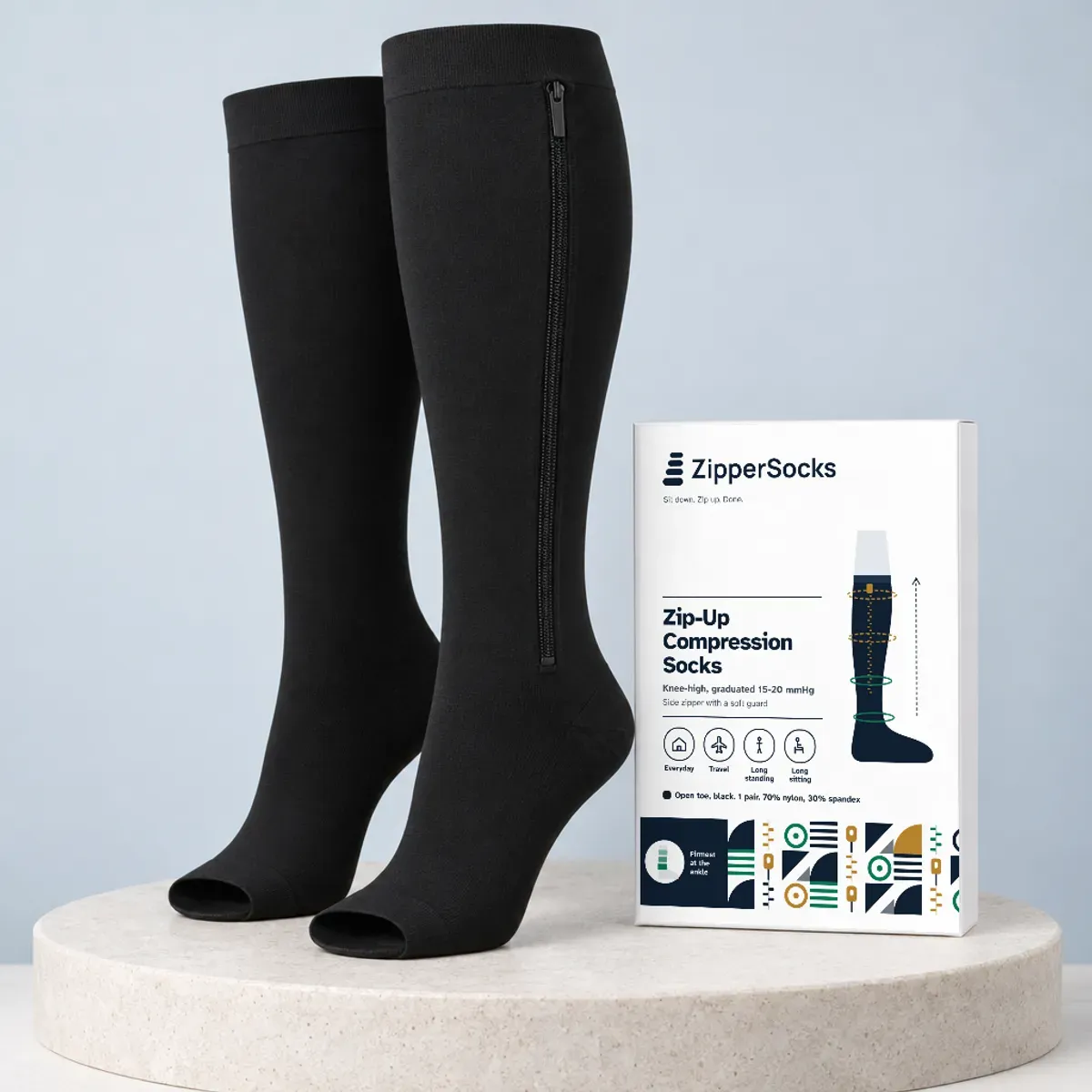
The ZipperSocks closed-toe and open-toe styles are a brand we stock. Both are 15-20 mmHg, in black or beige, sized M to 3XL by calf, with a soft fabric guard along the full-length zipper. Get your size from the sizing guide.
A word of caution. Check with your doctor before wearing compression if you have peripheral artery disease, heart failure, fragile skin or open sores, or reduced feeling in your feet.
Making a zipper sock last
A zipper is a moving part, so it needs a little more care than plain fabric. These habits help it keep working smoothly for the life of the sock:
- Zip up before washing. An open zipper can snag the fabric of the sock itself or other clothes in the load.
- Wash gently. Hand washing or a mesh bag on a gentle cycle is kinder to both the zipper and the elastic fibers. MedlinePlus suggests mild soap and air drying for compression stockings.
- Keep it away from heat. NHS fitting advice is to let compression stockings dry naturally, not in the sun or on a radiator.
- Do not force a stuck zipper. Ease it back a little, straighten the fabric, and try again.
- Replace the pair when the zipper or the fabric gives out. MedlinePlus suggests replacing compression stockings every 3 to 6 months so they keep their support, and a zipper sock is no different.
Which should you choose?
Ask yourself three questions:
- Can I get a regular compression sock on, on a tired morning, without help? If not, a zipper sock or a donner is worth trying.
- Does my calf measurement fall inside the zipper sock's size range? If not, a pull-on sock in a wider size range will fit better.
- Is my skin easily marked? If so, a pull-on sock may feel kinder, or choose a zipper sock with a good guard and check it each day.
Some people keep both: a zipper pair for busy mornings or flare-ups, and pull-on socks for days when hands feel better. All our socks come with 30-day returns if the first choice is not right.