Wide-Calf Compression Socks: Finding a Comfortable Fit
Wide-calf compression socks are cut with more room through the calf and top band, so they give graduated compression without digging in below the knee. If ordinary compression socks leave a deep groove, roll down, or simply will not go past your calf, you most likely need a wider size, not a different level.
This guide explains why fit matters so much on a fuller leg, how to measure, and what to look for in plus-size compression socks.
Mentioned in this article
Why standard compression socks often fail on fuller calves
Standard compression socks are designed around a set range of calf sizes. When a calf is fuller than that range, three things tend to happen:
- The top band digs in. The sock stretches past its intended size at the calf, so the band below the knee turns into a tight ring.
- The sock rolls down. Over-stretched fabric pulls itself toward the narrower part of the leg, folding over at the top.
- The compression is uneven. A graduated sock should be tightest at the ankle. Over-stretched at the calf, it can end up tighter at the top than the bottom.
That tight ring is the opposite of what you want. The NHS advises avoiding socks and clothing that are too tight when your ankles and legs swell, and MedlinePlus warns against tight garters and letting stockings bunch or fold. A rolled or digging band does exactly that.
Wide calf does not mean firmer compression
A common mix-up: people with larger legs sometimes assume they need a stronger sock. The compression level (measured in mmHg) and the size are separate choices.
- Size is about the circumference of your ankle and calf.
- Level is about how much pressure you want, from light to firm.
A properly sized wide-calf sock at a moderate level will often feel better and do more than an undersized firm sock. If you are unsure which level to start with, our guide to choosing mmHg explains the options.
How to measure a fuller calf
Measure first thing in the morning, before swelling builds, using a soft tape on bare skin.
- Ankle: around the narrowest part, just above the ankle bone.
- Calf: around the fullest part. On fuller legs this is sometimes higher than people expect, so feel for it rather than guessing.
- Length: floor to the bend of the knee, if the chart asks for it.
Keep the tape level and snug without pressing into the skin. On a fuller leg it is easy to pull the tape tight and read a smaller number, which leads to choosing a size that is too small.
Our step-by-step measuring guide has more detail, and the size charts are on the sizing guide page.
What to look for in plus-size compression socks
A true size range, not just stretch
Look for socks sized by calf measurement into the larger sizes, rather than one size that claims to stretch to fit. Our wide-calf range goes up to 7XL.
A wide, soft top band
A wider band spreads pressure over more skin than a narrow elastic edge. It should sit flat about two fingers below the bend of the knee, which is where MedlinePlus says knee-length stockings should end.
An easy way on
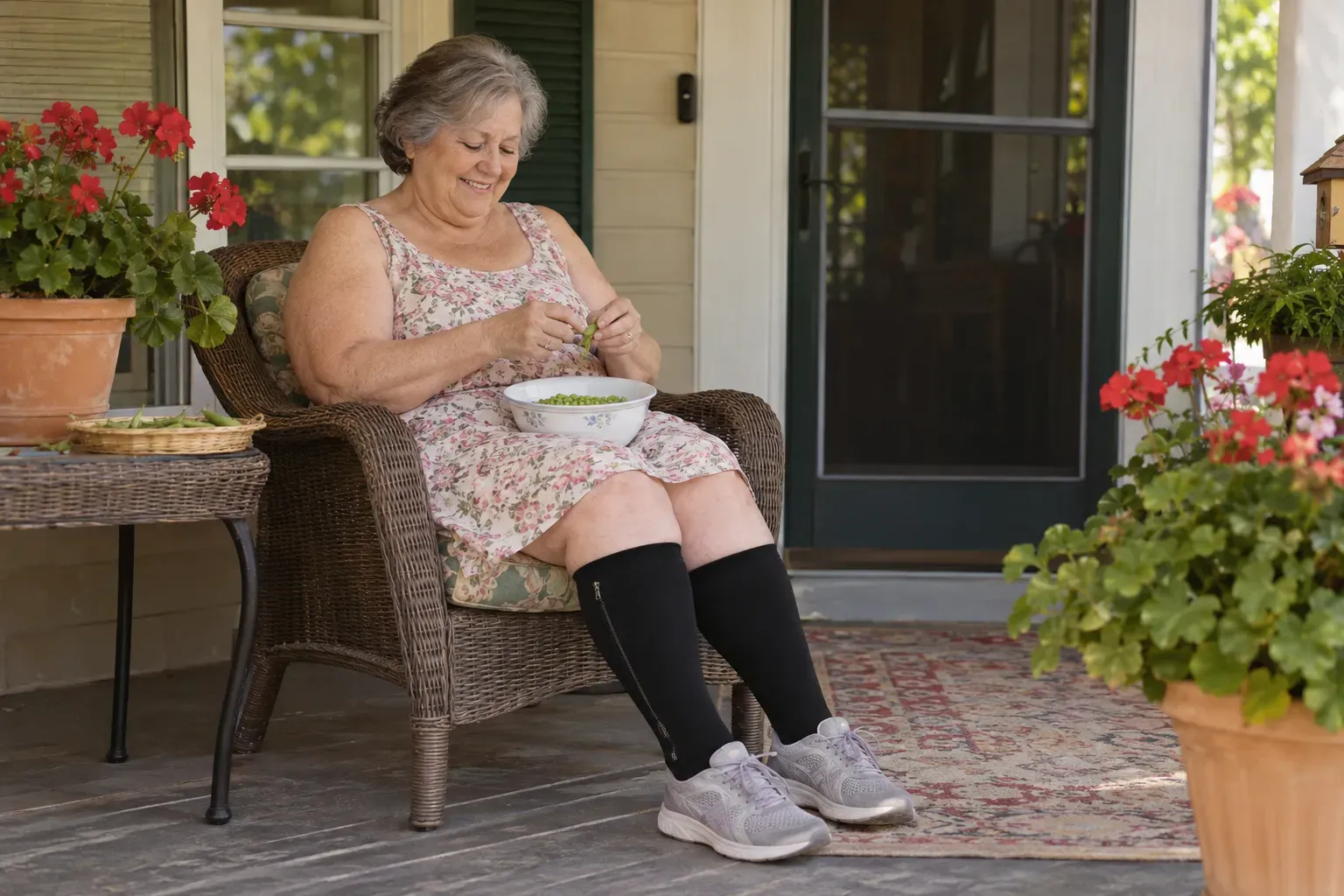
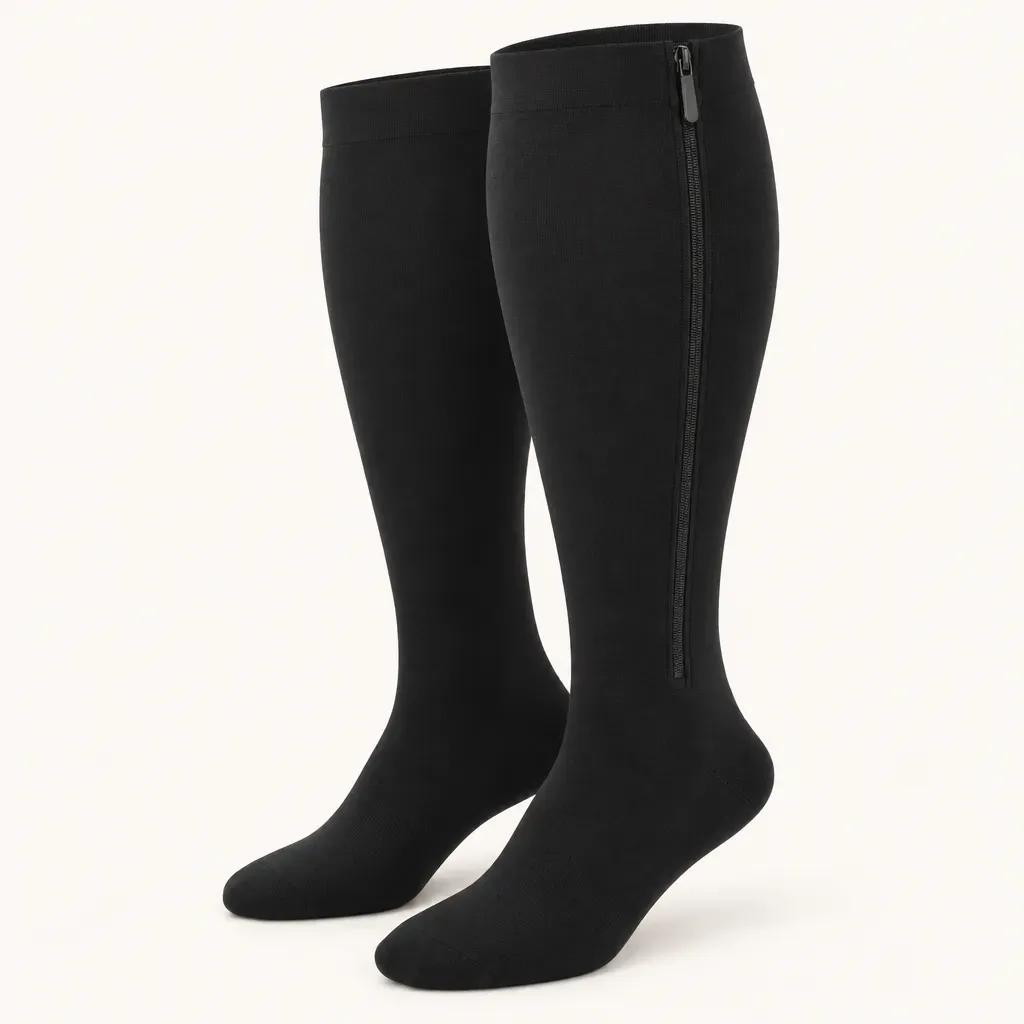
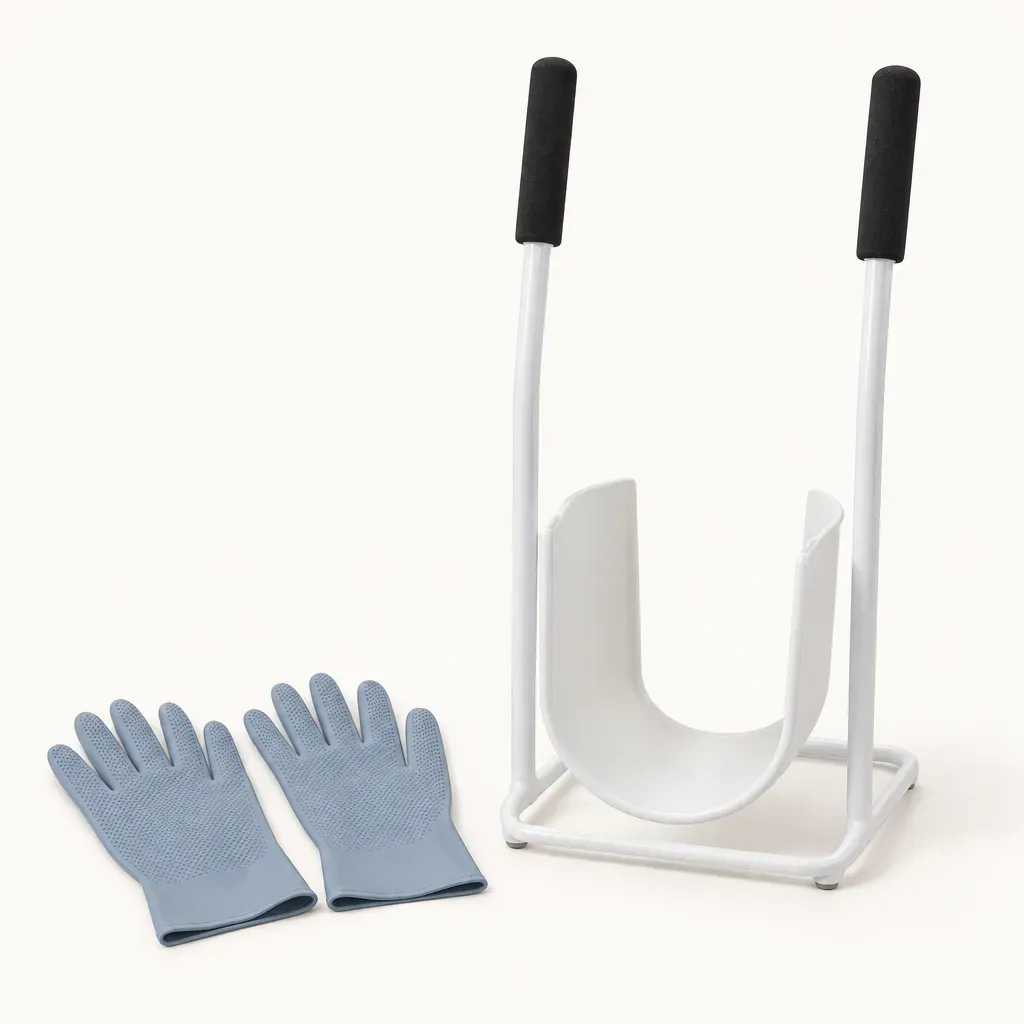
Getting a snug sock over a full calf takes effort. A side zipper or a frame donner can make it much easier.
Comfortable foot
Wider feet and swollen toes may feel better in an open-toe style, which also makes it easier to check the skin between the toes.
Wide-calf options we carry
| Sock | Sizes | Compression | Getting on |
|---|---|---|---|
| Wide-Calf Zipper Compression Socks | 4XL to 7XL | Moderate | Side zipper |
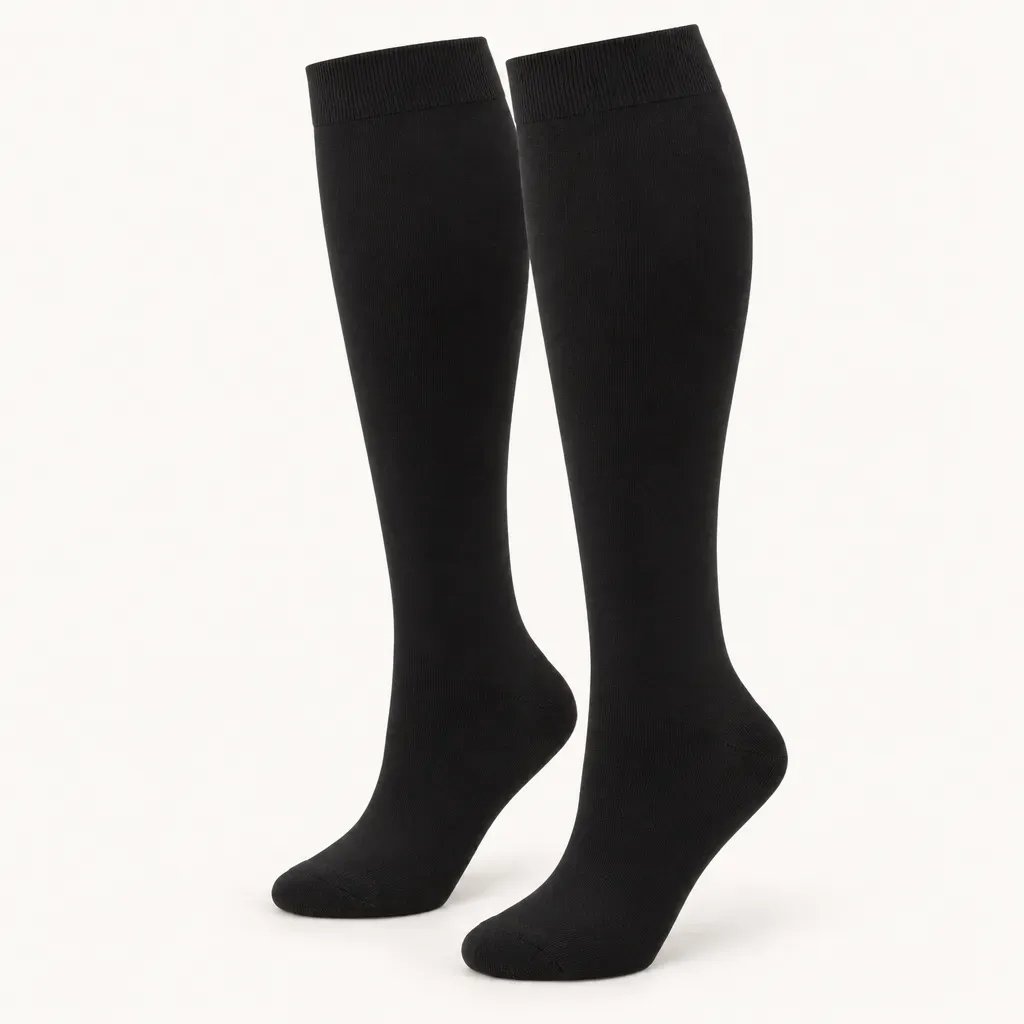
| Firm Knee-High Compression Socks | S to 7XL | Firm, 20-30 mmHg class | Pull-on, works with a donner |
| ZipperSocks Closed Toe (a brand we stock) | M to 3XL, calf about 8-20 in | 15-20 mmHg | Side zipper |
If your calf sits just above the ZipperSocks range, start with the wide-calf zipper style. If you want firmer support and can manage a pull-on sock, or use a donner, the firm knee-highs cover the widest range. You can browse everything in our wide-calf and plus-size collection.
Putting on compression socks over a full calf
- Sit down in a sturdy chair with arms, both feet flat.
- Turn pull-on socks inside out to the heel, set your foot in, then ease the rest up with flat palms. MedlinePlus suggests rubber gloves to help grip and smooth the fabric.
- Work in short sections over the calf, rather than one long pull from the top.
- For zipper socks, zip the first few inches at the ankle, check the heel is in place, then zip up slowly while smoothing the fabric guard flat.
- Check the top band sits flat and is not folded.
If bending to your feet is hard, our Easy-On Kit pairs a frame donner with donning gloves.
Comfort tips for everyday wear
A good fit is the biggest part of comfort, but a few small habits help on a fuller leg, where skin folds and warmth can make socks feel more noticeable.
- Keep skin clean and dry behind the knee and in any skin folds before putting socks on. Let lotion soak in fully first.
- Smooth the top band flat after you sit down for the first time each day, since sitting can push fabric up into the knee bend.
- Raise your legs on a footstool or pillows when you rest. The NHS suggests raising swollen legs whenever you can, and MedlinePlus suggests propping them above heart level when lying down.
- Keep two pairs so one can be washed while you wear the other.
- Look at your skin each evening, especially under the top band and behind the knee, where rubbing shows up first.
If you also have dry or easily irritated skin, our guide to compression socks for sensitive skin has more ideas.
Signs the fit still is not right
- A deep groove or red ring below the knee that is still there an hour after taking the sock off
- The top band rolling or folding over during the day
- Bunching at the ankle or behind the knee
- Pain, numbness, tingling, or color changes in the feet
Cleveland Clinic advises taking compression socks off and calling your provider if you have pain, numbness, tingling, skin discoloration or worsening swelling. For fit problems, try the next size up. We offer 30-day returns to make that easy.
A word of caution. Check with your doctor before wearing compression if you have peripheral artery disease, heart failure, fragile skin or open sores, or reduced feeling in your feet.