Compression Socks for Edema: What to Know Before You Buy
Edema is swelling caused by fluid building up in the body's tissues, and in the legs it often shows up as puffy ankles and feet. Compression socks can be part of everyday comfort for mild leg swelling, but edema has many causes, so a doctor should look at it first, especially if it is new, one-sided or getting worse.
Below, we explain edema in plain words, where light compression fits, how to pick a level and length, and which signs mean you should skip the shopping and call your doctor.
Mentioned in this article
-
-
-
What edema means, in plain words
Cleveland Clinic puts it simply: edema happens when fluid builds up in part of your body faster than it can drain out. In the legs, that fluid settles around the ankles and feet because of gravity.
You might notice:
- Puffy ankles or feet, often worse at the end of the day
- Shiny or stretched-looking skin
- A dent that stays for a few seconds after you press the skin
- Shoes or socks feeling tighter than usual
- Stiffness or a heavy feeling in the legs
The NHS lists all of these as common signs. Cleveland Clinic notes that edema can affect anyone, and that it is seen more often in adults over 65, in people who spend a lot of time on their feet, and in people with heart, liver or kidney disease.
Common reasons legs hold fluid
Edema is a sign, not a diagnosis. The same puffy ankle can come from very different places, which is why the cause matters more than the sock.
Everyday causes
- Sitting or standing in the same position for a long time
- A lot of salty food
- Warm weather
- Carrying extra weight
- Varicose veins or veins that do not return blood as well as they used to
Medicines
The NHS and Cleveland Clinic both list medicine side effects as a common cause. Some blood pressure medicines, steroids, hormone therapy and antidepressants can cause ankle swelling. If swelling started after a new prescription, mention it to your doctor or pharmacist. Do not stop a medicine on your own.
Causes a doctor needs to rule out
Less commonly, leg swelling comes from heart, kidney or liver problems, an infection, or a blood clot. These are the reasons a doctor should see new swelling before you settle into a routine of socks and footrests.
Where light compression fits
Compression socks gently squeeze the lower leg, tightest at the ankle and easing off toward the knee. MedlinePlus explains that this gentle pressure helps move blood up the legs. For many people with mild, everyday swelling, that means legs that feel less tired and ankles that stay a bit less puffy through the day.
Cleveland Clinic lists compression socks among the ways to manage edema at home, alongside raising your legs and cutting back on salt, and adds an important note: ask your provider before using them. That advice is worth following, for two reasons:
- Compression is not right for everyone. People with poor arterial circulation in the legs, some heart conditions, or fragile skin may need a different plan.
- Your doctor can tell you the right level. Some types of edema call for firmer, professionally fitted garments, which are not something to guess at online.
Compression socks are a comfort and support tool. They do not get rid of edema or the condition behind it.
A word of caution. Check with your doctor before wearing compression if you have peripheral artery disease, heart failure, fragile skin or open sores, or reduced feeling in your feet.
Other everyday steps that help
Socks work best as one part of a routine. These steps come from Cleveland Clinic, MedlinePlus and the NHS:
- Raise your legs. When lying down, prop your legs on pillows so they are above heart level.
- Take short walks. Do not sit or stand for long periods without moving. Even a walk to the kitchen helps the calf muscles pump fluid upward.
- Cut back on salt. Ask your doctor for guidance if you have heart or kidney disease, since advice on fluids and salt can be different.
- Wear roomy shoes. Wide, low-heeled shoes with soft soles are kinder to swollen feet.
- Look after your skin. The NHS suggests washing, drying and moisturizing your feet to help keep the skin healthy.
Our guide to compression socks for swollen feet and ankles has more practical tips for daily life.
Choosing a compression level for leg swelling
If your doctor is happy for you to try compression, the level depends on how much swelling you have and what they advise.
| What you have | Where people usually start |
|---|---|
| Tired legs, mild puffiness by evening | Moderate, 15-20 mmHg |
| More noticeable swelling, and your doctor suggests firmer support | Firm, the 20-30 mmHg class |
| Significant edema, or a doctor mentions 30-40 mmHg | A clinician-fitted garment (we do not sell this level) |
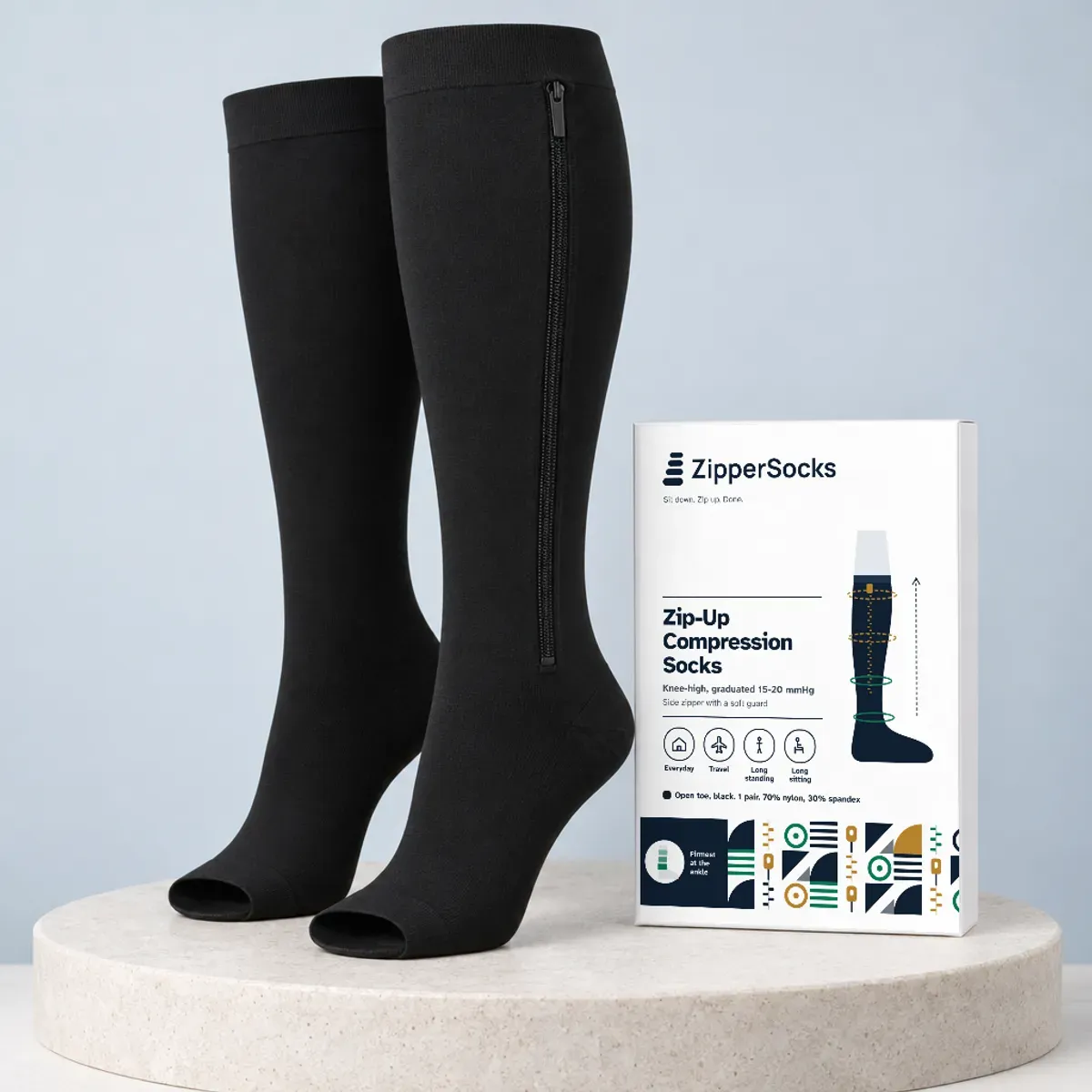
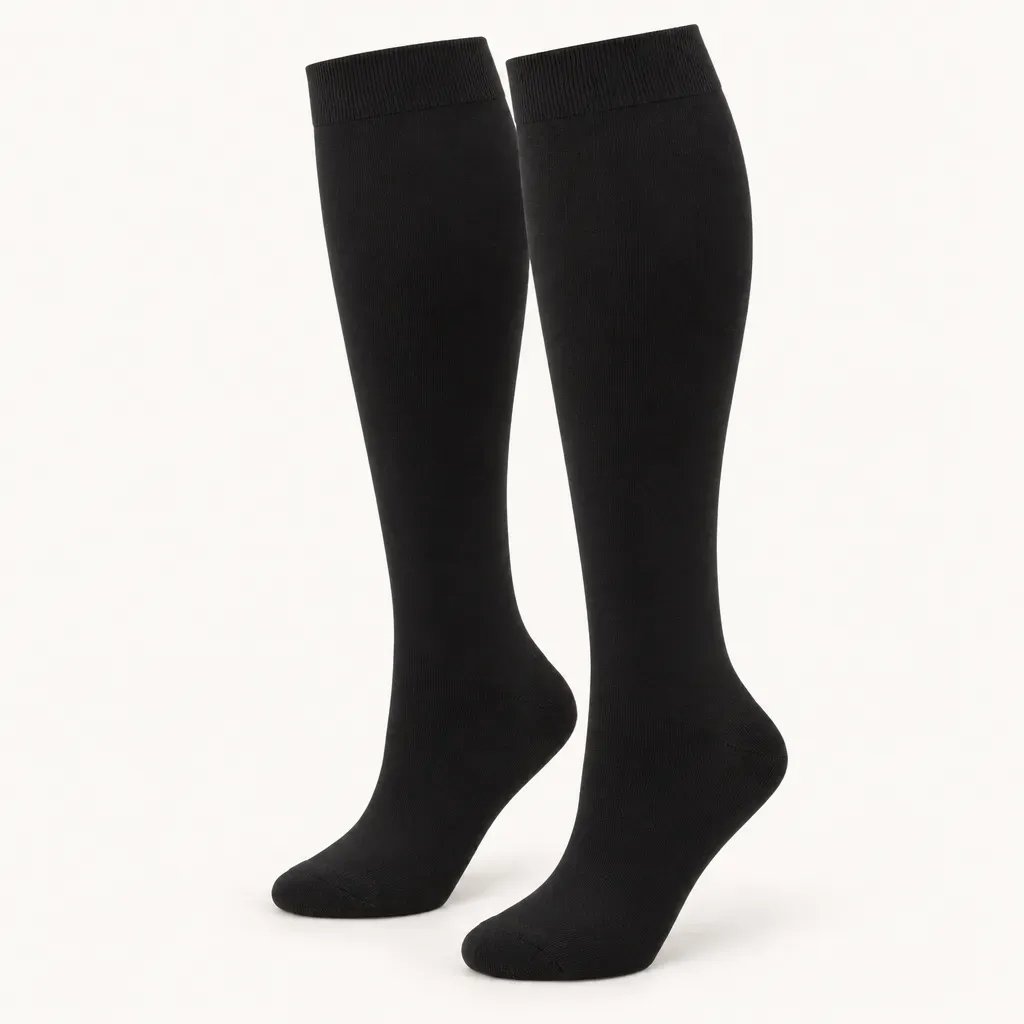
For mild swelling, the ZipperSocks open-toe zipper socks (a brand we carry) are 15-20 mmHg and open fully down the side. If your doctor suggests firmer support, our firm knee-high compression socks are in the 20-30 mmHg class and come in sizes S to 7XL. The full range is in our swelling and tired legs collection.
Length, toe and fit
Knee-high is the usual choice when swelling is in the ankles, feet and lower legs. MedlinePlus notes that a knee-length stocking should sit about two fingers below the bend of the knee.
Thigh-high is worth discussing with your doctor if swelling reaches above the knee.
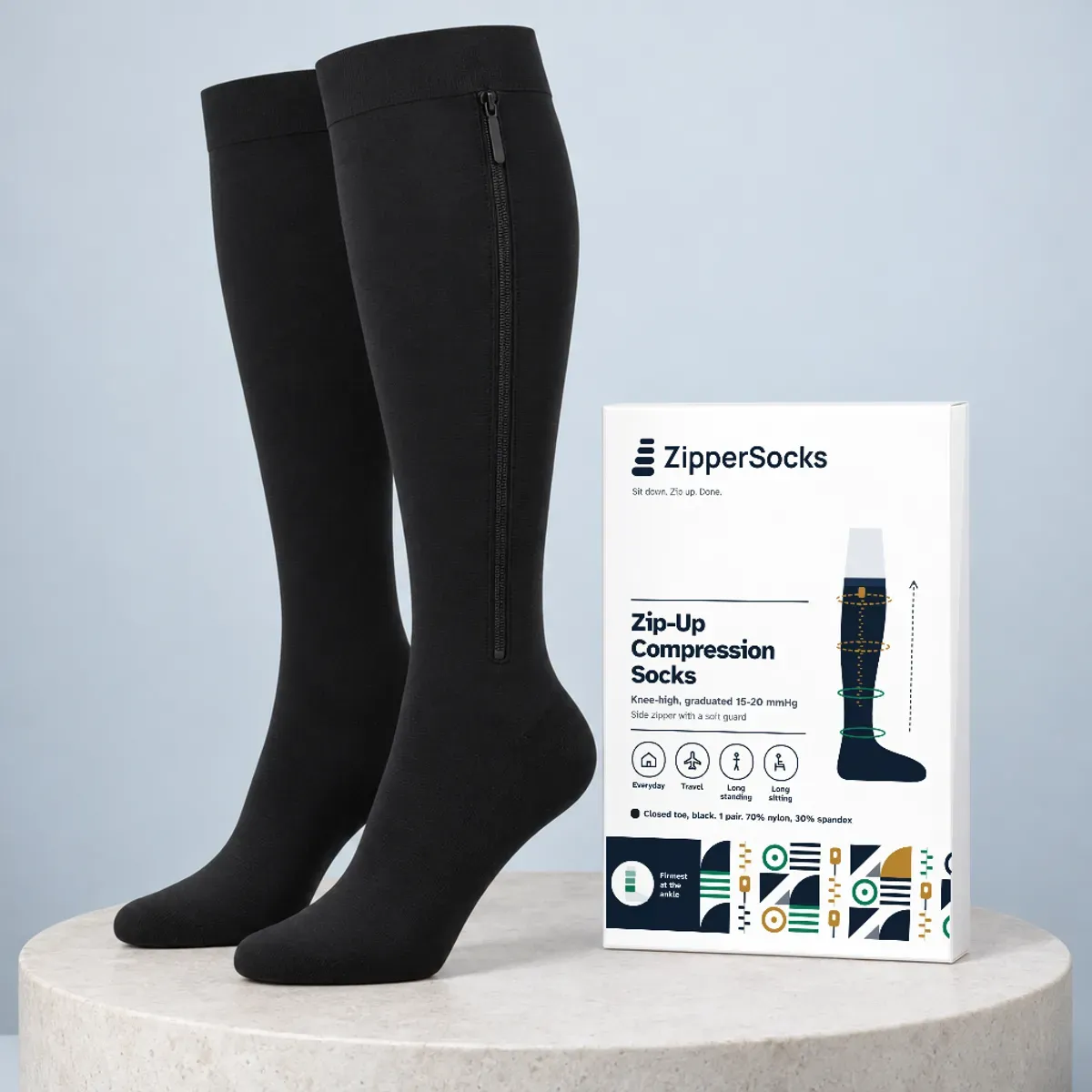
Open toe suits people whose toes feel crowded or tender, and makes it easier to check the skin on your toes. Closed toe looks and feels more like a regular sock.
Fit matters more with edema than with almost anything else. A sock that is too tight at the top can dig in like a rubber band, and one that is too loose does very little. Measure your ankle and calf in the morning, before swelling builds, and compare with our sizing guide. If your swelling changes a lot from week to week, a zipper style can be more forgiving to put on.
Red flags: when to call a doctor instead
The NHS and MedlinePlus agree on the swelling that should not wait. Get prompt medical advice if:
- Swelling is in one leg only, with no clear cause
- It started suddenly, or is severe or painful
- The area is red, hot, or you feel feverish or shivery
- You have heart, kidney or liver disease and the swelling is new or worse
- Swelling appears in other places, such as the face or belly
Call 911 for leg swelling with shortness of breath, chest pain or pressure, a racing heartbeat, or coughing up blood.
Our article on when to see a doctor about leg swelling goes through these signs in more detail.