Compression Socks for Travel: A Guide for Long Car Rides and Flights
Compression socks are a popular travel companion because long hours of sitting tend to leave feet and ankles puffy and legs heavy, and a snug, graduated sock can help them feel more comfortable on arrival. Put them on before you leave, and pair them with regular walks, ankle exercises in your seat, and plenty of water.
If you have had a blood clot, or have heart or circulation problems, talk to your doctor before a long trip. For everyone else, here is how to travel more comfortably by car, plane, bus or train.
Mentioned in this article
Why legs swell on long trips
Mayo Clinic explains that leg and foot swelling during air travel is common and usually harmless, and that the main reason is simply sitting still. With your feet on the floor for hours, blood tends to pool in the leg veins, and the seated position adds pressure, which pushes fluid into the surrounding tissue.
The same thing happens on a long drive or bus ride. Cramped legroom, few chances to stand, and less water than usual all add up. Most people notice tight shoes and sock marks by the end of the day, and the swelling goes down after a night's rest and some walking around.
How compression socks help on the road
Compression socks gently squeeze the lower leg, firmest at the ankle. MedlinePlus explains that this helps move blood up the legs. On a trip, many people find that means legs feel less tired and ankles less swollen by the time they arrive.
They are a comfort measure. They do not replace moving around during the journey, and they are not a substitute for your doctor's advice if you have a health condition that affects your legs, heart or circulation.
Before a long trip: talk to your doctor if you have had a blood clot, have heart or circulation problems, have had recent surgery, or have been told your risk of clots is higher. They can tell you what is right for you.
A word of caution. Check with your doctor before wearing compression if you have peripheral artery disease, heart failure, fragile skin or open sores, or reduced feeling in your feet.
Choosing travel compression socks
Level
For a trip, most people choose moderate compression, 15-20 mmHg. It feels snug without being hard work to wear all day. If your doctor has suggested a firmer level for daily wear, ask whether to use the same for travel.
Length
Knee-high socks are the usual choice for travel. They are easy to wear with trousers or shorts and cover the area that swells most.
Easy on and off
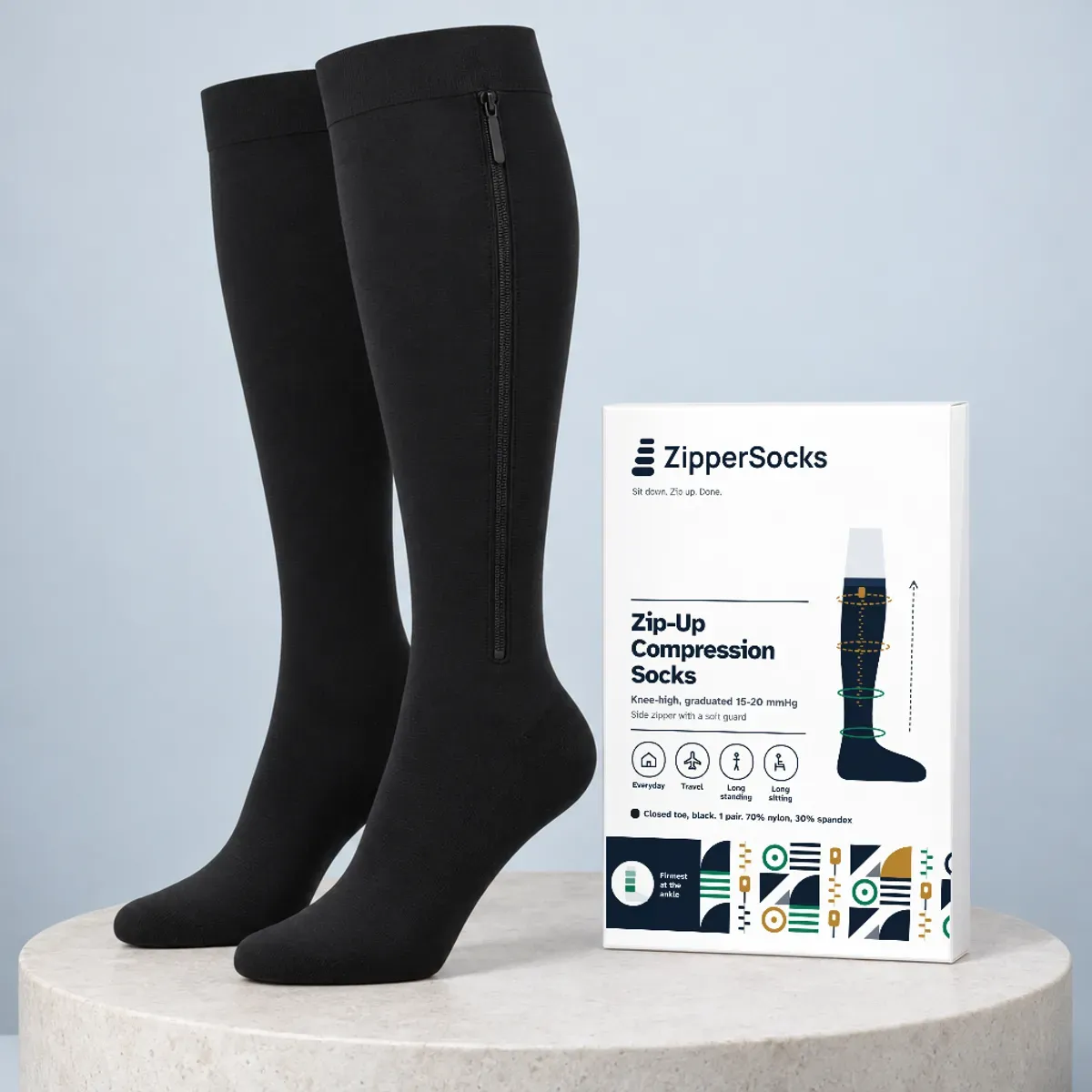
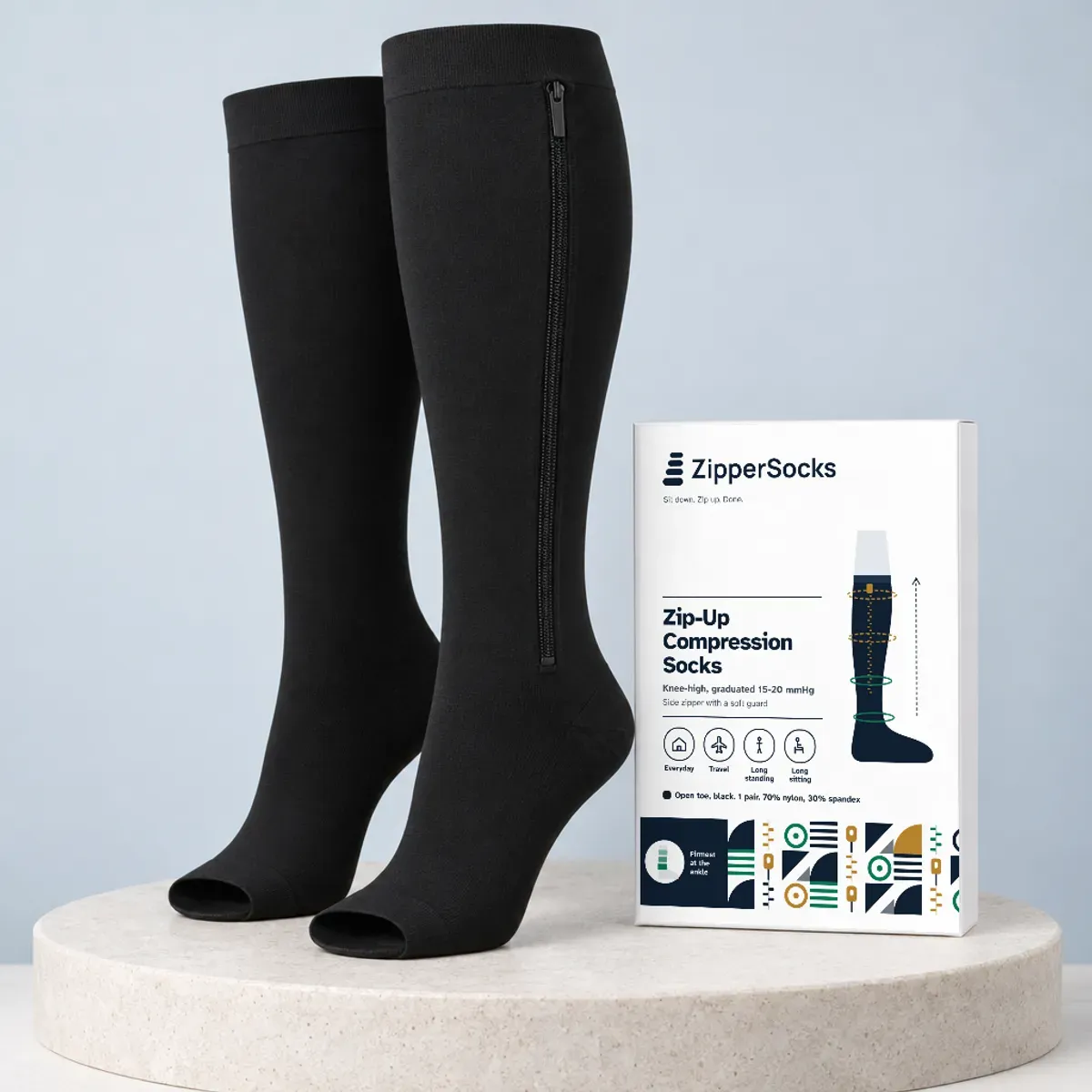
Think about the journey itself. If you may want to take socks off in a hotel after a long day, or put them on in a cramped space, a zipper style is much easier. The ZipperSocks closed-toe zipper socks, a brand we stock, are 15-20 mmHg with a soft guard behind the zipper. The open-toe version is cooler in warm weather and with sandals.
Fit
Measure your ankle and calf in the morning, at home, before you travel. Do not wait until you are already swollen. Our sizing guide has the charts.
When to put them on, and when to take them off
- Put them on the morning you travel, before you leave home. Cleveland Clinic advises putting compression socks on in the morning before swelling starts, and MedlinePlus suggests doing it before you get out of bed.
- Wear them for the whole journey. Try them out on an ordinary day at home first, so you know they fit comfortably for many hours.
- Take them off at bedtime. Cleveland Clinic advises not sleeping in compression socks unless your doctor says otherwise.
- On an overnight flight, ask your doctor before your trip whether to keep them on while dozing in your seat.
If socks cause pain, numbness, tingling or color changes in your toes during the trip, take them off.
Keep moving: car, plane, bus and train
Mayo Clinic suggests taking a walk every hour or so when you can, flexing your ankles and calves while seated, and not crossing your legs. The NHS gives similar advice for journeys of four hours or more: wear loose clothing, drink water, avoid alcohol, and walk around when you can.
By car
- Plan a stop every hour or two. Walk around the car, the rest area, or the gas station for a few minutes.
- Passengers can do seated exercises while the car is moving. Drivers should only do them at stops.
By plane, bus or train
- Choose an aisle seat if you can, so it is easier to get up.
- Walk the aisle when the seat belt sign is off and it is safe to do so.
- Keep the space under the seat in front clear so you can move your feet.
Seated exercises
- Ankle pumps: lift your toes toward you, then point them away. Repeat ten times.
- Heel raises: keep your toes on the floor and lift your heels, then lower them.
- Ankle circles: lift one foot slightly and draw slow circles each way.
- Knee lifts: lift one knee a few inches, hold briefly, and lower it.
Water, clothing and other comfort tips
- Drink water through the journey. Many travelers drink less to avoid restroom trips. Go anyway, because the walk helps too.
- Go easy on alcohol, which both the NHS and Mayo Clinic suggest avoiding on long journeys.
- Wear loose, comfortable clothing and shoes you can loosen. Feet often swell a little during the trip.
- Bring a small bag for your feet, such as a backpack or rolled jacket, to rest them on when sitting at the gate or hotel.
- Raise your legs when you arrive. Propping them on pillows for a while in the evening helps.
Packing list for comfortable legs
- Two pairs of compression socks, so one can be washed and dried in the hotel
- A small bottle of mild soap for hand washing
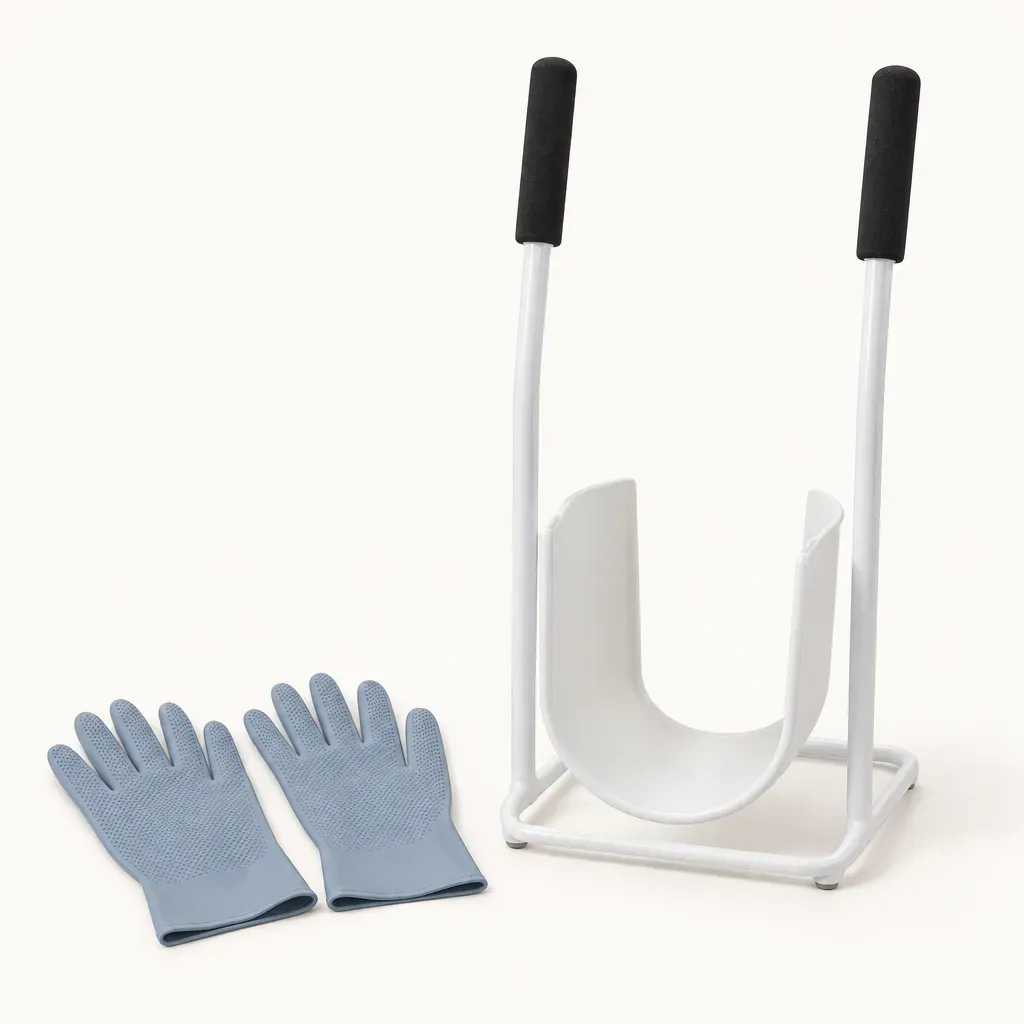
- Rubber gloves or a donner if you use them at home, such as our Easy-On Kit
- A refillable water bottle
- Comfortable shoes that are not tight
- A list of your medicines, and your doctor's number
Wash compression socks in mild soap and let them air dry, as MedlinePlus advises. Hang them over a towel rail rather than on a hot radiator. More detail is in our guide to washing compression socks.
When swelling after a trip needs a doctor
Some puffiness that goes down after a night's rest and a walk is normal. Mayo Clinic advises prompt medical care if you have swelling in only one leg along with leg pain, or swelling that does not go away after you are up and moving again.
Call 911 if you have shortness of breath, chest pain, or are coughing up blood, during or after a trip. The NHS lists these as signs that need emergency care.
Our guide to when to see a doctor about leg swelling covers the warning signs in more detail.